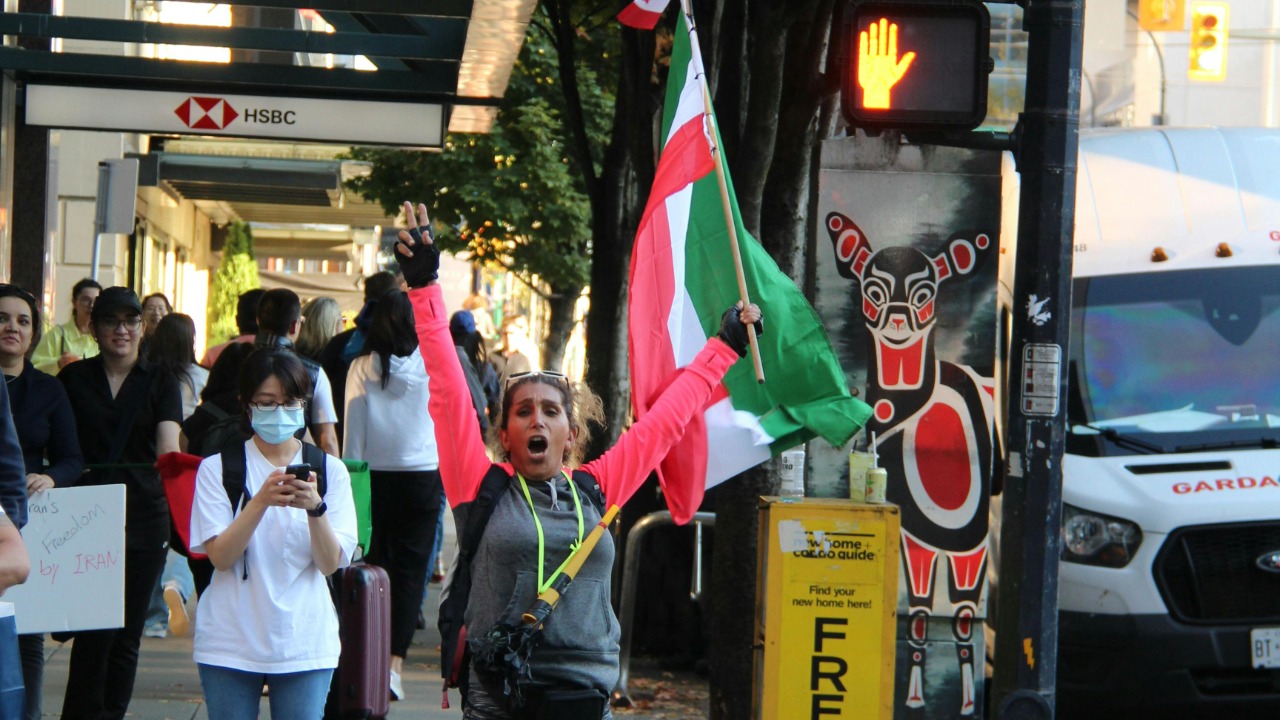

The Islamic Republic is facing the most serious internal rupture since its founding, a convergence of street revolt, economic collapse and elite uncertainty that is eroding the system from the edges inward. What is unfolding is not a single protest wave but a grinding fragmentation of authority, geography and legitimacy that traditional United States policy tools were never designed to read. I see a state that still commands guns and prisons, yet is losing the connective tissue that once bound society, security forces and clerical power into a coherent whole.
For years, Washington framed Iran as a unitary adversary, a black box of “the regime” on one side and a repressed population on the other. The current crisis exposes something more complicated: a country where Regions, classes and even pillars of the revolution are peeling away in different directions at different speeds. That slow cracking, rather than a single dramatic collapse, is what the United States never really prepared for.
The uprising that refuses to burn out
The first sign that the old playbook no longer applied came with the 2025–2026 Iranian protests, a movement that spread across multiple Regions instead of flaring and fading in a few big cities. By early January, demonstrations had been reported in urban centers and provincial towns alike, with participants rejecting both cosmetic reform and what they described as “false promises” from the authorities, according to accounts of the 2025–2026 Iranian protests. That breadth matters, because it suggests the unrest is no longer confined to a familiar coalition of students and urban middle classes, but is instead drawing in a cross section of Iranian society that once tolerated the system as the least bad option.
Monitoring groups tracking the situation inside Iran describe a protest tempo that has accelerated rather than ebbed as security forces escalate their response. An Iran Update from early January detailed how demonstrations expanded in both rate and magnitude after authorities tried to clamp down, a pattern that undercuts the regime’s long standing belief that calibrated repression can reset the streets. When a system’s main instrument of control starts to produce the opposite effect, it is not just facing dissent, it is confronting a structural loss of deterrence.
Repression without control
The state’s answer has been a level of violence and information control that signals fear rather than confidence. During what has become known as the 2026 Iran massacres, The Iranian authorities imposed a near total internet shutdown as they moved to crush protests, cutting off communication inside the country and with the outside world, according to accounts of the 2026 Iran massacres. Human rights groups have reported detainees being injected with unknown chemical substances, a chilling detail that speaks to a security apparatus willing to experiment with new forms of coercion even as its old methods lose their edge.
Yet the very tools the state is leaning on are creating fresh vulnerabilities. Analysts at CTP and ISW have noted that the regime’s apprehension about restoring internet access reflects an awareness that connectivity now amplifies protest coordination, but they also warn that prolonged shutdowns impose serious limitations on IRGC activities and broader governance, according to their assessment. In other words, the state is trading operational effectiveness for short term information control, a bargain that might buy days or weeks of quiet but erodes its ability to function as a modern government.
An economy that no longer cushions the pain
What makes this round of unrest different from earlier cycles is that the economic floor has fallen out from under the political crisis. The collapse of the rial and soaring prices first pushed shopkeepers in Tehran into the streets, before demonstrations broadened into a nationwide challenge to Iran’s leadership, according to reporting on why Iran’s economy. When small business owners who once formed the commercial backbone of the system decide that staying quiet is more dangerous than protesting, it signals a profound shift in the cost benefit calculus that has long underpinned the Islamic Republic’s social contract.
At the same time, the very actors tasked with defending that system are tightening their grip on what remains of the productive economy. Analysts like Thomas Kohlmann have described how religious elites and the Revolutionary Guards have strengthened their hold on key sectors, even as experts question whether this model can generate growth, according to an examination of Iran’s economic woes. The result is a feedback loop in which economic mismanagement fuels protests, protests trigger more securitization, and securitization further undermines the prospects for recovery.
From succession jitters to a “new revolution”
Behind the street battles and currency charts lies a quieter but equally destabilizing drama: the question of who will inherit the system and whether that system can survive the transition. Analysts of Iran’s internal politics argue that public unrest, economic stress and succession politics are colliding in ways that make the current governing formula look increasingly untenable, with some warning that the existing power structure may no longer be viable, as explored in assessments of Iran’s tryst with. When elites cannot agree on a clear path for leadership change, every protest and policy failure becomes a proxy battle over the post succession order.
Some regional specialists now describe the current moment as the beginning of a new Iranian revolution, arguing that after a year of setbacks to its regional sway and deterrence, Iran’s Islamic Republic has entered 2026 besieged at home and cut off from the world, according to one detailed analysis of the Islamic Republic. I see that framing less as a prediction of imminent regime change and more as a recognition that the old equilibrium, in which the state could absorb periodic shocks without altering its core architecture, has already been broken.
Urban war and the limits of force
The language coming from inside the establishment itself hints at how far things have slipped. On Day 23 of what opposition groups call the Iran Uprising, the Regime Parliament Speaker Admits that the country is facing an “Urban War” and acknowledges “Thousands of Deaths,” according to a summary of Day 23. When a senior figure uses that vocabulary, it is not just rhetoric, it is an admission that the state now sees parts of its own territory as contested space rather than governed cities.
Security briefings from outside observers reinforce that picture. One Jan assessment notes that the regime continues to perceive protests as a significant threat to its stability, a judgment consistent with the scale of resources it is deploying to suppress them. Another Jan report on the ground describes how protesters now face serious risks simply for appearing in public, a reality that has not deterred them from returning to the streets. When fear no longer guarantees compliance, force becomes a blunt instrument that can hold territory but not restore legitimacy.
More from Morning Overview