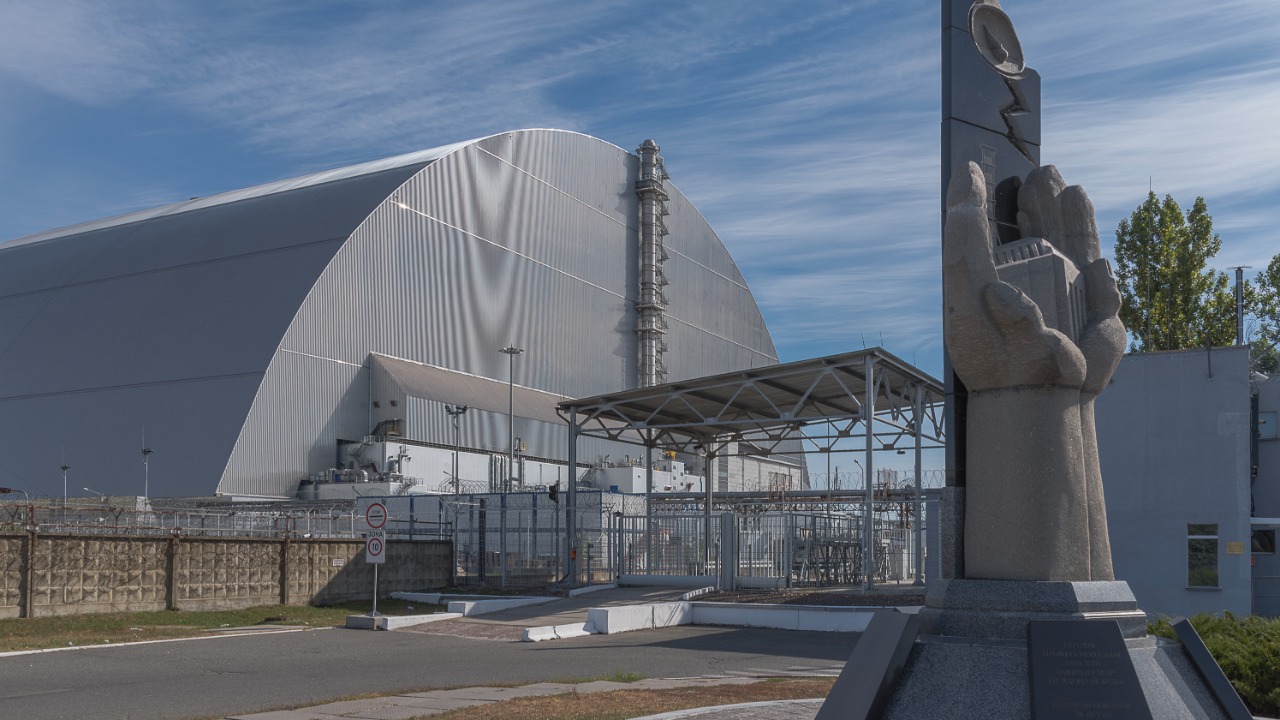

Inspectors now warn that the vast steel shelter over Chernobyl’s ruined reactor has suffered critical damage after an alleged drone strike, stripping away a key layer of protection that the world has relied on for nearly a decade. The structure that once symbolized the site’s long-term stabilization is now described as unable to fully contain radioactive material, raising fresh fears about a disaster many assumed had been safely entombed.
The alarm from nuclear experts is not about a sudden repeat of 1986, but about a slow, grinding risk: a compromised shield, a war zone around it, and a global community that must once again pay close attention to Chernobyl’s fragile equilibrium.
What inspectors say has changed at Chernobyl
For years, the New Safe Confinement over Chernobyl’s Number 4 reactor was treated as a solved problem, a massive engineering fix that locked away the most dangerous remnants of the explosion. Inspectors now say that assumption no longer holds, with the United Nations nuclear watchdog warning that the protective shield can no longer reliably contain nuclear material inside the ruined reactor hall. According to reporting attributed to the UN Watchdog and journalist David Spector, the structure that once sealed the sarcophagus is now described as compromised enough that it cannot guarantee full confinement of radioactive debris over Chernobyl’s Number 4 reactor, a stark reversal from the confidence that followed its completion in Dec, and a warning that the world’s most infamous nuclear site is again a live safety concern, as detailed in coverage of the Chernobyl protective shield.
Inspectors working with The IAEA have reinforced that message, saying the radiation shield has “lost safety function” after being “severely damaged” by a drone strike, language that signals a shift from routine monitoring to emergency mitigation. Their assessment describes a protective structure that was built as a vast steel enclosure over the old sarcophagus, now no longer performing its core role of fully isolating radioactive material from the environment, a conclusion that emerged from a formal safety assessment of the site and is reflected in reports that the Chernobyl radiation shield has lost its key safety function.
How the alleged drone strike damaged the New Safe Confinement
Investigators trace the current crisis back to a single, violent event: a drone that slammed into the New Safe Confinement above the reactor complex. Fragments of the unmanned aircraft were later recovered inside the Chernobyl Exclusion Zone, with inspectors reporting that fragments of the drone had struck the New Safe Confinement and pierced the outer layers of the steel and concrete shell. Those fragments, scattered across the Chernobyl Exclusion Zone, are now central to the technical narrative of how a structure designed to withstand decades of corrosion and weathering was instead breached in an instant by a weaponized device, as documented in accounts that describe how Fragments of the drone impacted the shield.
Technical summaries from inspectors describe a hole in the New Safe Confinement’s outer shell, a localized but serious breach that undermines the integrity of the entire containment system. Analysts following the incident, including Matthew Loh, have emphasized that every time Matthew publishes a story on the site’s condition, the picture of the damage becomes more detailed, with references to a hole in the New Safe Confinement that affects the long-term stability of the structure and the safety of the Chernobyl power plant complex. The damage is not just cosmetic; it is a structural wound in a system that was supposed to remain airtight for a century, a point underscored in reporting that urges readers to Follow Matthew Loh for details on the hole in the New Safe Confinement.
The shield that was meant to end Chernobyl’s emergency
The New Safe Confinement was never just another industrial building; it was a global engineering project designed to draw a line under the original catastrophe. The protective structure, often described as a massive steel arch, was built to slide over the crumbling sarcophagus that Soviet engineers hastily erected after the 1986 explosion, creating a second, more robust barrier between the reactor’s radioactive remains and the outside world. Inspectors now stress that this protective structure, built as a vast steel enclosure over the old sarcophagus, has lost a key safety function after the drone strike, a reversal that undermines years of planning and investment and is captured in reports that the protective structure built as a steel enclosure no longer fully performs its role.
That loss of function is not just a technical footnote; it reopens questions that many in Dec and beyond believed had been settled when the arch was completed and slid into place. The New Safe Confinement was supposed to last at least 100 years, giving engineers time to dismantle the old sarcophagus and safely manage the radioactive fuel and debris inside. Instead, inspectors now describe a scenario in which the very shield that was meant to end Chernobyl’s emergency has itself become an object of emergency repair, a shift that forces policymakers to revisit assumptions about how secure the site really is and how vulnerable such megastructures are to modern weapons.
Russian strikes and the militarization of a nuclear graveyard
The alleged drone attack did not occur in a vacuum; it is part of a broader pattern in which the war in Ukraine has turned Chernobyl from a frozen relic into an active military theater. Reports describe the main shield as being “down” after a Russian strike, language that reflects both the physical damage and the symbolic shock of seeing a supposedly inviolable nuclear shelter hit by a weapon. The massive structure that once stood as a monument to international cooperation is now described as having been damaged by a drone strike attributed to Russian forces, a development that folds Chernobyl into the wider story of how modern conflict is eroding long-standing nuclear safety norms, as captured in accounts that detail how Chernobyl’s main shield is down after a Russian strike.
Inspectors and diplomats now speak of a nuclear graveyard that has been militarized, with artillery, drones, and electronic warfare systems operating in and around the Chernobyl Exclusion Zone. The site’s transformation from a cordoned-off disaster zone into a contested military space raises the risk that further strikes, miscalculations, or sabotage could deepen the damage to the New Safe Confinement or other critical infrastructure. It also complicates the work of The IAEA and other technical teams, who must negotiate access and security guarantees in a landscape where the line between civilian and military targets has blurred, and where a single misdirected drone can have consequences far beyond the battlefield.
Radiation risk: what “cannot confine” really means
When inspectors say the shield can no longer “confine” radiation, they are not suggesting that Chernobyl is about to erupt in a new explosion, but they are warning that the barrier between radioactive material and the environment is no longer as tight as it was designed to be. Reports now state that Chernobyl’s protective shell can no longer block radiation from leaking out, a blunt assessment that the structure is unable to fully prevent the escape of radioactive particulates and gases. That conclusion, attributed to detailed reporting by Iona Cleave, underscores that the problem is not hypothetical; the shell’s diminished capacity to block radiation is already being treated as a present-tense safety issue, as reflected in accounts that describe how Chernobyl’s protective shell can no longer block radiation from leaking out.
Other assessments echo that language, with inspectors warning that the nuclear site’s protective shelter has been “severely damaged” in the drone attack and now “cannot confine radiation,” a phrase that signals a shift from theoretical risk to operational failure. The United Nations has warned that the Chernobyl nuclear site’s protective shelter is no longer able to fully contain radioactive material after the strike, a finding that forces surrounding countries and international health agencies to consider new monitoring and contingency plans. The description of a protective shelter that is both severely damaged and unable to confine radiation is now central to the global understanding of the incident, as detailed in reports that the Chernobyl nuclear site’s protective shelter is severely damaged and cannot confine radiation.
Inside The IAEA assessment and what inspectors actually measured
The IAEA has tried to cut through speculation by sending its own team to conduct a structured assessment of the damage, a process that goes beyond visual inspection to include radiation measurements, structural analysis, and modeling of potential leak pathways. According to the agency, a team completed a safety assessment of the site after the drone strike, concluding that the radiation shield had been “severely damaged” and had lost its safety function. That assessment is not just a bureaucratic label; it reflects a formal judgment that the shield no longer meets the design criteria that justified its construction, and that the risk of radioactive material escaping from areas covered by the protective shield is now materially higher, a conclusion that underpins reports that The IAEA’s assessment found the shield had lost its safety function.
Inspectors involved in the assessment have also highlighted structural weaknesses that extend beyond the immediate impact site, suggesting that the drone strike may have exposed deeper vulnerabilities in the New Safe Confinement’s design or maintenance regime. Structural weaknesses have emerged in the radiation shield after the drone strike, raising long-term safety concerns about the durability of its containment systems and the ability of the arch to withstand further shocks. The International Atomic Energy Agency has indicated that the damage reveals deeper complications than initially believed, and that while immediate catastrophic release has been avoided, the escape of radioactive particulates through compromised sections cannot be ruled out, a concern reflected in reports that Chernobyl’s radiation shield shows structural weakness and long-term safety concerns.
Structural weaknesses and the long-term future of the arch
Beyond the immediate breach, inspectors are increasingly focused on what the damage reveals about the New Safe Confinement’s long-term resilience. Structural weaknesses that have emerged after the drone strike suggest that the arch may not be as robust as its designers intended, particularly when subjected to concentrated kinetic impacts rather than the diffuse stresses of wind, snow, and corrosion. Engineers now speak of a containment system whose durability is in question, with concerns that microfractures, deformed support elements, or compromised seals could accelerate the structure’s aging and reduce its effective lifespan well below the century-long horizon that justified its cost.
Those structural concerns are not just academic; they shape the choices facing Ukraine and its international partners about whether to repair, reinforce, or partially rebuild the damaged sections of the arch. Each option carries its own risks and costs, from the technical challenge of working in a radioactive environment to the political difficulty of securing funding for a project that many governments believed was already complete. The emerging picture is of a containment system that now requires active, ongoing intervention rather than passive monitoring, a shift that will demand new engineering studies, new contracts, and renewed public attention to a site that had largely slipped from the headlines.
Global stakes: from Dec’s warnings to regional health fears
The renewed focus on Chernobyl is not limited to Ukraine’s borders; it has quickly become a regional and global concern, as neighboring countries and international agencies weigh the implications of a compromised shield. Health experts working with the World Health Organization and other bodies are now modeling how even modest increases in airborne radioactive particulates could affect populations downwind, particularly in scenarios where further strikes or structural failures enlarge the breach. The fact that the warnings and technical assessments have emerged in Dec, a month when much of the northern hemisphere is locked into winter weather patterns, adds another layer of complexity, since cold air inversions can trap pollutants closer to the ground and alter dispersion patterns.
For many in Europe, the news that Chernobyl’s protective systems are again in question revives memories of the original disaster, when shifting winds carried radioactive clouds across borders and into the food chain. While inspectors stress that the current situation is not comparable in scale, the language they now use, from “cannot confine radiation” to “lost safety function,” is serious enough to prompt new monitoring campaigns and contingency planning. The global stakes are not only about immediate health impacts but also about the precedent set when a nuclear disaster site becomes a battlefield target, a development that could influence how other countries think about the security of their own nuclear facilities in an era of proliferating drones and hybrid warfare.
What comes next for Chernobyl and nuclear security
The path forward at Chernobyl will likely involve a mix of emergency repairs, long-term engineering studies, and renewed diplomatic pressure to keep the site off-limits to further attacks. Engineers will need to design and install patches or secondary barriers to restore at least partial confinement, while structural specialists analyze whether the arch’s foundations, support ribs, and sealing systems can be reinforced without exposing workers to excessive radiation. At the same time, The IAEA and United Nations will be under pressure to secure commitments from all parties in the conflict that Chernobyl, and other nuclear facilities, will not be targeted again, a pledge that is easier to make than to enforce in a war that has already seen repeated strikes on energy infrastructure.
More broadly, the incident is likely to reshape how the world thinks about nuclear security in active conflict zones. The idea that a drone could punch a hole in one of the most heavily engineered containment structures on earth will feed into debates about how to protect reactors, spent fuel pools, and waste storage sites from similar attacks. It may also accelerate efforts to develop new international norms or treaties that treat nuclear disaster sites as demilitarized zones, with stronger verification and enforcement mechanisms. For now, inspectors’ warnings about critical damage at Chernobyl serve as a reminder that the legacy of 1986 is not frozen in time; it is a living, shifting risk that can be made better or worse by the choices governments and militaries make today.
More from MorningOverview