
On battlefields crowded with drones, smart missiles, and loitering munitions, the old idea that armor alone can keep crews alive is collapsing. Militaries are now racing to wrap vehicles, bases, and even entire regions in layers of sensors and directed energy that behave less like a steel wall and more like a science fiction force field. The race to build a real life energy shield for modern war is no longer a metaphor, it is a procurement plan, a research agenda, and in some places, an operational reality.
From high energy lasers on trucks to hard kill interceptors on tanks and experimental plasma bubbles around drones, I see a common thread: protection is shifting from passive to active, from heavy metal to fast software and invisible physics. The question is not whether this shift is happening, but how far it can go before physics, budgets, or politics pull it back to earth.
From reactive armor to active protection
The first step toward a battlefield shield has been to move beyond simply thickening armor and instead intercept incoming threats in flight. In the United States, the Army Invests in Next, Gen Vehicle Protection Systems under the Weapons and Tracked Combat Vehicles category, a signal that active defenses are now treated as core combat capability rather than an add on. The Active Protection Systems, APS, Program describes how Trophy APS uses radar to detect incoming anti tank rounds and then fires a kinetic countermeasure to destroy the threat or cause early detonation, turning what used to be a one way engagement into a duel between projectile and interceptor, as detailed on Active Protection Systems Page for Trophy APS.
European armies are moving in the same direction, but at scale. The Leopard 2A8 MBT now includes the Trophy APS as part of its standard configuration, according to reporting by Peter Felstead, which means The Leopard is delivered from the factory with an integrated hard kill shield rather than retrofitted later. Israeli Trophy System Selected as Standard Defense for Next, Gen NATO Tanks shows how Israel and its Rafael Trophy system have become central to this shift, with Israeli Trophy System Selected and Standard Defense for Next, Gen NATO Tanks describing how Israel and Rafael Trophy are now embedded in NATO planning for survivability, a trend echoed in the separate note that Trophy Selected as Baseline Protection for NATO, Next, Generation Tanks is highlighted by Trophy Selected as Baseline Protection for NATO Next Generation Tanks in Israel Electronics News.
Iron Fist, Bradley, and the hard kill market
If Trophy is one pillar of this emerging shield, Iron Fist is another. NATO CV90 Infantry Fighting Vehicles are gaining Iron Fist Active Protection after a $150M award, a move that reflects a broader shift in NATO ground warfare where survivability against modern anti armor weapons now depends on rapid interception rather than just armor thickness, as described in the NATO CV90 coverage. Elbit Systems, listed as ESLT, has been awarded new contracts totaling $150 million for its Iron Fist Active Protectio, with the same report also citing the figure as $150 m, underscoring how much money is now flowing into this niche, as noted in Elbit Systems contract filings.
On the American side, the Bradley Fighting Vehicle is moving into phase two of its own active protection effort. In ST. PETERSBURG, Fla, General Dynamics Ordnance and Tactical Systems, often shortened to OTS, is working together with Elbit Systems and IMI to advance a system that can protect the Bradley in both open terrain and urban environments, according to General Dynamics Ordnance program details. At the alliance level, TROPHY APS has been selected by 4 NATO countries for their Leopard 2 A8 fleets, with EVP Tzvi Marmor, Head of the Land and Naval Systems Division at Rafael, emphasizing that TROPHY is now a shared standard across multiple NATO nations and even other platforms such as the K2 Black Panther, as captured in EVP Tzvi Marmor’s comments.
Lasers and the promise of invisible walls
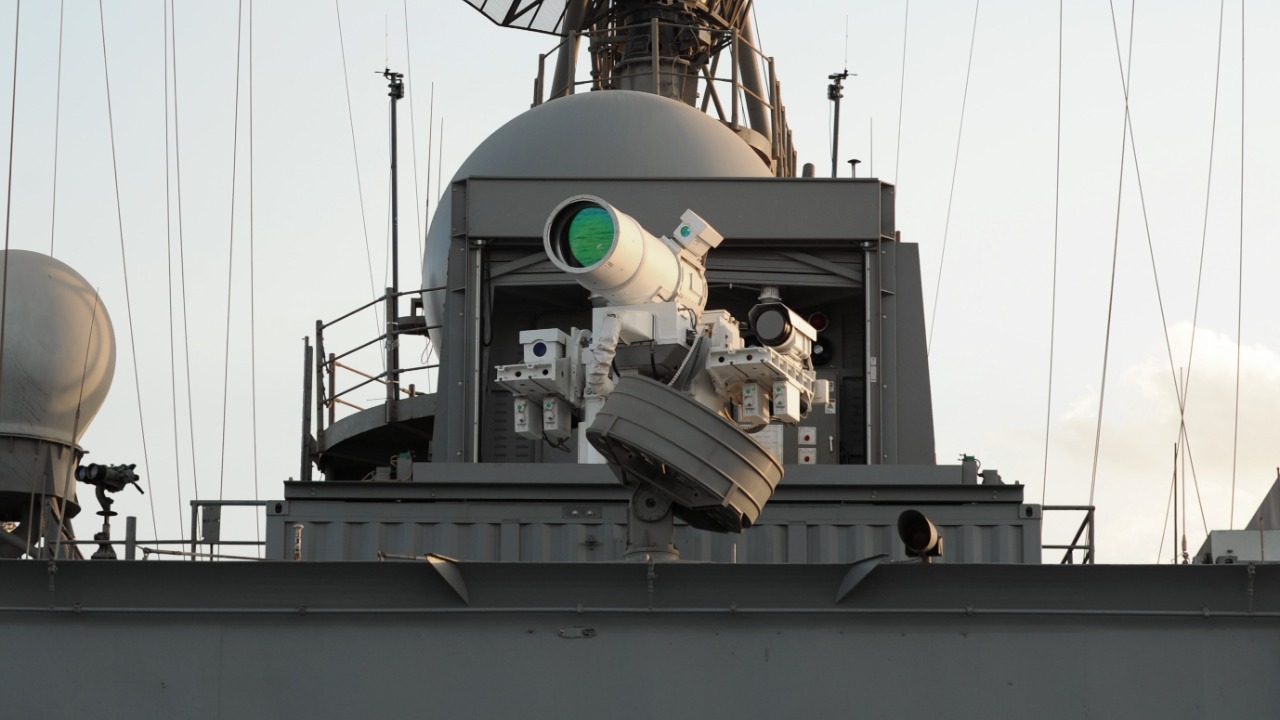
Hard kill interceptors are only one layer of the envisioned shield, the other is directed energy. The Army is preparing a 2026 competition for a counter drone laser weapon, with the directed energy variant intended to protect forces in the Central Command area of operations, as described in the report by By Jen Judson that details how the Army is structuring the competition. In parallel, Adam Miller, who leads RCCTO’s directed energy programs, has explained that the new scalable high energy laser program will separate vehicle integration from laser development to speed fielding of a scalable counter drone capability, a design choice that reflects lessons from earlier programs and is laid out in Adam Miller and RCCTO planning documents.
Senior leaders are already talking about a near term inflection point. In HUNTSVILLE, Ala, The Army is preparing to pick the winner of its first production contract for high energy, vehicle mounted air defense lasers, a decision that could make 2026 a breakthrough year for operational laser weapons, as discussed in HUNTSVILLE briefings. Yet the technology is far from guaranteed, and the U.S. Air Force experience is a cautionary tale, since the Air Force Self, High Energy Laser Demonstrator program, often shortened to Self, High Energy Laser Demonstrator, closed out without ever putting a laser directed energy weapon on a fighter, a reality check documented in Air Force program reviews.
China’s plasma bubble and the Star Wars imagination
While Western militaries iterate on interceptors and lasers, China is experimenting with something that sounds closer to a cinematic deflector shield. According to Chinese news sources, Chinese scientists have reportedly developed a plasma based energy shield to protect military assets, including drones, from potentially harmful microwaves, with the shield using low temperature plasma to block electromagnetic energy that could damage sensitive electronics, as described in a Chinese technical summary that even notes a claimed radius of about 9.8 feet (3 meters). A separate report explains that China develops a Star Wars style deflector plasma shield to defend drones, with the description that According to Chinese sources, Chinese scientists hope to keep unmanned systems protected as much as possible from directed energy attacks, a narrative that blends pop culture language with real laboratory work, as outlined in China focused reporting.
The idea of an invisible barrier is not new, and some Chinese commentary even reaches back to Nikola Tesla. One social media discussion notes that Tesla claimed that he had proposed the creation of an invisible energy shield, although it was never fully developed or tested, a historical reference that is now being linked to modern Chinese research in Invisible Energy Shield discussion. Another post reiterates that Chinese scientists have reportedly developed a plasma based energy shield to protect military assets, including drones, from potentially harmful microwaves, reinforcing how this concept is being framed as both a technological breakthrough and a response to the vulnerability of military chips, as seen in a second tank that deflects themed summary. For now, these plasma bubbles are experimental, but they show how the race for an energy shield is as much about electromagnetic dominance as it is about kinetic threats.
Golden Dome, markets, and the limits of physics
In Washington, the concept of a protective dome has migrated from metaphor into early planning. The Department of Defense has begun exploratory work on a project nicknamed Golden Dome, and both the Senate and House Armed Services Committees have debated preliminary ideas for how such a system might integrate space based sensors and rapid sensor to shooter linkages, according to a Fact Sheet that outlines The Department of Defense vision. A related explainer on the US Space Force concept notes that Their closeness to possible missile flight paths means they can react nearly instantaneously, giving defenders a real chance to intercept threats before they reach targets, an argument for putting parts of this shield in orbit, as described in a Golden Dome video analysis.
More from Morning Overview