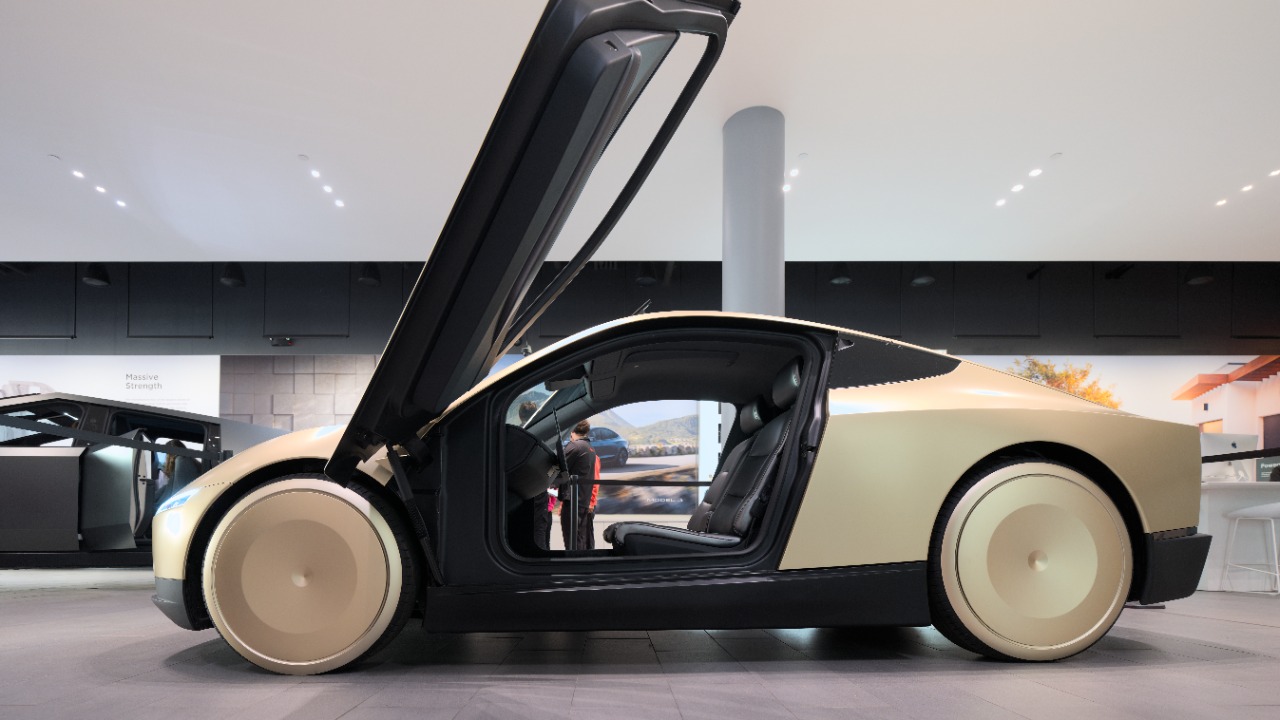

Tesla’s long promised robotaxi era is finally moving from slide decks to factory floors, with the company betting that a purpose built Cybercab and new software will turn its cars into revenue generating fleets. After years of shifting timelines, the project is now tied to concrete production plans, regulatory milestones, and a broader shift in how Tesla talks about its future growth.
Inside that shift is a story of bold engineering, unresolved safety questions, and a company trying to reinvent itself from an automaker into a transportation platform. I see the emerging robotaxi network as less a single launch event and more a layered build out of vehicles, code, and business models that will test whether Tesla can deliver on its most ambitious narrative.
The Cybercab takes center stage
The clearest sign that Tesla is serious about a driverless future is its decision to design a dedicated robotaxi, the Cybercab, rather than relying only on existing models. The company has presented the Cybercab as a clean sheet vehicle optimized for autonomy, a shift from earlier plans that leaned heavily on retrofitting the Tesla Model Y and other cars already on the road. That pivot is visible in concept images and technical descriptions that emphasize a compact footprint, easy ingress and egress, and interiors that prioritize passengers over drivers.
Tesla chief executive Elon Musk has framed this new vehicle as the backbone of the company’s next growth phase, with multiple references to the Cybercab as a mass market robotaxi rather than a niche prototype. Public materials describe it as part of a broader Tesla Robotaxi ecosystem that also includes software, charging, and fleet management tools. In that framing, the Cybercab is not just another model in the showroom, it is the hardware anchor for a service that aims to compete directly with ride hailing incumbents.
From concept to production timelines
For years, the missing piece in Tesla’s autonomy story was a credible production schedule. That has now shifted, with Tesla stating that it plans to begin Cybercab production in 2026 and tying that to specific quarters and factory plans. Company communications describe how Tesla expects Cybercab manufacturing to start in 2026 while acknowledging that regulatory approvals will determine when the vehicles can actually operate as commercial robotaxis. The emphasis on calendar based milestones marks a departure from earlier, more open ended promises.
Elon Musk has reinforced that message in investor settings, telling shareholders that Tesla plans to begin mass production of the Cybercab in April 2026, with the caveat that service deployment will depend on regulators. Separate reporting notes that Tesla Cybercab production is slated to start in the second quarter of 2026, and that Elon Musk has highlighted how the vehicle is being engineered specifically for unsupervised self driving. Another account describes how Tesla Starts Cybercab 2026, tying early manufacturing activity to the company’s broader autonomy roadmap.
How the robotaxi service is supposed to work
Underneath the Cybercab hardware is a service model that aims to turn parked cars into income streams. Company descriptions of Tesla Robotaxis describe a driverless ride hailing service where vehicles operate without a human driver or human supervision, dispatched through an app in a way that resembles existing platforms but with no labor cost in the front seat. The same materials explain that Tesla’s Full Self Driving software is expected to power these trips, with the company positioning its camera based approach as a competitive advantage.
That vision extends beyond company owned fleets. One widely cited plan describes how, following an initial rollout of dedicated robotaxis, the company intends to let individual owners add their cars to a shared network. Reporting on driverless taxis notes that, following early deployments, Following this, Tesla plans to allow individual Tesla owners to rent out their own vehicles by 2026, effectively turning private cars into commercial assets. That owner participation is central to Musk’s long standing claim that robotaxis could dramatically change the economics of car ownership.
Austin and Buffalo as early proving grounds
Even before Cybercab production ramps, Tesla has been using specific cities to shape the narrative around autonomy. In Texas, the company has highlighted Austin as a showcase market, with Elon Musk confirming that Elon Musk planned a robotaxi launch date in Austin and described how Tesla would begin rolling out robotaxis there starting June 2025, beginning with 10 vehicles and scaling up. Separate coverage from Texas shows a Tesla robotaxi moving through Austin, Texas traffic on its first day of operations in June, while noting that the service is not fully autonomous and that a human remains responsible for the ride in both directions.
Cold weather testing has become another key storyline. In New York, footage shows Tesla Cybercab Hits, with The Cybercab seen near Buffalo as part of a push to validate performance in snow and ice. The same reporting notes that Tesla is ramping up for 2026 with Cybercabs testing in diverse regions, underscoring how climate and road conditions factor into regulatory and public acceptance. Together, Austin and Buffalo illustrate how Tesla is trying to demonstrate capability in both sun baked highways and harsh winter streets.
Software, safety, and the competition gap
Behind the scenes, the most consequential work is happening in code. Tesla’s Full Self Driving system is the brain that will determine whether Cybercabs can operate without human supervision, and the company has been tweaking its business model around that software. Recent comments from Musk describe how Tesla is moving Full Self Driving to a monthly subscription, even as the company remains way behind Alphabet’s Waymo, which reached more than 450,000 weekly rides in December. That 450,000 figure is a stark reminder that Tesla is chasing an incumbent that already operates large scale robotaxi services in multiple cities.
Technical choices also set Tesla apart. One widely shared analysis points out that, unlike many competitors that use Unlike LIDAR and radar for object detection, Tesla relies solely on cameras for navigation, and that this system can be tricked by visual illusions. That design philosophy is central to Musk’s argument that vision based AI will ultimately outperform sensor heavy stacks, but it also feeds criticism that the company is taking on unnecessary risk in complex urban environments.
More from Morning Overview