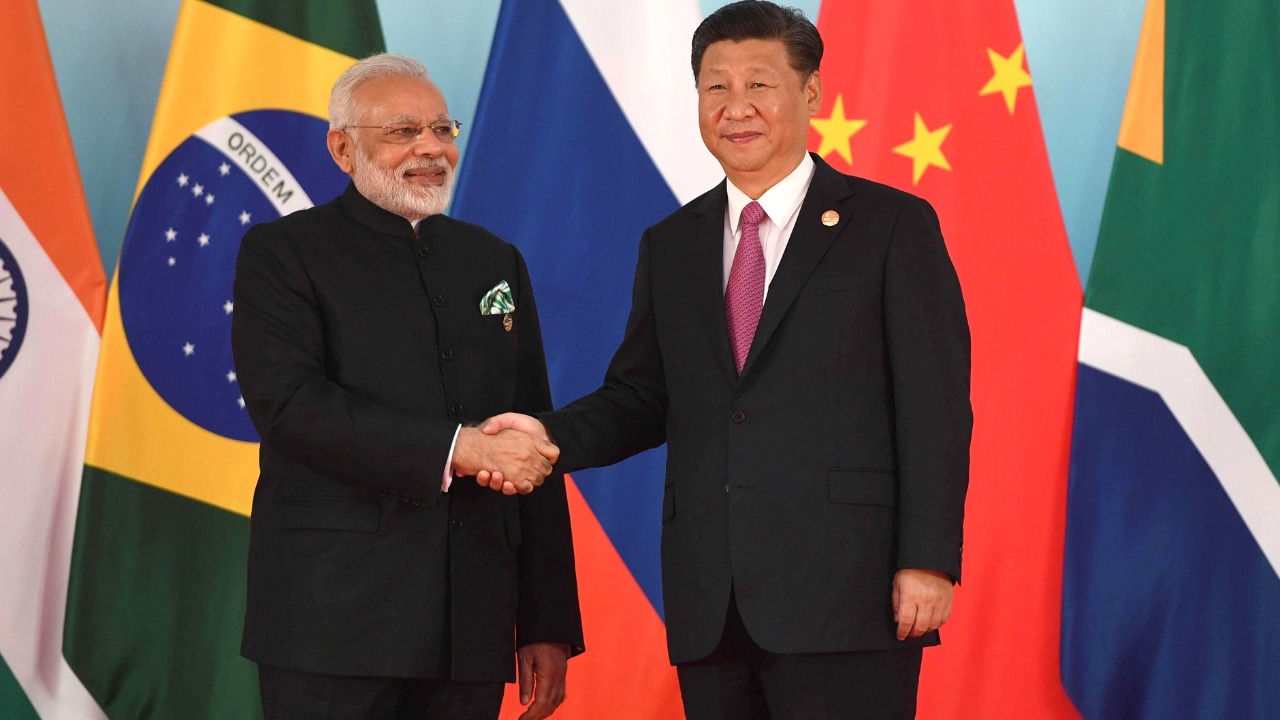

India is being cast as the only country with the scale, growth and political will to loosen China’s grip on the technologies needed for net zero, from solar modules to batteries and green hydrogen. The claim is bold, but it rests on a mix of rapid electrification at home, a push to build clean‑tech factories, and a global appetite for supply chains that do not run almost entirely through Chinese ports. Whether that promise is realised will depend on how quickly New Delhi can turn ambition into investment and industrial depth.
At stake is not just climate diplomacy but who captures the jobs, intellectual property and geopolitical leverage embedded in the energy transition. If India can build a second global hub for clean hardware, it could reshape trade flows and give governments and companies genuine choice over where they source the tools of decarbonisation.
Why China’s dominance is now a strategic risk
For more than a decade, China has been the default factory for the net zero economy, controlling large shares of global capacity in solar wafers and cells, battery materials and finished electric vehicle batteries. That concentration has delivered cheaper panels and storage, but it has also created a single point of failure in a world that is trying to electrify everything from cars to steel plants. When a leading green energy boss warns that the current system amounts to a “stranglehold”, the concern is not only commercial pricing power but the vulnerability of climate plans to trade disputes or geopolitical shocks that could disrupt Chinese exports.
The same executive argues that if governments genuinely want diversification, they need at least two locations with industrial scale from which they can reliably import clean‑energy hardware, rather than relying on one dominant supplier whose own decarbonisation push depends critically on domestic policy choices. That is where India can break into the picture, offering a vast labour pool, a large internal market and a government that has made clean energy manufacturing a strategic priority.
India’s green leap and the China comparison
India’s strongest argument for becoming the world’s alternative clean‑tech hub is its own energy transition record. The country is electrifying its economy faster and with fewer fossil fuels per person than China did at a similar stage of development, using cheap green technologies to connect households and industries that previously relied on diesel or biomass. That trajectory suggests a different development model is possible, one that does not repeat the coal‑heavy path that powered Chinese growth in earlier decades.
Analysts tracking this shift note that India is electrifying faster than China while burning far less fossil fuel per capita, and that this pattern is already visible in power‑sector data and per‑capita emissions. A separate assessment by Ember researchers frames this as a “green leap”, arguing that India and China now represent two distinct templates for emerging economies, one more compatible with global climate goals than the other.
The investment mountain: $145 Billion a year
Turning that domestic transition into global manufacturing heft will not happen on rhetoric alone. Energy analysts estimate that India needs around $145 billion every year in new energy investment to keep its economic growth on track while still meeting climate targets, a figure that covers generation, grids, storage and industrial decarbonisation. Without that scale of capital, the country risks bottlenecks in power supply and a continued dependence on imported technology, including from the very Chinese firms it is supposed to be balancing.
One detailed pathway sets out how India Requires US $145 Billion in Annual Energy Investment to Bridge Growth and Climate Targets Wood Mackenzie, warning that decisions taken in the next few years will lock in the country’s emissions and economic trajectory for decades. A companion assessment focused on domestic policy stresses that India positioned as an alternative supply‑chain hub can only seize that role if it scales domestic manufacturing and secures long‑term finance at reasonable cost.
From green hydrogen to gigafactories: closing the reality gap
One test of India’s seriousness is green hydrogen, which New Delhi has promoted as a future export industry and a way to decarbonise steel, fertilisers and heavy transport. The government has set a target of producing 5 million tonnes per annum of green hydrogen by 2030, but there is already a widening reality gap between that goal and the current project pipeline, with most announced plants still stuck in early feasibility stages. Unless permitting, grid connections and offtake contracts accelerate, the risk is that the headline number remains aspirational while other countries quietly build the first wave of large‑scale capacity.
Energy specialists tracking the sector warn that India’s 5 mtpa green hydrogen target for 2030 will only be credible if it is matched by clear policy on subsidies, land, water and export infrastructure. The same logic applies to batteries and solar components, where India is racing to build gigafactories and module lines that can compete with Chinese incumbents on both price and reliability.
Building the supply‑chain alternative
For India to genuinely loosen China’s grip on net zero technologies, it must move from being a fast‑growing energy consumer to a trusted exporter of clean hardware. That means deepening industrial clusters, improving logistics and ensuring that domestic firms can access the minerals and components they need at scale. It also requires a regulatory environment that gives foreign investors confidence that factories built in Gujarat or Tamil Nadu will not be stranded by sudden policy shifts or grid constraints.
There are early signs of this shift. Large conglomerates are committing billions of rupees to renewables and storage, including a recent decision by Tata Power invests 6,675 crore rupees in new solar and hybrid projects that will feed both domestic demand and, potentially, export‑oriented manufacturing. International observers increasingly describe India as a pivotal player in the global energy transition, one whose choices on tariffs, subsidies and industrial policy will help determine whether the world has a genuine alternative to Chinese clean‑tech dominance or remains reliant on a single, powerful supplier.
More from Morning Overview