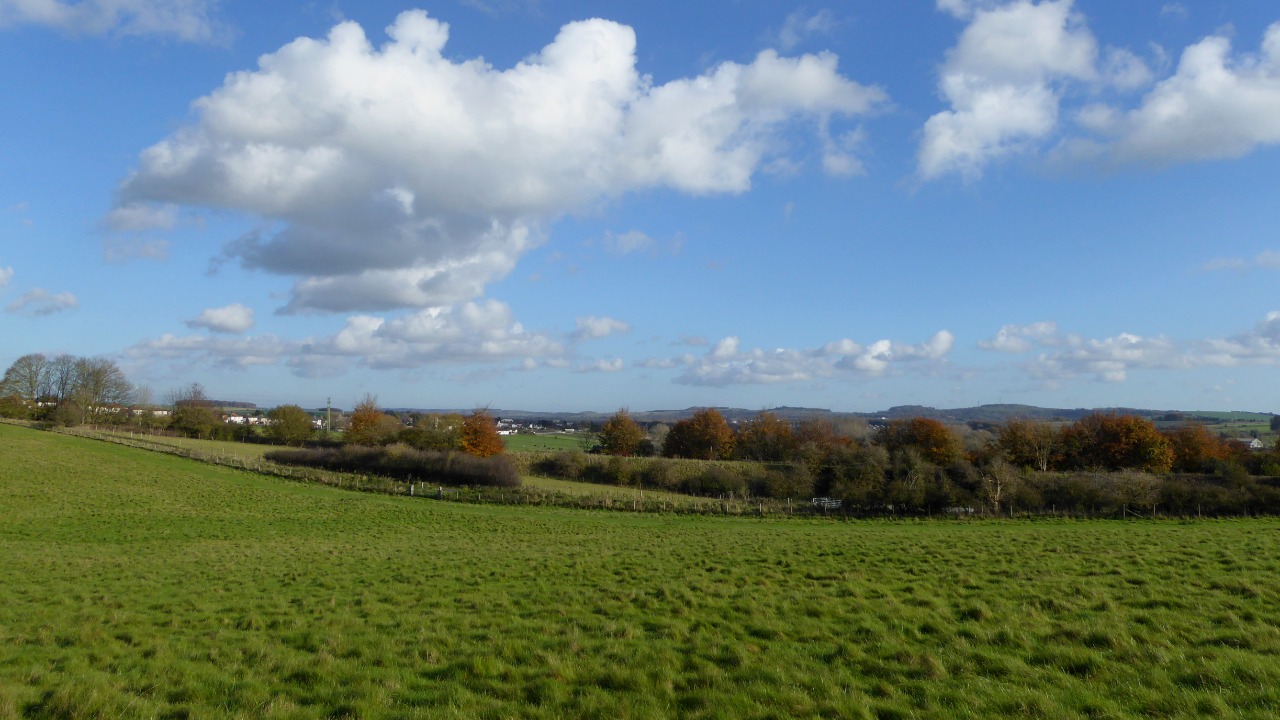

When archaeologists announced in 2020 that they had traced a vast ring of prehistoric pits encircling the Neolithic site of Durrington Walls, the find instantly reshaped how researchers think about the Stonehenge landscape. Five years on, that “huge prehistoric structure” is no longer a breaking discovery but a foundational reference point for understanding how people organized space, ritual and power on Salisbury Plain. I want to look back at what was uncovered, what scientists now think it means, and how this earlier revelation continues to influence debates about one of the world’s most studied ancient monuments.
The pit circuit, which stretches for kilometres around Durrington Walls and sits a short distance from Stonehenge itself, has emerged as a case study in how new technologies can transform a landscape that has been pored over for generations. By revisiting the evidence and the arguments that followed, I can trace how this single structure has forced archaeologists to reconsider everything from Neolithic engineering to the social networks that sustained such an ambitious project.
Revisiting a landmark 2020 announcement
When the pit ring was first reported in 2020, researchers framed it as one of the largest prehistoric structures ever identified in Britain, a claim that immediately raised the stakes for any discussion of Stonehenge’s wider setting. The feature consists of a broad circuit of deep shafts, each several metres across, that together define a monumental boundary around Durrington Walls, the vast Neolithic enclosure that already ranked among the most impressive earthworks on Salisbury Plain. At the time, the scale alone signalled that this was not a minor addition to the archaeological map but a discovery that demanded a rethinking of how the entire ceremonial landscape functioned.
Initial coverage highlighted how the pits, arranged in a ring several kilometres in diameter, appeared to have been laid out with striking regularity, suggesting deliberate planning rather than random natural hollows or later quarrying. Reports described the feature as a “massive prehistoric structure” and stressed that nothing comparable in size and design had previously been documented in Britain’s Neolithic record, a point underscored in early write‑ups of the Durrington Walls pit circuit. That framing, repeated across subsequent summaries, set the tone for the debate that followed: this was not simply another ring in a landscape of rings, but a structure that might rival Stonehenge itself in ambition.
What the pit ring actually looks like on the ground
On paper, the Durrington Walls feature is deceptively simple: a ring of large pits, spaced at intervals, forming a broad circle around an already monumental enclosure. In practice, the details are more complex and more revealing. Individual shafts are reported as being several metres wide and deep, with steep sides that would have required sustained labour to excavate using Neolithic tools. The ring’s diameter runs to several kilometres, so even a conservative count of pits implies the removal of an enormous volume of chalk and soil, all without metal implements or wheeled vehicles.
Descriptions of the fieldwork emphasize that the pits are not casual hollows but carefully positioned features that maintain a consistent distance from the centre of Durrington Walls, creating what amounts to a vast geometric frame in the landscape. Coverage of the original research notes that the circuit encloses both the henge and associated features, reinforcing the idea that the pits were part of a single, integrated design rather than a scatter of unrelated shafts. Accounts of the ring of deep Neolithic pits stress that their regular spacing and shared dimensions are central to the argument that this is a coherent structure, not a coincidence of erosion or later activity.
How archaeologists pieced the structure together
One of the most striking aspects of the Durrington Walls pit ring is that it was not discovered through a single dramatic excavation but assembled from layers of survey data, test trenches and reinterpreted records. Archaeologists working across the Stonehenge landscape had already mapped numerous anomalies around Durrington Walls using geophysical techniques, but it took a coordinated effort to recognize that many of these features lined up to form a single, enormous circuit. That process, combining remote sensing with targeted digging, reflects a broader shift in how large prehistoric sites are studied.
Reports on the project describe how ground‑penetrating surveys, aerial imagery and environmental sampling were used to identify and confirm the pits, with excavations then revealing their depth and profile. Rather than relying solely on traditional trenching, the team leaned on digital mapping to trace the ring’s full extent, a method that allowed them to see patterns that would have been invisible from a handful of isolated digs. Summaries of the work around Durrington Walls and its surrounding pits underline that this synthesis of technologies was crucial: the structure existed in the data before it existed in anyone’s interpretation, and only by stitching those datasets together did the ring emerge as a coherent monument.
Stonehenge, Durrington Walls and a reimagined ritual landscape
To understand why the pit circuit matters, it helps to place it within the dense cluster of Neolithic monuments on Salisbury Plain. Stonehenge, with its iconic sarsen circle and bluestones, sits a few kilometres from Durrington Walls, which is itself a massive henge enclosure with evidence of houses and feasting. For years, archaeologists have argued that these sites formed part of a connected ceremonial complex, linked by avenues and river routes along the Avon. The recognition of a huge ring of pits encircling Durrington Walls adds a new layer to that picture, suggesting that the enclosure was not just a settlement or gathering place but the focal point of a much larger, bounded sacred zone.
Analyses of the 2020 findings stress that the pit ring appears to mark a threshold between the interior of Durrington Walls and the wider landscape, potentially guiding movement or signalling a boundary that only certain people could cross. In that sense, the structure may have worked in concert with Stonehenge and other nearby monuments, creating a choreography of approach, entry and exclusion across the plain. Coverage of the largest known Neolithic boundary around Durrington Walls highlights how this interpretation elevates the enclosure’s status: rather than being a secondary site in Stonehenge’s shadow, it becomes the centre of its own monumental system, with the pit ring acting as a kind of outer curtain.
Interpreting purpose: boundary, warning or cosmological map?
Since 2020, debate has focused less on whether the pit ring is artificial and more on what it was for. One leading interpretation is that the circuit functioned as a boundary, a physical and symbolic marker that separated the intensely managed interior of Durrington Walls from the surrounding countryside. The sheer effort required to dig and maintain such pits would have made the boundary visible in both practical and ideological terms, signalling that those who passed inward were entering a controlled, perhaps sacred, space. In this reading, the pits might have been left open as dramatic voids, filled with water or deposits, or partially backfilled to create subtle but still meaningful markers.
Other researchers have suggested that the ring could have served as a kind of warning system, its deep shafts discouraging casual movement across the line and channelling people along specific routes into the enclosure. There are also more speculative ideas, including the possibility that the layout encoded cosmological principles or tracked celestial events, although direct evidence for such functions remains limited. Discussions of the possible roles of the Durrington Walls pit circuit tend to converge on one point: whatever its precise purpose, the structure reflects a level of planning and social coordination that pushes back against older images of small, loosely organized Neolithic communities.
What the pits reveal about Neolithic society and labour
Even without a definitive answer on function, the pit ring offers hard evidence about the capacities of the people who built it. Each shaft, several metres across and deep, would have required many hours of digging with antler picks and wooden tools, followed by the removal of heavy chalk spoil. Multiplied across the full circuit, that labour implies a workforce organized over a sustained period, with leaders able to coordinate tasks, supply food and tools, and maintain a shared vision of the project’s goal. The ring is, in effect, a fossilized record of social cooperation on a grand scale.
Analyses of the Durrington Walls complex already pointed to large gatherings, feasting and seasonal occupation, suggesting that people travelled significant distances to participate in events there. The addition of the pit circuit strengthens the case that this was a regional centre of power and ritual, drawing in communities from across southern Britain. Accounts that examine the scale of labour behind the Neolithic pits emphasize that such a project would have required not just manpower but shared beliefs strong enough to motivate people to dig deep shafts into hard chalk, with no immediate economic payoff. In that sense, the ring becomes a measure of ideology as much as engineering.
Technology’s role in rewriting a familiar landscape
The Durrington Walls pit ring has also become a showcase for how digital tools can transform even the most intensively studied archaeological regions. Salisbury Plain has been surveyed and excavated for more than a century, yet the full extent of the pit circuit only came into focus when researchers combined high‑resolution geophysics, lidar and GIS mapping. That experience has encouraged archaeologists to revisit other “known” landscapes with fresh eyes, looking for large‑scale patterns that might have been missed when attention was focused on individual monuments.
Reports on the project describe how subtle anomalies in geophysical plots, once dismissed as noise or isolated features, were reinterpreted as parts of a larger whole when mapped against one another. This kind of pattern recognition depends on both computing power and a willingness to question long‑held assumptions about what the data can show. Summaries of the digital mapping that revealed the ring structure underline that the discovery was as much methodological as material: the pits themselves had always been there, but only a new way of seeing allowed them to coalesce into a single, monumental design.
Scientific scrutiny, scepticism and ongoing questions
As with any major reinterpretation, the 2020 announcement prompted scrutiny from other specialists, some of whom questioned aspects of the dating, the uniformity of the pits or the strength of the boundary interpretation. Archaeology advances through such debate, and the Durrington Walls ring has been no exception. Critics have asked whether all of the identified shafts are truly Neolithic, whether some might be later features, and how confidently they can be tied to a single construction phase. Those questions do not erase the evidence for large, ancient pits, but they do shape how boldly researchers can claim a unified design.
Over the past five years, the pit circuit has moved from headline‑grabbing surprise to a more measured place in the scholarly conversation, where its details are tested against new data and alternative models. Some commentators have urged caution in labelling it the “largest” or “most significant” structure of its kind, noting that such superlatives can obscure the complexity of the archaeological record. Coverage that revisits the arguments around the Durrington Walls trenches reflects this shift in tone: the ring remains a major feature, but one that must be integrated carefully into a broader, evolving picture of Neolithic Britain rather than treated as a standalone marvel.
How the pit ring shapes Stonehenge research today
Five years after the initial reports, the Durrington Walls pit circuit continues to influence how archaeologists frame research questions around Stonehenge and its neighbours. Field projects now routinely consider whether new anomalies might form parts of large‑scale patterns, and there is greater interest in how boundaries, processional routes and zones of restricted access structured the experience of these landscapes. The pit ring has also encouraged more attention to Durrington Walls itself, not just as a supporting actor in Stonehenge’s story but as a central monument with its own monumental architecture and social role.
Public engagement has followed a similar trajectory, with documentaries, online explainers and site tours incorporating the pit circuit into their narratives about the Neolithic. Video features that walk viewers through the mapped ring around Durrington Walls help translate abstract survey plots into something more tangible, inviting audiences to imagine what it would have felt like to approach an enclosure encircled by deep shafts. That imaginative exercise, grounded in data but open to interpretation, is part of what keeps the structure relevant: it offers a new way to picture life, movement and belief in a landscape that many people thought they already knew.
Why this “huge prehistoric structure” still matters
Looking back from late 2025, the Durrington Walls pit ring stands as a reminder that even the most familiar archaeological settings can still yield surprises when examined with new tools and fresh questions. The structure itself belongs firmly to the Neolithic, and its identification as a coherent monument dates to 2020, not to any more recent campaign. Yet its implications continue to ripple outward, shaping how I and many others think about the organization of space, the scale of communal labour and the role of boundaries in prehistoric ritual life.
In that sense, the pit circuit has become less a “new discovery” than a reference point, a case that scholars return to when debating how to interpret large, enigmatic features elsewhere in Britain and beyond. Accounts that synthesize the evidence for the Neolithic structure near Stonehenge show how it now sits alongside Stonehenge, Durrington Walls and other monuments as part of a single, intricate story about how people in the fourth and third millennia BCE reshaped their world. The ring of pits may have been dug more than four thousand years ago and recognized as a structure five years ago, but its capacity to challenge assumptions about the past is very much alive.
More from MorningOverview