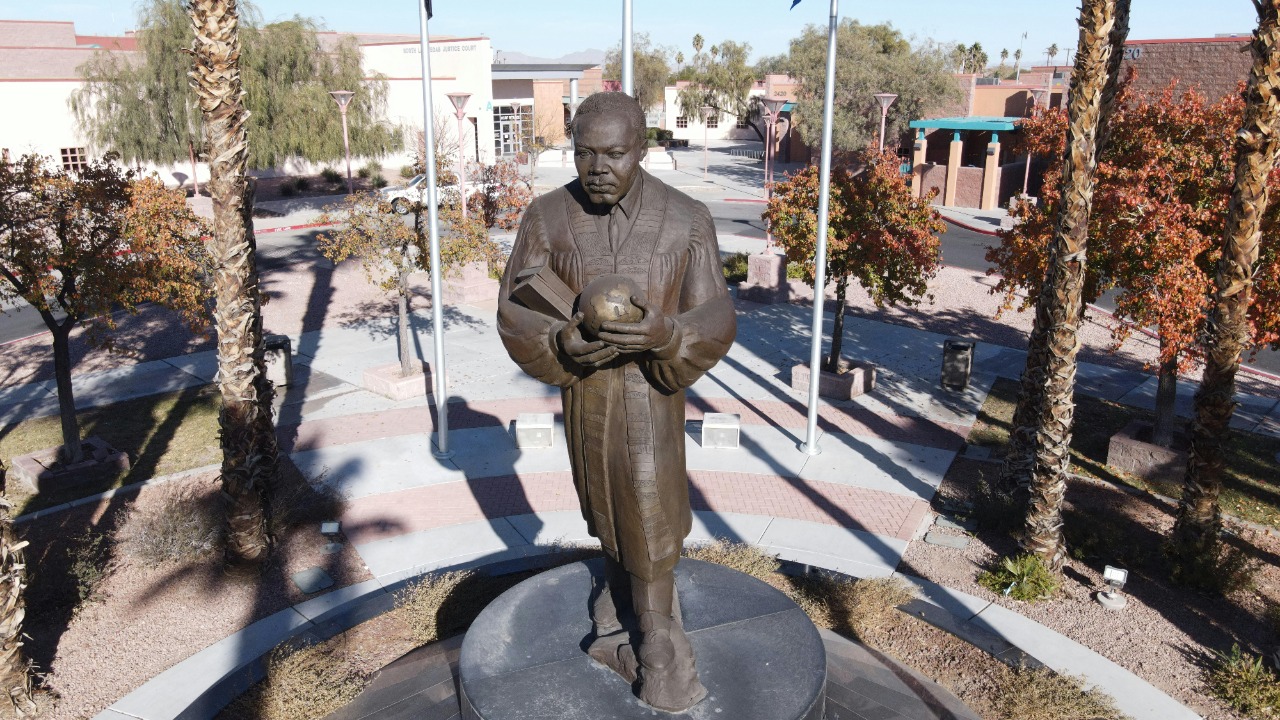

Across the United States, the 40th federal observance of Martin Luther King Jr. Day has collided with a volatile political moment, turning what was once treated as a feel‑good day of service into a stage for sharper demands. With President Donald Trump approaching the first anniversary of his second term in office on Tuesday, activists and institutions are treating the holiday less as a ritual and more as a referendum on whether the country is living up to the promises King laid out.
That tension is driving a new push to “reclaim” the day from sanitized quotes and corporate branding, and to root it again in the radical campaigns for voting rights, economic justice and demilitarized policing that defined King’s final years. The fight over how to mark MLK Day has become a proxy for a broader struggle over whose history counts and whose grievances are heard in today’s US politics.
The political backdrop: a holiday under pressure
The current debate over MLK Day is inseparable from the broader climate of polarization, racial backlash and democratic strain that has intensified during President Donald Trump’s return to the White House. Bernice King has described the holiday as a kind of “saving grace” in this environment, noting that it arrives just as President Donald Trump marks that first anniversary, and as many of King’s warnings about racism and militarism “ring more true today.” For organizers, that timing underscores why a holiday rooted in nonviolent resistance cannot be reduced to bipartisan photo‑ops.
At the same time, the 40th federal observance has prompted communities to reflect on how far the country has drifted from King’s agenda. On the milestone anniversary, cities and towns hosted parades, panels and service projects that were framed not just as celebrations but as stock‑taking of progress and backsliding, with local coverage emphasizing that On the 40th federal observance of Martin Luther King Jr Day, communities around the U.S. held events that doubled as civic report cards.
From day of service to day of resistance
For years, MLK Day has been branded as a “day of service,” with corporations and federal agencies encouraging volunteerism that often sidesteps King’s more confrontational politics. Activists now argue that this framing has blunted the holiday’s power, especially as voting rights are rolled back and racial inequities deepen. Coverage of national events notes that the U.S. political climate has pushed federal agencies, corporations and universities to reexamine whether their MLK programming matches their policies on issues like hiring, policing and campus speech.
That reassessment has been especially visible in coverage that describes how the U.S. political climate has spurred efforts to reclaim the MLK holiday, with U.S. political climate itself cited as the catalyst. Organizers are increasingly explicit that service projects must be paired with demands for structural change, from voting protections to police accountability, if they are to honor Martin Luther King Jr’s legacy rather than obscure it.
Grassroots “Reclaim MLK” campaigns
On the streets, the most visible expression of this shift is the rise of “Reclaim MLK” actions that treat the holiday as a launchpad for protest. In Oakland and other cities, the Anti Police‑Terror Project has built a 12th Annual Reclaim MLK tradition, organizing a Radical Legacy March and Week of Action under the banner “Reclaim MLK: The Radical Legacy Lives in the Streets.” The group’s messaging makes clear that it sees the holiday as a time to confront police violence and economic inequality, not simply to remember them.
Social media posts show how these efforts are coordinated months in advance. One organizer announced that “We’re building toward the 12th Annual Reclaim Dr Martin Luther King Jr Legacy March and Week of Action,” while another urged, “Greetings Community, Save the date for January 19, 2026,” as Greetings Community from The Anti Police Terror Project invited residents to the 12th Annual mobilization. These campaigns treat MLK Day as a recurring organizing anchor, with the Streets themselves framed as the proper venue for King’s unfinished work.
National coalitions and civil rights institutions
Alongside local organizers, national coalitions are reshaping the holiday’s tone. The Movement for Black Lives, a coalition of organizations affiliated with the Black Lives Matter movement, has planned events that explicitly connect King’s legacy to contemporary fights against police killings and voter suppression, with Movement for Black describing its MLK programming as part of a broader strategy to defend Black political power. Coverage of the current US political climate notes that this coalition is using the holiday to rally supporters around a shared platform rather than a single march.
Established civil rights institutions are also recalibrating. The NAACP, described as the nation’s oldest civil right organization, organized a myriad of MLK Day events for Monday and used the moment to assert that the holiday must be a time to confront ongoing threats to democracy, with The NAACP tying its message to voting rights and anti‑racist education. Other reports describe how Groups have called for a holiday of reclamation, education and rallying, with Groups explicitly rejecting a purely ceremonial approach.
Flashpoints: cancellations, shootings and backlash
The push to reclaim MLK Day has been sharpened by a series of flashpoints that reveal how contested the holiday has become. In Indiana, a school’s decision to cancel a historic MLK Day event, citing “budget constraints,” drew immediate criticism from students and alumni who saw the move as part of a broader pattern of erasing Black history, with coverage noting the Indiana controversy alongside Photos of a Martin Luther King Jr Day Parade in L.A. that went forward. A separate report detailed how a Black Student Union at another institution was told the same “budget constraints” explanation, but the group said the reasoning reflected deeper political choices, a point echoed by Black Student Union leaders who challenged the official narrative.
Violence has also intruded on the commemorations. Earlier this month, the fatal shooting of an unarmed Minneapolis woman in her car by Immigration and Customs Enforcement agents sent there for an operation became a rallying point for MLK events that focused on state violence, with reports describing how the killing in Minneapolis by Immigration and Customs Enforcement agents helped spark a wave of resistance and rallies nationwide. Organizers framed the tragedy as a grim reminder that King died while confronting police violence and that any honest observance of his holiday must grapple with similar abuses today.
More from Morning Overview