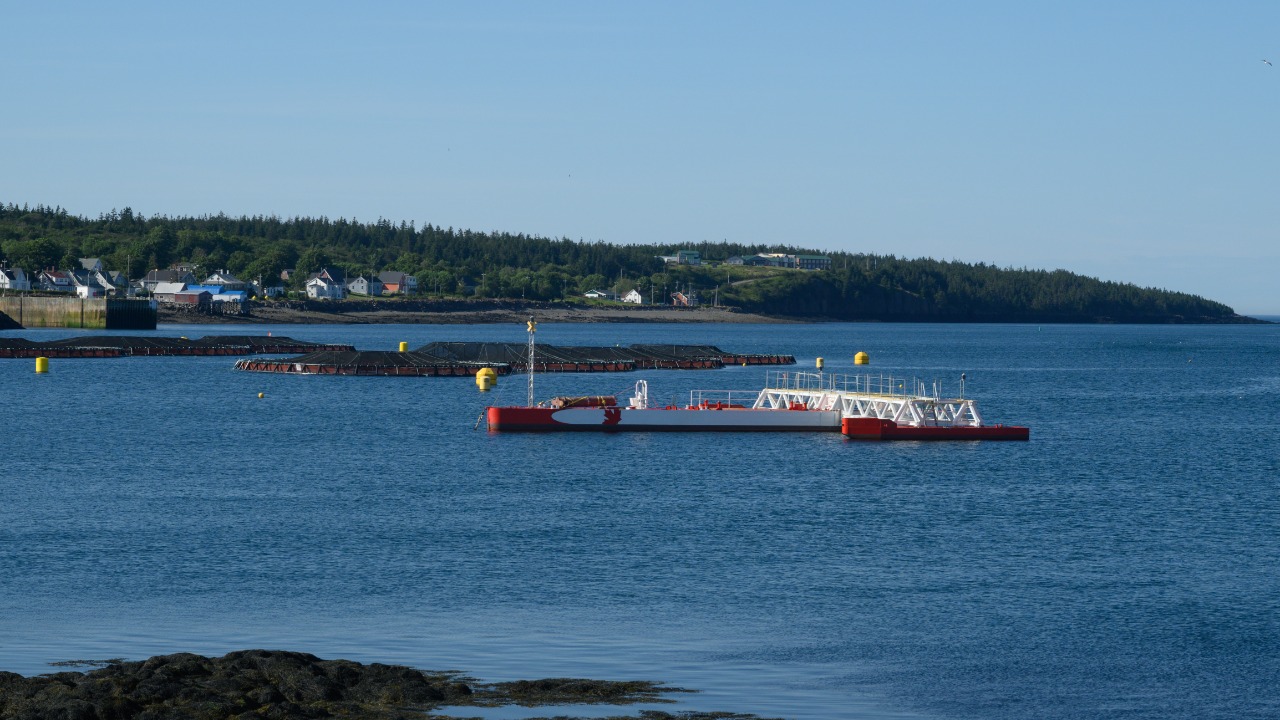

The world’s coastlines are quietly holding one of the most disruptive energy shifts of the century. Tidal and wave technologies promise not just another clean power option, but a way to turn the ocean’s relentless motion into a stable backbone for renewable grids that now lean heavily on sun and wind. If they scale, they could recast marine margins from climate risk zones into powerhouses of predictable, zero‑carbon electricity.
I see the stakes in simple terms: whoever learns to harvest this motion at cost and at scale will gain a new class of baseload renewables that do not wait for clear skies or steady breezes. That prospect is already drawing engineers, investors and coastal communities into a race to turn prototypes into infrastructure and to prove that the ocean can power homes without sacrificing marine life.
Why the ocean’s motion is such a powerful energy resource
The basic physics behind tidal and wave power is brutally simple: huge masses of water are moving, all the time, and that motion carries energy that can be converted into electricity. Tidal energy draws on the natural rise and fall of the sea surface created by the gravitational pull of the moon and sun, while wave systems tap the rolling swells driven by wind across the ocean. Unlike intermittent gusts or passing clouds, these cycles follow celestial mechanics and large‑scale weather, which makes them far more predictable on daily and seasonal timescales.
That predictability is paired with density. As High energy density advocates like to point out, Water‘s density being 800 times greater than air allows turbines and converters to extract far more power from a smaller swept area than comparable wind machines. That is why They are often framed as a high‑value complement to existing renewables rather than a niche curiosity, especially in narrow straits and estuaries where currents accelerate.
How tidal and wave systems actually work
At its core, tidal power comes in a few main flavors. Classic barrages act like low dams across estuaries, capturing water at high tide and releasing it through turbines at low tide, but newer designs focus on in‑stream turbines that sit directly in tidal currents and on coastal lagoons that impound water along shorelines. What engineers prize is that these Tidal phenomena are stable and rarely experience unexpected changes, which lets grid operators schedule output days or even years in advance.
Coastal lagoon concepts are particularly interesting because, as one explainer notes, Unlike barrages they can be placed along natural coastline formations to reduce ecological disruption while still relying on a large tidal range to generate power. On the wave side, devices range from point absorbers that bob up and down to long attenuators that flex with swells and oscillating water columns built into breakwaters. A review of Hybrid floating breakwater‑WEC systems shows how Wave Energy Converter designs can be integrated into coastal protection, even if, as that same work notes, Although many concepts still struggle with cost.
From niche experiments to serious grid players
For years, marine energy sat in the shadow of cheaper solar panels and fast‑scaling wind farms, but that balance is starting to shift. A recent Size Overview of the global waves and tidal energy market estimates that it reached $983.11 m, or $983.11 million, on the back of improved efficiency and scalability in commercial devices. That is still tiny compared with global solar or wind, but it signals that wave and tidal projects are moving out of the lab and into early markets.
Policy support is following. A call to Call for investment urges governments and companies to Channel the power of the ocean by deploying more converters, arguing that Wave and Tidal can complement other types of renewable energy rather than compete with them. In the United States, an assessment of Tidal Power in the U.S. Today notes that However limited current deployment may be, planners already see a path to larger arrays that balance capacity and safety.
Why predictability could flip the renewable script
Solar and wind have won on cost, but they still force grid operators to juggle variability with storage and backup plants. Tidal currents, by contrast, result from the gravitational forces exerted by the moon and sun, leading to cyclic patterns that can be forecast with precision decades ahead. That is why analysts who focus on Understanding Tidal Power describe Tidal power as a reliable complement to other renewables, ideal for smoothing out the peaks and troughs of wind and solar output.
Wave energy offers a different kind of stability. Offshore, WAVES TRANSMIT ENERGY, NOT WATER, which means the swells can carry power over long distances even when local winds are calm. Advocates argue that Generation after generation has kept trying to harness this because wave energy is among the most abundant and reliable marine resources. One analysis of how waves could quietly overtake solar and wind notes that if you add up every crashing swell, the ocean carries more energy than the roughly 30,000 terawatt hours humans consume each year, a reminder of just how oversized the resource is compared with demand.
The innovators betting on a marine energy breakthrough
Behind the physics and forecasts are entrepreneurs and engineers trying to turn prototypes into bankable projects. In Jun, Inna Braverman, co‑founder and CEO of the Israeli startup Eco Wave Power, argued that early wave‑power pioneers failed by chasing deep‑water machines instead of simpler near‑shore systems that can bolt onto existing infrastructure. Her company’s devices attach to harbor walls, letting them piggyback on built ports rather than fight the full violence of the open ocean.
On the tidal side, utilities and policymakers are starting to treat marine currents as a serious planning option. A blog on Tidal Energy argues that Future of Renewable will include coastal projects that cut emissions and help reduce dependence on fossil fuels. Video explainers from creators like Matt Frell on the channel Undecided and other pieces on How Waves Could are helping mainstream audiences understand that wave energy is part of the hydropower family tree, not a science‑fiction outlier.
More from Morning Overview