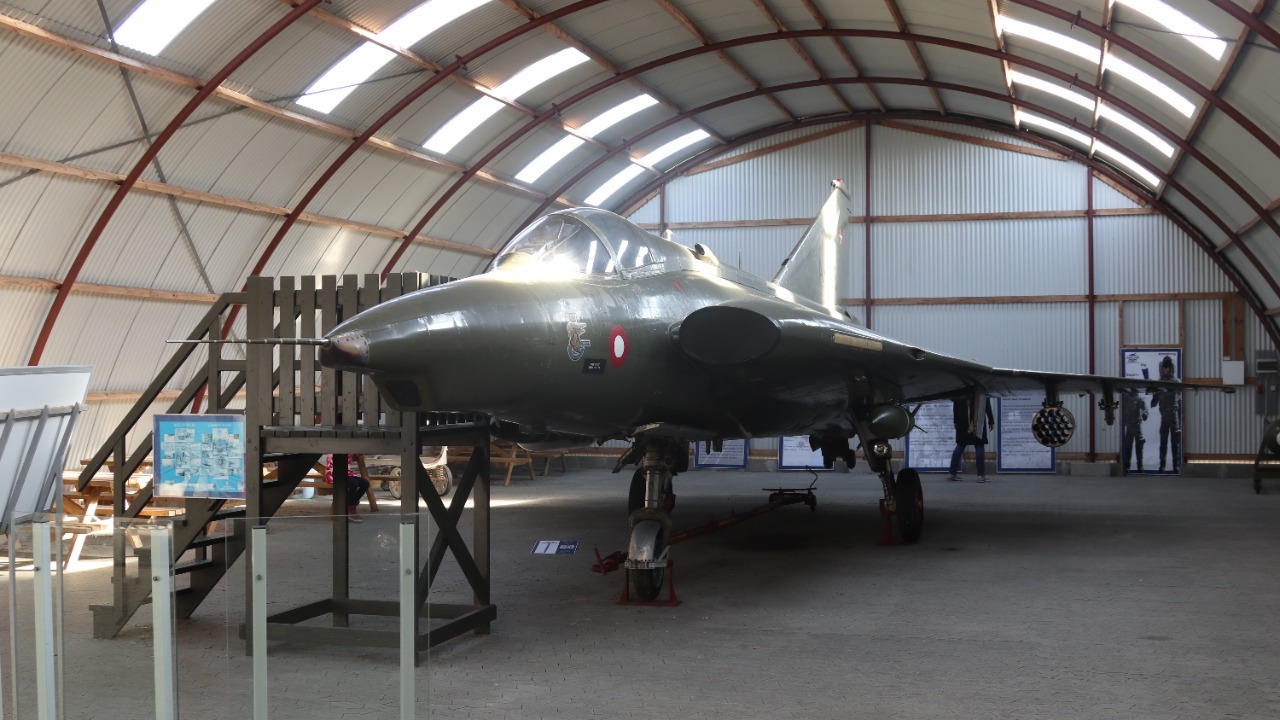

The Saab 35 Draken was built to sprint at Mach 2 in the thin air over Scandinavia, yet its real legacy is how a small, pragmatic air arm used it to challenge assumptions that still shape the F-35 program. By revisiting the Draken’s mix of speed, simplicity and national control, I can trace a quiet argument running through today’s debates over stealth fighters, industrial policy and who really benefits from trillion‑dollar aircraft projects.
That argument is not nostalgia for a cold war delta, but a pointed comparison: a compact, exportable interceptor that gave a minor power strategic autonomy versus a sprawling, software‑heavy system that ties dozens of countries into a single supply chain. The way the Draken was conceived, flown and remembered sends a message about what airpower is for, and who it should serve, in the age of the F-35.
From Flying Barrel to Double‑Delta: Sweden’s Unlikely Jet Lineage
To understand what the Draken was saying to the future, I start with the jet that came just before it, the Saab 29 “Flying Barrel,” which proved that a neutral, mid‑sized country could design a frontline fighter on its own terms. That stubby, swept‑wing aircraft showed how Swedish engineers could absorb global aerodynamic trends, then adapt them to local geography and doctrine rather than simply importing foreign designs. The story of the Saab 29 has already been used as a pointed comparison with the F-35, highlighting how a compact national program can still send a “big message” to a much larger, multinational project, as detailed in an analysis of the Flying Barrel fighter.
The Draken took that lineage and pushed it into the supersonic era, with a double‑delta wing and a design brief that demanded blistering climb rates from short, dispersed runways. Where the Saab 29 had been about proving Sweden could build jets at all, the Draken was about proving it could build something tailored to its own air defense concept, even as bigger powers chased ever more complex multi‑role platforms. That continuity from Flying Barrel to Draken is what makes the comparison with the F-35 so sharp: both Swedish jets were built to answer specific national problems, while the F-35 is built to be everything to everyone.
Mach 2 on a Budget: What the Draken Actually Did Well
The Draken’s headline number, Mach 2, mattered less than how it reached that speed within a tightly constrained budget and industrial base. Swedish planners wanted an interceptor that could get off short strips, climb hard into the thin northern air and meet Soviet bombers before they reached key targets, all while remaining maintainable by conscripts in dispersed bases. The resulting aircraft was not just fast, it was optimized: a relatively small airframe, a powerful engine, and a focus on high‑altitude performance rather than every possible mission profile, a philosophy that stands in contrast to the F-35’s sprawling requirements.
That focus has given the Draken a second life in the public imagination, where its clean lines and purposeful design are celebrated far beyond Sweden’s borders. Even a modern watchmaker has built an entire product around the jet’s silhouette and history, using the story of the Mach 2 interceptor to market a themed timepiece that leans on the aircraft’s distinctive double‑delta wing and cold war mystique, as seen in a profile of the Saab 35 Draken. The fact that a relatively modest fighter can still anchor that kind of branding underscores how clearly it embodied its design brief, something the F-35, with its diffuse mission set, struggles to match in the public mind.
Industrial Pride vs Global Supply Chains
One of the sharpest contrasts between the Draken era and the F-35 age lies in how each aircraft is used to tell a story about national industry. Sweden used the Draken as proof that its domestic aerospace sector could deliver a complete, sovereign capability, from airframe to weapons, without depending on foreign supply chains that might be cut in a crisis. The jet was a flying advertisement for Swedish engineering, but it was also a practical guarantee that Stockholm controlled its own upgrades, data and export decisions.
The F-35, by design, tells a different story, one of interdependence and shared production lines spread across partner nations. That narrative has been pushed so hard that even small components have become marketing talking points, with social media users noting how official messaging sometimes highlights that only a minor part of the fighter is made in a given country, as in a post dissecting how “some small part of the F-35 is made” in a particular location on Threads. Where the Draken symbolized concentrated national capability, the F-35 is used to symbolize participation in a vast, often opaque industrial ecosystem, which can dilute both accountability and pride.
What a Vintage Jet Says About Modern Risk
Looking back at the Draken also highlights how much the risk profile of fighter programs has changed. Sweden’s Mach 2 interceptor was advanced for its time, but its technology stack was relatively contained, with analog systems and a limited electronic footprint that reduced the attack surface for espionage and cyber intrusion. The main security concern was physical: keeping the aircraft and its documentation out of hostile hands, a challenge that could be managed with traditional counterintelligence and export controls.
The F-35, by contrast, is as much a flying software platform as it is an airframe, and that makes its secrets both more valuable and more vulnerable. Concerns about technology leakage are no longer hypothetical, with a former United States general warning that China is actively targeting F-35 data and intellectual property as Washington reviews potential sales to partners such as Saudi Arabia, a risk highlighted in reporting on how Beijing seeks F-35 secrets. The Draken’s relative simplicity did not make it safe, but it did keep the stakes of a compromise more bounded, a contrast that underscores how the F-35’s complexity amplifies both capability and vulnerability.
Culture, Coaching and the Cost of Complexity
The way organizations manage complex systems often comes down to leadership and culture, whether on a basketball court or in a fighter program. When a head coach steps away from a college team, the reasons can range from performance to institutional fit, but the impact is always felt in how players adapt to new expectations and systems. A recent example came when women’s basketball coach Kate Findlay resigned from her role at Macalester College, a change that was reported in detail as the program adjusted to life after Kate Findlay resigns. That kind of transition illustrates how even a relatively small organization can struggle when a central figure in a complex operation departs.
The F-35 program operates on a far larger scale, but it faces a similar challenge: sustaining a coherent culture and clear accountability across multiple services, partner nations and contractors. The Draken program, by contrast, was compact enough that design choices, maintenance practices and operational doctrine could be aligned within a single national ecosystem, much like a team built around one coaching philosophy. When I compare the two, the Swedish jet’s smaller footprint looks less like a limitation and more like a deliberate choice to keep complexity manageable, a lesson that resonates far beyond aviation.
Public Perception, Memes and the F-35 Backlash
Modern fighters do not just live in hangars and briefing rooms, they live in memes, viral posts and online arguments that shape how taxpayers and voters see them. The Draken, long retired from frontline service, has benefited from this shift, emerging as a kind of cult favorite in aviation circles where its sharp profile and cold war pedigree make it a natural subject for enthusiast threads and nostalgic commentary. Its reputation is largely positive, framed by admiration for its performance and the clarity of its mission rather than by cost overruns or software delays.
The F-35 has had a rougher ride in that same arena, where critics seize on every glitch, grounding or budget figure to question the program’s value. Social media posts often distill complex procurement debates into sharp, shareable lines, such as a widely circulated comment on X that uses a single image and caption to contrast older, purpose‑built fighters with the F-35’s sprawling ambitions, as seen in a post by GrecianFormula. The Draken’s message to the F-35 in this context is not that old jets were perfect, but that clarity of purpose tends to age better than grand promises, especially once the internet gets involved.
Security, Secrecy and the Limits of Transparency
Both the Draken and the F-35 sit at the intersection of public accountability and necessary secrecy, but the balance has shifted dramatically over time. During the Draken’s heyday, much of its performance envelope and operational doctrine remained classified, yet the basic contours of the program were straightforward enough that citizens could grasp what they were paying for: a fast interceptor to defend national airspace. The opacity was focused on tactics and technical details, not on the overall rationale or structure of the project.
Today, the F-35’s labyrinth of contracts, software baselines and data rights can make even basic questions about cost, capability and control hard to answer, which in turn fuels suspicion and conspiracy theories. That dynamic is visible in the broader online ecosystem, where discussions of classified systems and secret programs sometimes spill into dubious or satirical corners, including sites that trade on the language of “known passwords” and hidden access, as hinted at by a page labeled known_pass1. The Draken’s relative transparency about its purpose, if not its every parameter, stands as a reminder that secrecy works best when the public can still see the outline of what is being done in their name.
More from MorningOverview