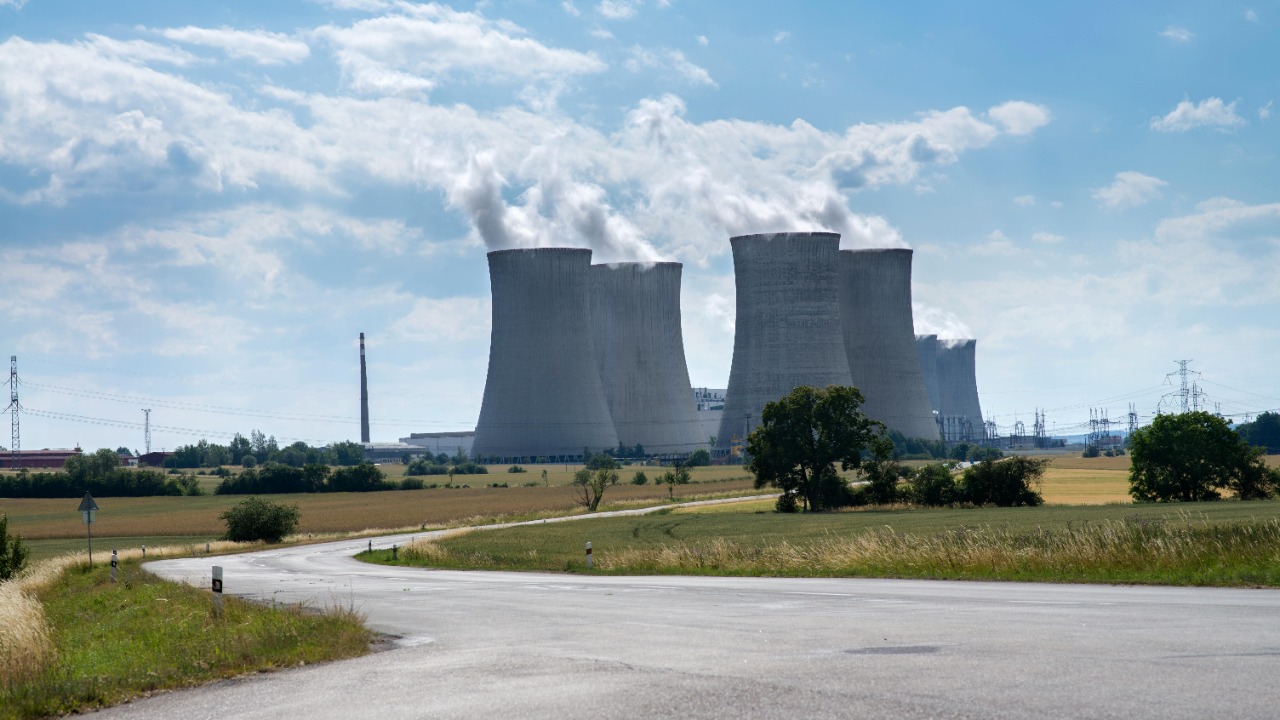

Artificial intelligence is often sold as a tool to speed the clean energy transition, but the technology’s own appetite for power is pulling the grid in the opposite direction. As companies race to build bigger models and more data centers, they are locking in new fossil fuel demand at the very moment climate goals require the opposite. The result is a feedback loop in which AI both drives up energy use and helps the fossil fuel industry find and extract more oil, gas, and coal.
I see a widening gap between AI’s green marketing and its physical footprint. From the grid upgrades being designed to “win the AI race” to algorithms that promise to unlock an extra trillion barrels of oil, the infrastructure behind machine learning is increasingly intertwined with a fossil fuel boom that could reverberate for decades.
AI’s data center boom and the strain on the grid
The most visible front line of AI’s energy impact is the explosion of data centers that train and run large language models and other intensive systems. Analysts warn that Data centers could represent up to 12% of total U.S. electricity demand by 2028, consuming as much as 580 terawatt-hours per year, a scale that rivals entire industrial sectors. That surge is not happening in a vacuum, it is landing on a grid that is already struggling to connect new renewable projects and keep up with rising loads.
Globally, International Energy Agency projects that by 2026, data centers will consume more than 800 terawatt-hours annually, more than double their consumption in 2022, and the agency notes that AI is a major driver of that growth. In the United States, the EIA expects overall power use to hit record highs in 2025 and 2026, with AI-heavy data centers singled out as a key factor. According to the 2026 Data Center Power, power availability itself has become a defining boundary for new server farms, a constraint that is already reshaping where AI infrastructure can be built.
Why more AI often means more fossil fuels
In theory, AI workloads could be powered entirely by wind, solar, and storage, but the speed of deployment is pushing utilities back toward coal and gas. Under Current state and federal climate and energy policies, one analysis finds that meeting data center demand will increase reliance on fossil fuels, because clean projects are not being built and connected fast enough. Surging electricity demand driven by artificial intelligence is already being blamed for pushing climate targets out of reach, extending the life of existing fossil plants that might otherwise retire.
On the ground, that dynamic is visible in places like Wisconsin, where Under current policies, the Union of Concerned Scientists warns that data center demand could cost the state’s energy system billions and create an overreliance on fossil fuels as utilities scramble to meet new loads. Nationally, some utilities are already proposing new gas capacity to serve AI clusters, and Some are signaling that they will lean on existing coal plants for years to meet that demand. The result is that AI’s growth is not just adding electrons to the grid, it is shaping the mix of fuels that produce them.
Policy choices: racing for AI, or racing for clean power
Federal policy is now explicitly tying grid expansion to AI competitiveness. Department of Energy has launched the Speed to Power initiative to accelerate the buildout of transmission and other infrastructure in order to “win the AI race,” a framing that risks prioritizing fast megawatts over clean ones. If that buildout leans on gas pipelines and life extensions for coal, the program could hardwire fossil dependence into the digital economy for decades. At the same time, climate advocates argue that Speed to Power could instead be used to unlock more wind and solar if regulators insist on clean energy over costly coal bailouts.
Local permitting fights are becoming another flashpoint. In Kansas, a report on Army Corps Reissues Track Permits That Endanger Streams and Wetlands warns that new shortcuts for data centers could damage waterways while speeding fossil-heavy grid connections. Political backlash is also mounting: a social media post notes that Ron DeSantis and Bernie Sanders are both pushing back against the data center boom, citing Rising electricity costs and risks to grid stability as voter anger grows ahead of the 2026 midterm elections. Those cross-ideological critiques suggest that the politics of AI power demand could shift quickly if communities feel they are being asked to subsidize corporate compute with higher bills and more pollution.
How AI is supercharging fossil fuel extraction
Even as AI drives up electricity demand, it is also making it easier and cheaper to find and produce fossil fuels. Reporting on the U.S. resource push notes that AI is turbocharging the hunt for minerals and hydrocarbons, with By Ian M. Stevenson and Hannah Northey detailing how Federal agencies are using machine learning to assess drilling and mining opportunities. Their account notes that artificial intelligence could be the key to unlocking new oil and gas fields, as well as geothermal and environmental monitoring, by processing seismic and geological data at a scale humans cannot match.
Industry boosters are even more explicit about the upside. One analysis from What can AI bring to the party argues that algorithms can help operators wring substantially more oil out of producing reservoirs and quantify the remaining potential in existing fields, effectively unlocking an extra trillion barrels. Another piece, highlighted by Related coverage on Resilient Oil Demand Turns AI into a Transition Enemy, cites Wood Mackenzie’s view that artificial intelligence could help the industry identify and produce barrels that were previously uneconomic, turning AI into a boost for global oil demand rather than a bridge to net zero. In parallel, Companies are touting AI’s improved exploration and production efficiency, training algorithms on massive amounts of geological data to identify previously unknown reservoirs and optimize drilling.
Beyond servers: AI’s wider energy footprint and possible off-ramps
The energy story does not stop at server racks. AI is embedded in electric vehicles, logistics, and manufacturing, each with its own power demands. A corporate analysis notes that Autonomous vehicles, powered by AI, require extensive charging infrastructure, while smart factories use machine learning to optimize operations, all of which increases electricity use that traditional energy sources, including oil, are currently filling. A separate overview of the sector points out that the rapid growth of AI has sparked a critical dialogue about its energy footprint, with The rapid growth of AI blamed for straining grids and slowing the adoption of renewable sources when fossil plants are kept online to backstop new loads.
At the same time, there are pathways to blunt AI’s fossil impact if policymakers move quickly. The Union of Concerned Scientists argues that powering data centers with clean energy could avoid trillions in climate and health costs, and its analysis stresses that aligning AI growth with aggressive wind and solar buildouts is still possible. A student commentary citing According to Yale School of The Environment warns that Artificial Intelligence is using fossil fuels to power servers and that these fuels are killing the planet, a stark reminder that public perception is shifting. Even industry leaders acknowledge the stakes: an interview clip notes that As 2026 begins, the artificial intelligence industry is being reshaped by geopolitical shifts and regulatory battles, with large language models moving deeper into Silicon Valley products. If regulators, utilities, and tech firms treat energy as central to that reshaping rather than an afterthought, AI does not have to lock in a fossil fuel boom, but the window to make that choice is closing fast.
More from Morning Overview