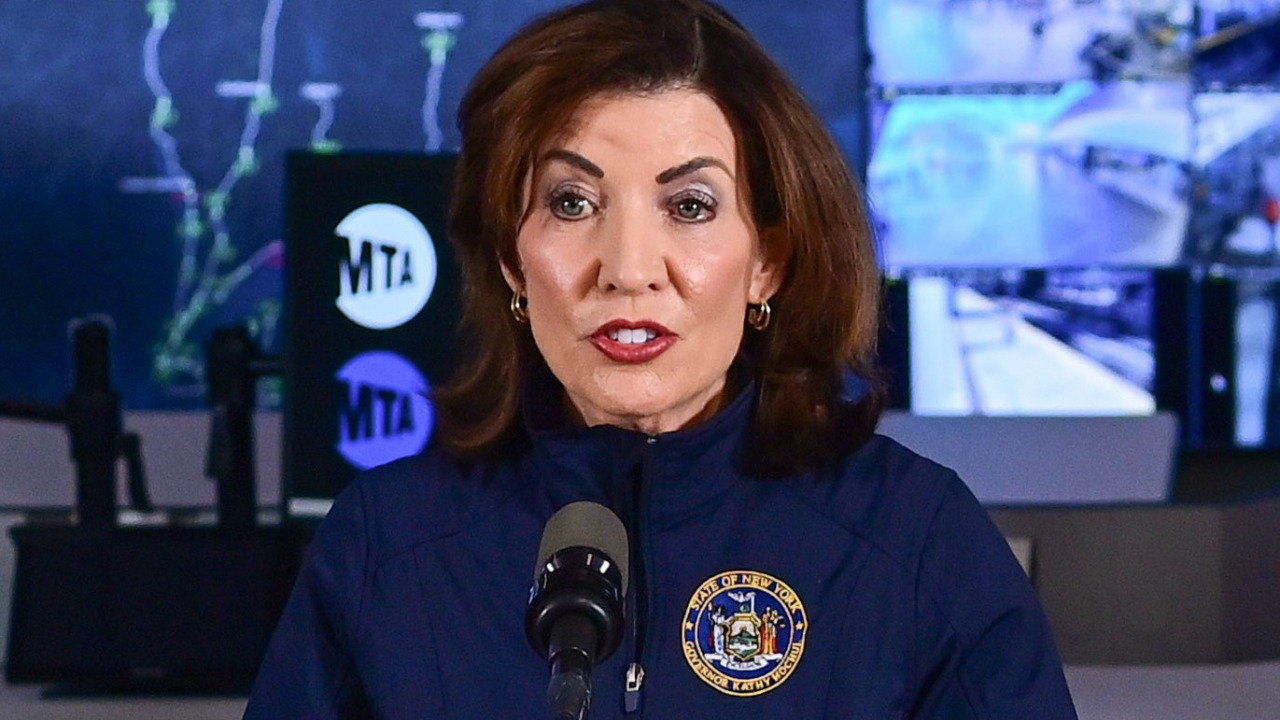

New York’s power debate has a new villain: the artificial intelligence data center. Gov. Kathy Hochul is warning that these facilities could devour gigawatts of electricity and send household bills soaring, even as her own climate mandates and past policy choices have already driven costs higher. The clash between rhetoric and reality is fueling anger among ratepayers, lawmakers, and industry alike, who see a governor blaming tomorrow’s technology for problems rooted in yesterday’s decisions.
At stake is whether New York treats the coming wave of AI infrastructure as a scapegoat or as a tool to revive struggling regions and modernize the grid. The way Hochul frames the issue, and the way she proposes to tax and regulate these projects, will determine whether the state attracts investment or scares it away while residents keep paying more for the same unreliable service.
Hochul’s AI warning and the “gigawatt” narrative
Gov. Kathy Hochul has begun sounding the alarm about what she portrays as a looming surge in electricity demand from AI and cloud computing, casting data centers as a threat to the grid and to family budgets. In her recent messaging, she has leaned on images of “gigawatt” scale consumption and suggested that unchecked growth in these facilities could push electricity costs “into the stratosphere,” a framing that has quickly seeped into public debate about energy and technology in New York. Critics argue that this narrative, amplified in commentary on her gigawatt rhetoric, exaggerates the role of AI while downplaying the state’s own responsibility for high prices.
In that telling, Hochul is not simply warning about future demand, she is repositioning AI as the main culprit for a crisis that has been building for years. Her language about a “coming artificial-intelligence boom” that will overwhelm the system invites residents to see every new server hall as a direct hit to their wallets. Yet the same commentary that dissects her claims points out that New York’s grid has long struggled under the weight of policy-driven costs, and that blaming data centers risks distracting from the structural reforms needed to keep power both reliable and affordable.
The “Energy NY Development” push to make data centers pay more
Hochul’s rhetoric is not just talk, it is being translated into policy proposals that would single out AI and data facilities for higher charges. Her administration is promoting an “Energy NY Development” framework that would require large computing hubs to pay more as they “tax” the grid, effectively treating them as a special class of heavy user rather than as one more industrial customer. Reporting by Carl Campanile details how Gov. Hochul wants New York AI and data centers to shoulder extra costs, with the governor arguing that these projects should fund upgrades and capacity expansions that their power needs might require. The plan, as described in that Energy NY Development coverage, would formalize the idea that AI growth is a burden first and an opportunity second.
Supporters of the approach say it is only fair that companies running power-hungry AI models help pay for the infrastructure they rely on, especially when those models serve global clients rather than just New Yorkers. But I see a risk that the state is building a policy architecture on a shaky premise, one that assumes data centers are uniquely harmful rather than potentially grid-stabilizing if paired with new generation and storage. By framing the issue as “they tax the grid, so they must pay more,” Hochul is setting up a political fight in which any concession to AI developers can be painted as a giveaway, even if those projects bring jobs, tax revenue, and investment in cleaner power.
Lawmakers, advocates, and the fight over who really drives bills higher
Hochul’s focus on AI has not gone unchallenged in Albany. At a hearing at the state Capitol, lawmakers and advocates pressed the administration on how large data centers might affect what residents pay for electricity, and whether the governor’s narrative matches the underlying numbers. In that session, which featured testimony and questions captured in a video that thanks Bria for moderating, participants dug into how these facilities would connect to the grid, what kind of contracts they would sign, and how costs would be allocated. The Bria hearing underscored a central tension: whether AI is being used as a convenient foil while deeper drivers of high bills remain untouched.
Advocates at the hearing argued that the state’s existing policies already load significant expenses onto ratepayers, from transmission upgrades to mandated renewable purchases, and that simply tacking on new surcharges for data centers will not fix that. Some lawmakers questioned whether the governor’s approach risks chasing away investment that could help modernize the grid, especially in regions that have lost manufacturing and now see AI infrastructure as a rare growth opportunity. The debate revealed a growing skepticism toward the idea that New Yorkers must choose between affordable power and technological progress, and a desire to scrutinize the governor’s claims rather than accept them at face value.
Environmental mandates, past decisions, and New Yorkers’ soaring bills
To understand why Hochul’s framing has sparked such outrage, it helps to look at what has already happened to electricity costs in the state. Environmental rules, taxes, and climate mandates have all contributed to putting New Yorkers’ electric bills “on steroids,” as one analysis put it, long before AI data centers became a political talking point. Those policies include aggressive timelines for closing fossil fuel plants, requirements for renewable procurement, and a complex web of surcharges that show up on monthly statements. The same critique notes that while Hochul now warns about “massive” new loads from AI, her administration has not ensured that enough generation is being built to meet rising demand, leaving the grid more fragile and expensive. That context is central to the argument laid out in the Environmental rules critique of her policies.
Residential electricity rates have been surging across New York since 2019, a trend that cannot be pinned on AI, which only recently emerged as a large-scale power user. Reporting on the state’s energy crunch notes that COVID-related disruptions played a role in pushing costs higher, but that even after those shocks eased, prices kept climbing as the state continued to subsidize certain projects and mandates. The analysis of Residential rates in New York highlights how these structural choices, not AI, have driven the long-term upward trajectory. When Hochul now points to data centers as the main threat, many New Yorkers who have watched their bills rise for years see a disconnect between the story they are being told and the reality they live every month.
Upstate opportunity, shuttered plants, and the risk of chasing AI away
While Hochul warns about AI’s power appetite, developers are eyeing upstate New York as a prime location for new facilities, precisely because of its existing infrastructure and relatively low-cost power. Shuttered coal plants and defunct manufacturing sites offer large parcels of land with grid connections already in place, making them attractive for large-scale data center proposals that could bring jobs and tax revenue to communities that have struggled since heavy industry left. A detailed look at how Shuttered coal plants are being repurposed shows how AI infrastructure could anchor a new phase of economic development in regions that have long been left behind.
More from Morning Overview