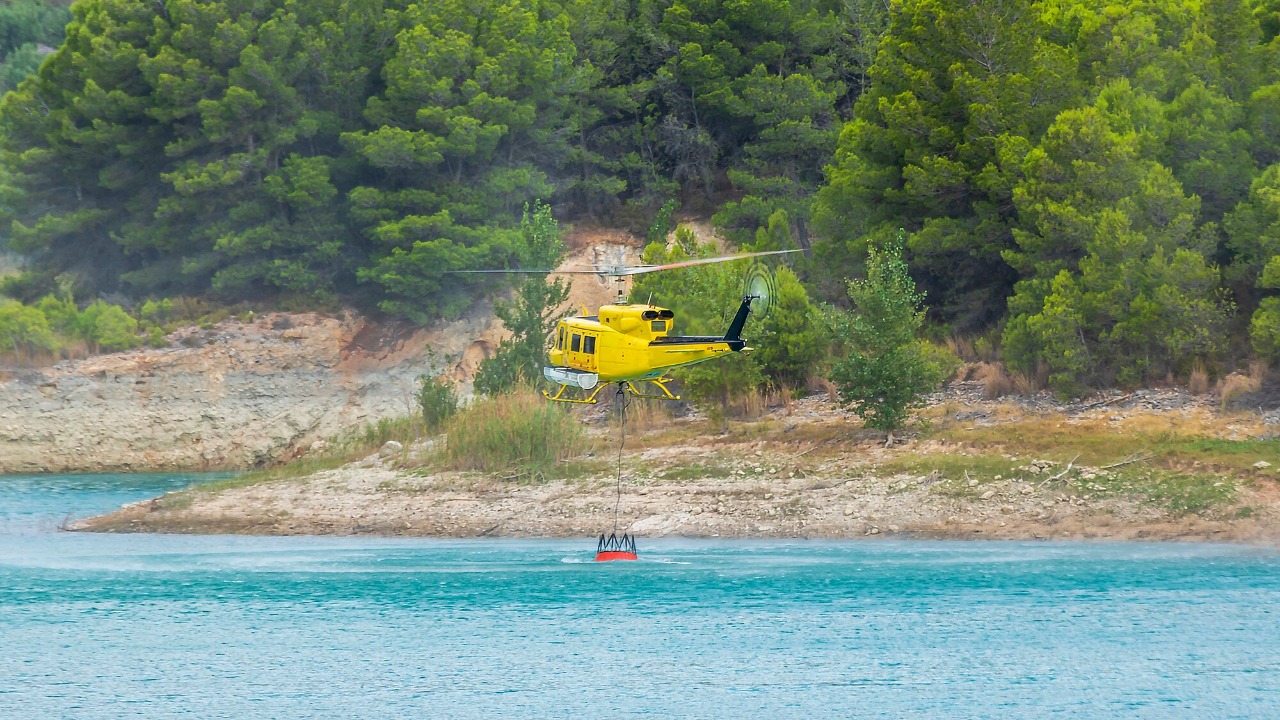

In the forests and canyons of the Northwestern US, helicopters are now doing something that would have horrified river engineers a generation ago: dropping thousands of tree trunks straight into the current. The goal is to undo roughly 40 years of aggressive “clean up” that stripped streams of wood, flattened their channels, and helped push salmon toward collapse. By flying in roughly 6,000 logs to remote rivers, crews are trying to rebuild the messy, complex waterways that salmon and trout actually need to survive.
The work looks dramatic from the air, but on the ground it is part of a careful experiment in how fast humans can help rivers heal. The U.S. Forest Service and tribal nations are betting that if they can recreate the log jams that once formed naturally, they can cool the water, slow the flow, and bring back the deep pools that young fish depend on, compressing processes that would otherwise take centuries.
How a “clean” river became a dead one
For much of the twentieth century, river managers treated fallen trees as a problem to be removed, not a habitat to be protected. In the Pacific Northwest, crews dynamited log jams, dragged out snags, and straightened channels so timber could be floated downstream and floods could move through more quickly, a mindset that helped set up the “decades of poor river management” now being confronted in the Northwestern US. Almost 40 years ago, people like Scott Nicolai watched as streams were bulldozed into simple chutes, with the assumption that fish would adapt to the new conditions. Instead, salmon runs crashed, gravel beds scoured out, and side channels dried up.
Those choices are now widely seen as a mistake that simplified rivers to the point of ecological failure. Reporting on helicoptering logs describes how those earlier projects straightened the Little Naches River so thoroughly that key habitat for trout and salmon disappeared. What looked like progress for navigation and flood control turned out to be a slow-motion disaster for fish that evolved in rivers full of fallen timber, braided channels, and seasonal log jams.
The new strategy: fly logs back into roadless rivers
The reversal now underway is as ambitious as the earlier clean up, but it runs in the opposite direction. In Washington, more than 6.000 logs are being relocated by helicopter along 38 km of rivers and streams in roadless areas, a scale that would be impossible with trucks or excavators. The aircraft shuttle timber from staging areas to precise points in the channel, where crews on the ground guide each trunk into position to form engineered log jams. The operation is designed to reconnect side channels, rebuild gravel bars, and create the deep pools that young salmon use as shelter.
Across the Pacific Northwest, similar projects are adding up to a regional experiment in what one report calls massive river restoration. The U.S. Forest Service is a central player, coordinating flights and engineering designs in collaboration with tribes and local partners. In some valleys, helicopters are the only way to reach creeks that no longer have logging roads, which is why crews are also using aircraft to place timber in smaller systems like Beaver Creek, an important tributary to the Sandy River. The visual of a chopper swinging a log beneath it may look like logging in reverse, and that is essentially the point.
Why salmon need messy rivers full of wood
From a fish’s perspective, a “clean” river is often a lethal one. Salmon and trout evolved in channels where fallen trees forced water to slow down, split, and swirl, creating pockets of calm behind log jams and cool, shaded pools beneath them. The current projects in the Northwestern US are explicitly trying to recreate those conditions, reversing the earlier push to treat wood as an enemy. By dropping logs into isolated rivers, crews are rebuilding the hydraulic complexity that gives juvenile salmon places to rest, feed, and hide from predators.
Scientists and engineers working with the Forest Service describe the effort as a way to Revive Salmon Habitat on a timeline that matches the urgency of climate change. Instead of waiting for natural log falls to accumulate over centuries, helicopters can rebuild key structures in a matter of seasons. The goal is not just more fish, but cooler water and more resilient channels that can absorb floods without scouring away spawning gravels. In that sense, the logs are infrastructure as much as habitat, a living alternative to concrete levees.
Inside the 6,000‑log airlift
The most eye catching numbers come from projects where helicopters are dropping 6,000 logs into rivers in the Pacific Northwest, a scale that would have been unthinkable when wood was still being pulled out. Reports on Helicopters describe aircraft making repeated runs over canyons, each time swinging a single trunk on a long line before releasing it into a carefully chosen bend or side channel. On the ground, crews use pink and blue flagging tape to mark where each piece should land, turning the river corridor into a kind of three dimensional blueprint.
In Washington, the airlift is part of a broader push in which Tests Massive River are being used to gauge how quickly fish respond. The same reporting that details the 6.000 logs along 38 km of streams notes that these are roadless areas where traditional construction equipment cannot reach, which is why In Washington helicopters have become the tool of choice. The same logic applies on smaller projects where a helicopter hefts timber into Beaver Creek to rebuild about a mile of habitat that feeds the Sandy River.
Tribal leadership and a cultural reset
Behind the engineering is a deeper shift in who gets to define what a healthy river looks like. Nicolai, a fisheries biologist who grew up watching streams be straightened, is now helping lead a project for the Yakama Nation aimed at rebuilding river complexity by returning logs to the water. Accounts of that work describe how the wood comes from forest thinning that also reduces the risk of mega fires, a point emphasized by Lolley. Then, instead of selling that timber, crews fly it into streams, often after a ceremony and prayer that frames the work as healing rather than construction.
That perspective is echoed in coverage of Helicoptering In Logs, where the Largest River Restoration is described as an attempt to let the system heal itself once key pieces of wood are back in place. By Courtney Flatt, reporting for OPB, notes that Almost 40 years after earlier projects stripped out logs, tribal leaders are now central to deciding where new ones go. Additional accounts of Nicolai and the Yakama Nation describe the philosophy as simple: if people put the right materials back into the river and then step aside, the water will do the rest.
More from Morning Overview