
A school event at a U.S. base in Okinawa turned deadly when the blast of air from a descending rescue helicopter hurled a spectator off a viewing platform, sending her to a fatal fall. The Air Force has now confirmed that the rotor wash, not a mechanical failure, was the decisive force that killed the Japanese teacher as children and colleagues looked on. The newly released investigation lays bare a chain of human decisions, planning gaps, and misplaced confidence that turned a family-focused demonstration into a preventable tragedy.
What emerges from the official findings is not a freak accident but a stark case study in how routine displays of military hardware can mask very real danger. The report details how the helicopter came in too close to the crowd, how safety assumptions went unchallenged, and how basic controls on where people stood and how high they were allowed to climb simply did not exist. I see in this mishap a warning that goes far beyond one base or one aircraft type, touching on how the U.S. military manages risk whenever it invites civilians into the blast radius of its most powerful machines.
The fatal approach and the force of rotor wash
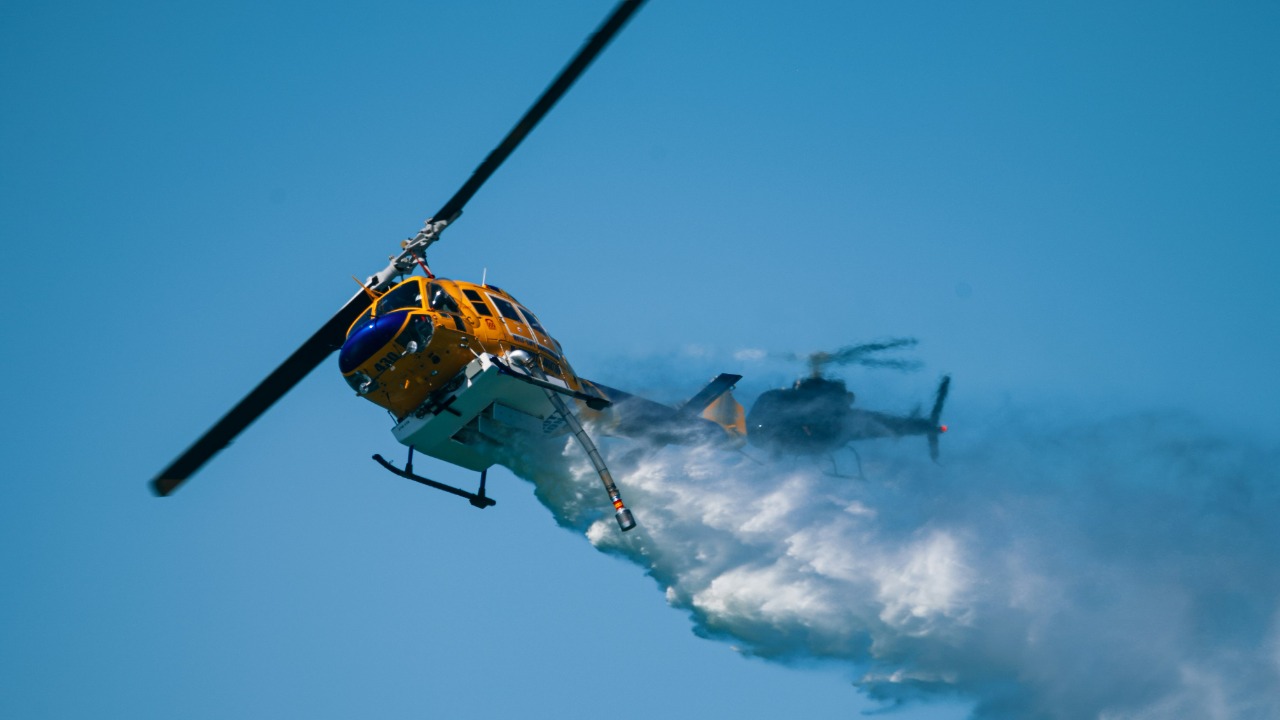
Investigators found that the HH-60W Jolly Green II approached the demonstration area at Kadena Air Base in a way that put its powerful downwash directly onto a cluster of spectators. Instead of maintaining a wider buffer, the helicopter flew too close to the crowd and then descended, its rotors generating a violent column of air that swept across the viewing area as teachers and students watched before landing. According to the official account, that blast of air knocked the woman off balance on an elevated platform, throwing her over a railing and onto the ground, where she suffered fatal head injuries. The Air Force’s own Accident Investigation Board concluded that there were no other fatalities or significant injuries, underscoring how one person absorbed the full cost of a misjudged flight path.
The physical mechanism of the accident was brutally simple. The powerful air flow generated by the helicopter’s rotor wash hit the spectators with enough force to topple the Japanese teacher from her vantage point. She was part of a group of local educators and children invited to watch the demonstration, a gesture meant to showcase cooperation and reassure the community about the presence of U.S. forces. Instead, the airflow that is essential for a rescue helicopter to hover and land became the lethal factor, as described in a detailed account of how the rotor wash caused her to lose her balance and fall. That no one else was seriously hurt does not lessen the severity of the miscalculation that put her in that blast zone in the first place.
Planning failures and a “false confidence of safety”
What makes this case especially troubling is that the Air Force’s own review points to systemic planning failures rather than a single moment of pilot error. The event was organized by personnel at the 33rd Rescue Squadron, known in the report as Jan, who relied heavily on how similar demonstrations had been run in the past. Instead of conducting a fresh risk assessment for this specific crowd, location, and aircraft profile, planners leaned on habit and assumption. The investigation describes a “false confidence of safety” among those responsible, a phrase that captures how familiarity with the mission and the aircraft dulled their sense of danger. That complacency is laid out in the mishap report, which notes that the woman’s death came amid poor planning and a belief that previous uneventful shows guaranteed this one would be safe.
Investigators also highlighted how basic questions about where spectators would stand, how high they could climb, and how close the aircraft would come were never resolved with precision. Instead of clearly marked and enforced viewing zones, there were vague understandings and last minute adjustments. Investigators described a cascade of planning failures, including reliance on past demonstrations and unclear spectator locations, that left people positioned in areas directly affected by the helicopter’s downwash. In other words, the crowd was not accidentally in harm’s way, it was placed there by a planning process that never fully accounted for the physics of the aircraft it was showcasing.
How close is too close for a school crowd
One of the most striking findings in the report is how far the spectators should have been from the helicopter compared with where they actually stood. Safety guidance indicated that Children and teachers should have been 60 feet or more away from the landing zone to avoid the worst effects of rotor wash and debris. Instead, the helicopter landed significantly closer, putting the crowd well inside the recommended buffer. That gap between policy and practice is central to the Air Force’s conclusion that the helicopter landed too close to the crowd in the death of the school teacher at the family-focused event, as laid out in the Air Force mishap findings.
Distance is not an abstract number in this context, it is a direct proxy for how much force a human body will experience from a helicopter’s downwash. At 60 feet, the blast is still intense but more manageable, especially for adults on solid ground. At closer ranges, particularly for people on elevated or unstable platforms, the airflow can become overwhelming. The report’s insistence on that 60 foot figure is a reminder that safety margins exist for a reason, and that shaving them down for the sake of a better view or a more dramatic demonstration can have lethal consequences. When I look at the way the crowd was arranged, I see a textbook example of how small compromises on distance can add up to a catastrophic loss of control over the environment.
Inside the Air Force’s accountability process
The Air Force’s response to the Okinawa mishap fits into a broader pattern of how it investigates and learns from serious accidents. In this case, The Accident Investigation Board was convened to reconstruct the sequence of events, analyze flight data, interview witnesses, and determine both proximate and systemic causes. That board’s findings carry formal weight, shaping not only potential disciplinary actions but also changes to procedures, training, and event planning. The official summary of the HH-60W case makes clear that the board saw the rotor wash and crowd placement as the key causal factors, and that There were no mechanical failures driving the tragedy.
This approach mirrors how the Air Force handles other high profile mishaps, such as recent fighter jet crashes. In those cases, a separate Safety Investigation Board is often convened first, focused on quickly identifying hazards and recommending immediate fixes, followed by a more formal accident board that can be used in administrative or legal proceedings. A recent analysis of an F-35 crash, for example, described how a Safety Investigation Board is tasked with identifying causes and preventing future incidents. By applying that same layered investigative model to the Okinawa helicopter case, the service is signaling that it views the death of the Japanese teacher not as a minor mishap but as a serious failure that demands institutional learning.
Public trust, local anger, and what must change
For communities that live alongside U.S. bases, especially in places like Okinawa where tensions over the American military presence are longstanding, this accident cuts deep. The victim was a Japanese teacher participating in a school event that was supposed to build goodwill and familiarity with U.S. forces. Instead, parents and students watched as a routine demonstration turned into a fatal fall, reinforcing fears that even carefully staged interactions with military hardware carry hidden risks. Local reporting on how the Japanese teacher died has already fueled questions about whether the base truly prioritizes the safety of its neighbors when planning public events.
More from Morning Overview