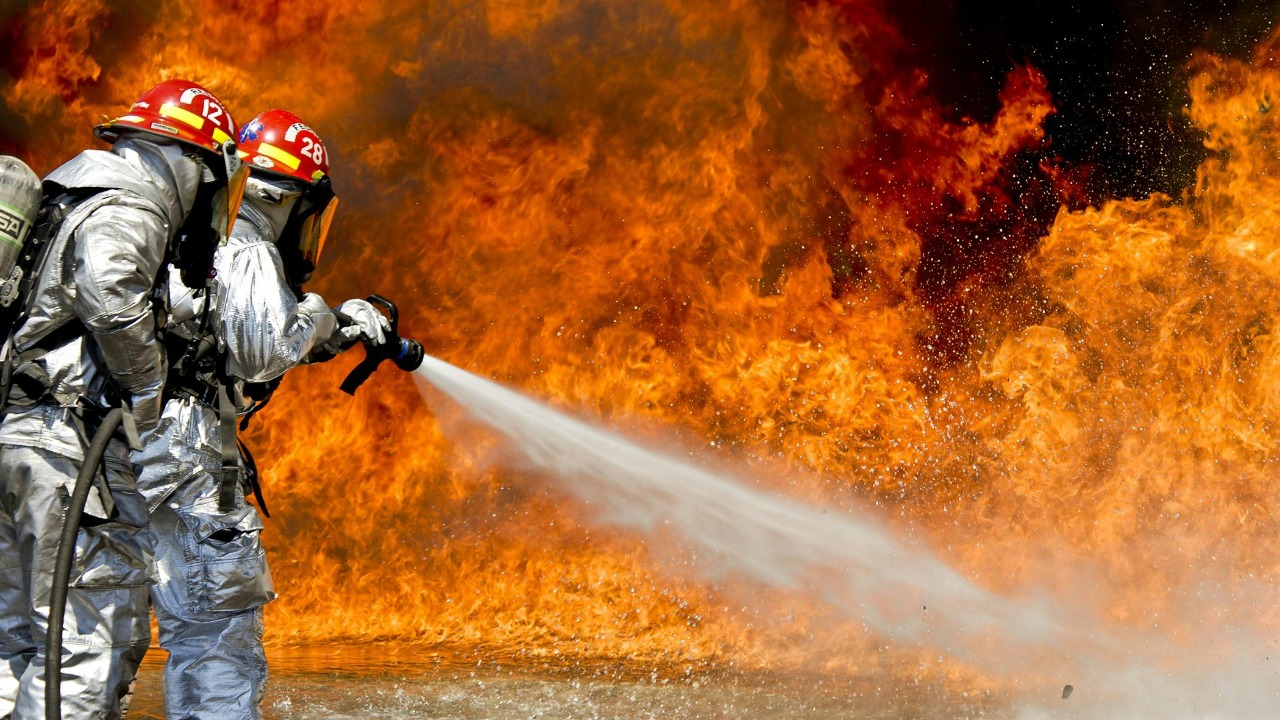

Firefighting is not where most people expect to find the next big artificial intelligence windfall, yet that is exactly where Sunny Sethi has staked his claim. By turning a humble fire nozzle into a networked data device, the founder of HEN Technologies has built a business that treats every blaze as a physics experiment and every hose line as a sensor. The result is an AI-ready dataset that is already reshaping how fires are fought and, increasingly, how machines learn to move through the physical world.
What began as a hardware fix for a profession that had barely changed in decades is now attracting attention from the military, space agencies, and robotics companies hungry for real-world data. Sethi’s bet is simple: if you can precisely measure how water and fire interact in the harshest conditions, you can sell that knowledge far beyond the fireground.
The founder who treated a fire as a data problem
Sunny Sethi does not fit the stereotype of a swaggering hardware mogul, yet he has quietly rethought how one of the most dangerous jobs on earth should work. As founder of HEN Technologies, he approached firefighting less as a craft passed down through stations and more as a system that could be instrumented, measured, and optimized. Reporting on his work describes an industry that had remained largely unchanged, and Sethi’s core insight was that the nozzle at the end of the hose could be the gateway to a stream of information, not just water.
That mindset has turned him into an unlikely reference point for the broader AI world. Coverage by Connie Loizos, whose byline appears alongside Image Credits for HEN Technologies, underscores how surprising it is to hear such a low-key founder talk about a market that is “a lot bigger than fire nozzles.” In other words, Sethi did not just hack a tool, he reframed the entire environment around it as a data platform.
From smart nozzle to global footprint
The hardware that unlocked this shift is deceptively simple: a nozzle that can shape and stabilize a water stream even in strong winds while feeding back performance data. A detailed profile of the product describes how the smart nozzle helps firefighters maintain control of the stream in chaotic conditions, turning each deployment into a repeatable, measurable event rather than a guess. That same reporting notes that the system now serves 1,500 fire departments, a scale that gives HEN Technologies a rare, statistically rich view of how fires behave in the real world.
That reach is not limited to municipal agencies. The same account notes that Its customer base includes the Marine Corps, which has its own demanding standards for equipment that must function in combat and disaster zones. When a tool built for city fire engines also satisfies military buyers, it signals that the underlying technology is robust enough to become infrastructure for a much wider class of physical operations.
The hidden physics dataset inside every fire
What makes HEN Technologies so valuable to AI developers is not just the hardware, it is the torrent of measurements that hardware generates. Each nozzle deployment captures how water behaves under pressure, how flow rates interact with building materials, and how fire responds when conditions change. One analysis of this trend describes the importance of Highly specific, real-world data of exactly this kind for training advanced models, especially those that must reason about physics rather than just language.
To collect that information at scale, HEN’s platform uses a network of devices that effectively turn the fireground into a lab. Reporting on the company’s research methods highlights how sensor units at the pump act as a virtual sensor at the nozzle, inferring what is happening at the business end of the hose even when direct instrumentation is difficult. That architecture lets HEN capture a continuous stream of pressure, flow, and performance data without overburdening firefighters in the middle of an emergency.
Turning a safety tool into an AI business
The commercial impact of this approach is already visible in HEN Technologies’ financial trajectory. According to one funding report, Revenue jumped from $200,000 in Q2 2023 to a projected $20 million in 2026, a curve that would be impressive for any SaaS startup, let alone a company that began with a piece of metal at the end of a hose. Another profile notes that the same platform now serves 1,500 departments and projects $20 million in revenue this year, reinforcing how quickly the business has scaled from pilot programs to a global footprint.
Those customers are not just local fire chiefs. The funding report specifies that the Marine Corps and NASA are among the organizations buying into HEN’s system, alongside fire departments in 22 countries. Another account of the company’s growth notes that Its customer base includes the Marine Corps and other demanding institutional buyers, which suggests that the data HEN collects is already being used in contexts far beyond municipal fires. When agencies that think in decades, not quarters, adopt a technology, it is a sign that the underlying dataset has long-term strategic value.
Why robotics and AI companies are circling
For AI developers, the appeal of HEN Technologies lies in how neatly its data maps onto some of the hardest problems in robotics. Training a robot to move through a burning building or a drone to navigate turbulent air requires more than synthetic simulations. It demands the kind of ground truth that comes from thousands of real incidents, each logged with precise measurements of how fluids, heat, and structures interact. One analysis of Sethi’s plans notes that Companies training robotics and predictive physics engines would pay handsomely for exactly this kind of dataset, and that Sethi will not yet elaborate on the full scope of what he is building.
There is also a broader lesson here about where the next generation of AI advantages will come from. Another piece on the AI talent market underscores how leaders now expect engineers to work directly with Highly specific, real-world data rather than generic benchmarks. HEN’s dataset is a textbook example of that shift: it is narrow, messy, and incredibly valuable for anyone trying to teach machines how to operate in dangerous, fluid environments where mistakes are costly.
More from Morning Overview