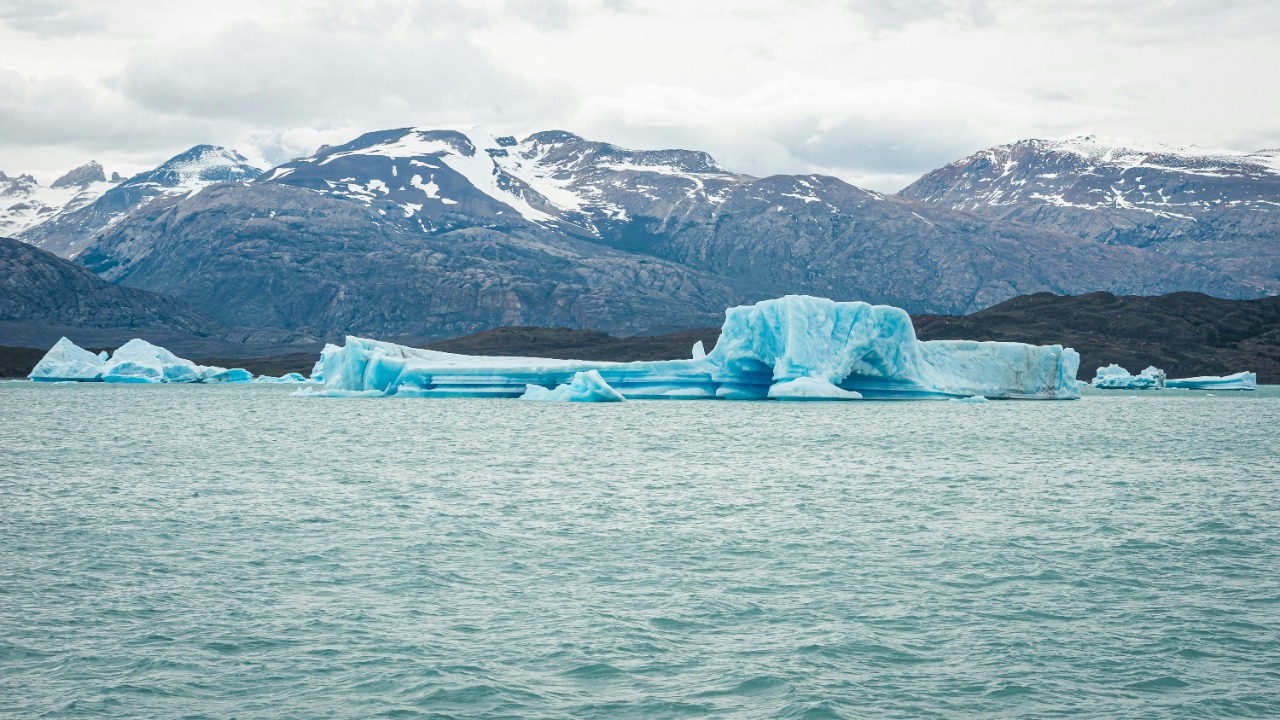

Greenland’s ice is vanishing at a pace that is reshaping coastlines, trade routes and the global balance of power. As meltwater carves new rivers and exposes long buried rock, the island is being recast from remote outpost into a potential resource superpower at the center of a warming Arctic. The same forces that threaten coastal communities worldwide are turning Greenland into a prize that major powers are suddenly unwilling to ignore.
I see a stark paradox emerging: the more the climate crisis accelerates, the more valuable Greenland becomes to governments and companies hunting for critical minerals, new shipping lanes and military leverage. That tension between planetary risk and strategic opportunity is now driving a scramble that could define the next era of geopolitics.
From ice fortress to exposed frontier
For most of modern history, Greenland functioned as a frozen shield, its vast ice sheet locking away minerals and limiting access to its coasts. That shield is now thinning fast. Scientists describe how Greenland is warming much faster than the global average because of Arctic amplification, as reflective ice gives way to darker water and rock that absorb more heat. That feedback loop is not only accelerating sea level rise, it is also physically uncovering terrain that was inaccessible to prospectors and militaries alike.
The geopolitical implications are already visible. Reporting on President Donald Trump’s climate and security agenda notes that Jan warnings from Denmark’s leadership have framed any unilateral move on the island as a potential breaking point for NATO, underscoring how central this once peripheral territory has become. A parallel account of the same debate highlights how the Arctic focus is now entwined with questions of alliance cohesion and U.S. defense planning, a far cry from the days when Greenland was treated as a remote radar outpost.
The mineral “gold rush” beneath the meltwater
As the ice retreats, it is revealing what many in the mining industry have long suspected: some of the world’s largest untapped deposits of critical minerals lie under Greenland’s surface. Analysts describe how Major ice loss from Greenland is exposing natural resources that could feed global demand for rare earths, cobalt and other inputs for electric vehicles and advanced electronics. That exposure is not a deliberate policy choice, it is an unintended consequence of a destabilized climate that is making extraction logistically easier even as it heightens environmental risk.
Governments are already maneuvering to lock in supply. The United States and Australia have agreed an $8.5 billion package to develop critical minerals, a figure that signals how central these resources have become to industrial strategy. At the same time, industry research describes Greenland as the Last frontier for exploration, with assessments identifying a wide range of internationally defined critical raw materials but only a handful of projects moving forward because of cost and climate constraints. That gap between geological promise and practical limits is where the new scramble is playing out.
Greenland at the center of a melting Arctic chessboard
Strategists now talk about Greenland less as an island and more as a pivot on the Arctic chessboard. One analysis asks bluntly, Is Greenland the key to Arctic dominance, pointing to its prime location between North America and Europe and its role in guarding sea lanes and airspace. As the Arctic melts, that geography becomes even more valuable, giving whoever shapes Greenland’s future a say over emerging shipping corridors and military posture.
Those corridors are no longer theoretical. Shipping data show that the Similarly thawing Northwest Passage has seen through sailings rise from only a couple a year to dozens, with as many as 41 in 2023. That trend hints at what could unfold around Greenland’s own waters as sea ice retreats and seasonal windows widen. It also explains why security analysts describe the island as central to any attempt to control the Greenland to North Atlantic corridor while safeguarding U.S. interests.
Trump’s framework and the new resource politics
President Trump has moved quickly to translate this shifting landscape into policy. His administration has floated a Jan framework for cooperation with Greenland and Denmark that he argues would put “everybody in a really good position” as Arctic routes and resources open up. Parallel coverage of his climate and security agenda notes that Denmark’s prime minister has warned that any military intervention would end the NATO alliance, a sign of how sensitive this negotiation has become for Copenhagen, Washington and Brussels alike.
At the same time, Trump’s rhetoric has focused heavily on minerals. Social media coverage under the banner Trump Eyes Greenland frames the island as a major climate flashpoint where the hunt for Minerals could Fuels Climate Tensions. A related video report on how Greenland may look like a frozen wasteland but in fact sits atop one of the most geopolitically and climatically significant resource troves reinforces that narrative. In Davos style remarks, TRUMP TELLS DAVOS audiences that the United States alone, or ALONE, can secure supply chains in ways that undercut China’s grip on critical inputs for artificial intelligence and clean energy.
Local land rising, global seas surging
Behind the high politics sits a quieter but equally transformative physical shift. As the ice sheet thins, Greenland is literally rising, its bedrock rebounding now that billions of tons of weight have been removed. Researchers describe how this Melting driven uplift will create an uneven pattern of sea level change, with some Greenlandic coasts experiencing falling local sea levels even as global oceans rise. A complementary study notes that as Greenland loses ice, global sea levels will rise while its own will fall, a counterintuitive outcome that complicates planning for ports, fisheries and coastal settlements.
The local impacts are already being felt. Researchers explain that In Greenland, the loss of ice leads to land rise and sediment accumulation that make harbors shallower, complicating access for fishing boats and supply ships. That same process is reshaping coastal ecosystems in ways that are not yet fully understood. A separate analysis of coastal rebound, Greenland’s rising land, underscores that these changes will not be uniform, creating winners and losers among communities that depend on the sea for food and income.
More from Morning Overview