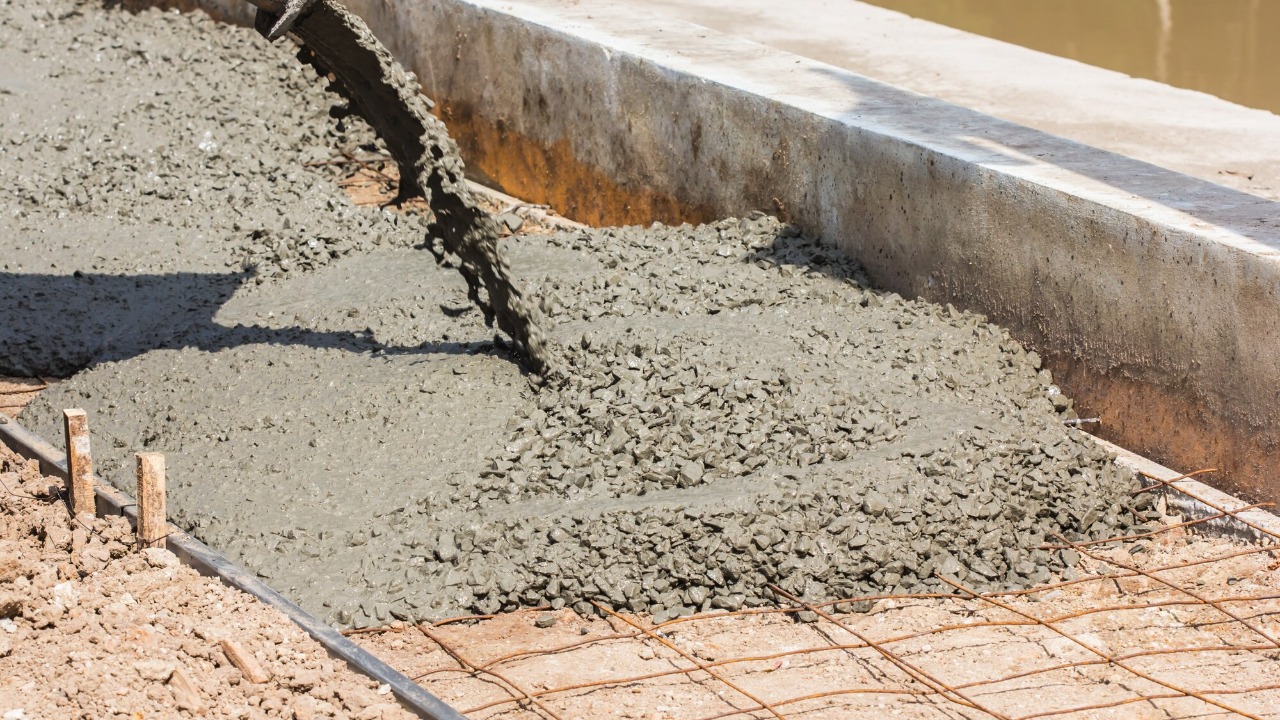

Concrete has quietly become one of the planet’s biggest climate problems, yet the material itself has barely changed in a century. Now a new class of mixes infused with graphene is starting to alter how buildings are specified, poured, and even powered, promising stronger structures with a fraction of the cement and carbon. The shift is still early, but on test slabs, factory lines, and university campuses, graphene concrete is already rewriting the assumptions that have governed construction for decades.
Instead of treating concrete as a heavy, inert bulk material, engineers are beginning to design it as a high‑performance composite where a few grams of graphene can reorganize the entire microstructure. That is turning a commodity product into a platform for lower emissions, longer life, and even embedded intelligence, with implications that reach from local planning departments to global climate targets.
Why concrete needs a radical rethink
For all its ubiquity, concrete has a glaring flaw: the cement that binds it together is one of the world’s most carbon‑intensive materials. The production of cement for concrete in the building industry is identified as one of the leading causes of global carbon emissions, and that footprint scales with every foundation, bridge, and tunnel. With concrete already described as the most widely used substance on earth behind water, as highlighted in Jun, the sector’s climate impact is baked into the modern built environment.
Traditional fixes, from clinker substitution to marginal efficiency gains in kilns, have not been enough to bend that curve. Analysts looking at advanced materials note that graphene has been celebrated for superlative strength, flexibility, and conductivity, yet criticized for failing to find mass‑market applications, a tension explored in IDTechEx. Concrete, with its vast volumes and relatively forgiving chemistry, is emerging as the place where that mismatch can finally be resolved.
How graphene transforms an old material
At the microscopic level, graphene’s role in concrete is deceptively simple: ultra‑thin carbon sheets act as nucleation sites and bridges inside the cement paste, tightening the bond between aggregates and reducing microcracks. A detailed review of graphene concrete reports that incorporating graphene can improve mechanical strength, thermal properties, and durability, which in turn leads to longer service life and reduced maintenance costs. Researchers at one university go further, suggesting that a graphene composite can be two times strong and four times more water‑resistant than any existing concrete, according to Researchers.
That performance gain is not just theoretical. Scientists at the University of Exeter reported that their graphene‑enhanced mix delivered higher compressive and flexural strength while using less material, positioning it as a more sustainable and environmentally friendly option. A broader European initiative notes that Graphene is at once strong and light, making it a powerful reinforcement for the construction industry and potentially cutting concrete‑related CO2 emissions by 30 percent when used to reduce cement content.
The climate math: less cement, less carbon
The most disruptive aspect of graphene concrete is not that it is stronger, but that it can achieve that strength with significantly less cement. At the University of Manchester, engineers working with Concretene describe how the graphene‑based additive significantly improves mechanical performance, allowing developers to cut cement content while keeping or even boosting structural capacity. A companion report from Graphene@Manchester frames this directly against concrete’s emissions problem, arguing that such mixes can be both greener and cheaper by reducing the volume of high‑carbon binder required.
Material scientists at Nanotech Energy echo that logic. In a discussion of graphene‑strengthened concrete, El‑Kady is quoted as saying “Less cement equals less CO2,” and notes that because this super‑charged concrete is stronger, builders might not need to use as much material overall once it gets regulatory approval. The European Feb analysis reinforces that by quantifying potential CO2 cuts of up to 30 percent when graphene is used to optimize mix designs, a scale of reduction that would be difficult to reach through incremental efficiency tweaks alone.
From lab curiosity to real‑world slabs
For years, graphene’s reputation as a “wonder material” outpaced its real‑world deployment, a gap that early commentators such as Construction’s and Surf Shark‑sponsored explainers were quick to point out. That is now changing on construction sites. In England, the World saw its first graphene‑enhanced concrete slab poured as a full‑scale structural element, not just a lab sample, demonstrating that the material can be batched, transported, and placed with standard equipment. The project drew on work from Concrene Ltd, a spin‑off from the University of Exeter and the University of Manchester’s Graphene research, which has been developing commercial admixtures.
Industrial supply chains are starting to follow. First Graphene Limited, listed as ASX:FGR, has positioned itself as a large‑scale supplier of graphene materials, and First Graphene recently announced the historic production of graphene‑enhanced cement, with the Company highlighting plans for projects rolling out in the United Kingdom. Parallel work at the University of Manchester has focused on scaling Concretene, while LayerOne Materials describes how graphene, being strong and lightweight, can reinforce concrete while lowering construction costs.
Smarter, longer‑lasting and more efficient infrastructure
Once graphene is inside the mix, its benefits extend beyond raw strength. A technical review of graphene concrete notes improved thermal properties and durability, which translate into better resistance to freeze‑thaw cycles and chemical attack. That resilience is echoed in architectural commentary where Researchers emphasize the composite’s water resistance, a critical factor for coastal infrastructure and flood defenses. The result is not just lower embodied carbon at the outset, but fewer repairs and replacements over a structure’s life.
Graphene’s conductivity also opens the door to infrastructure that actively manages heat and stress. Analysts at Energy describe how graphene concrete could enable energy‑efficient buildings through thermal management and even self‑sensing pavements that adapt to conditions. A separate overview of modern infrastructure applications points to longer‑lasting pavements and maintenance‑free surfaces as realistic targets once graphene is integrated into road and bridge decks.
More from Morning Overview