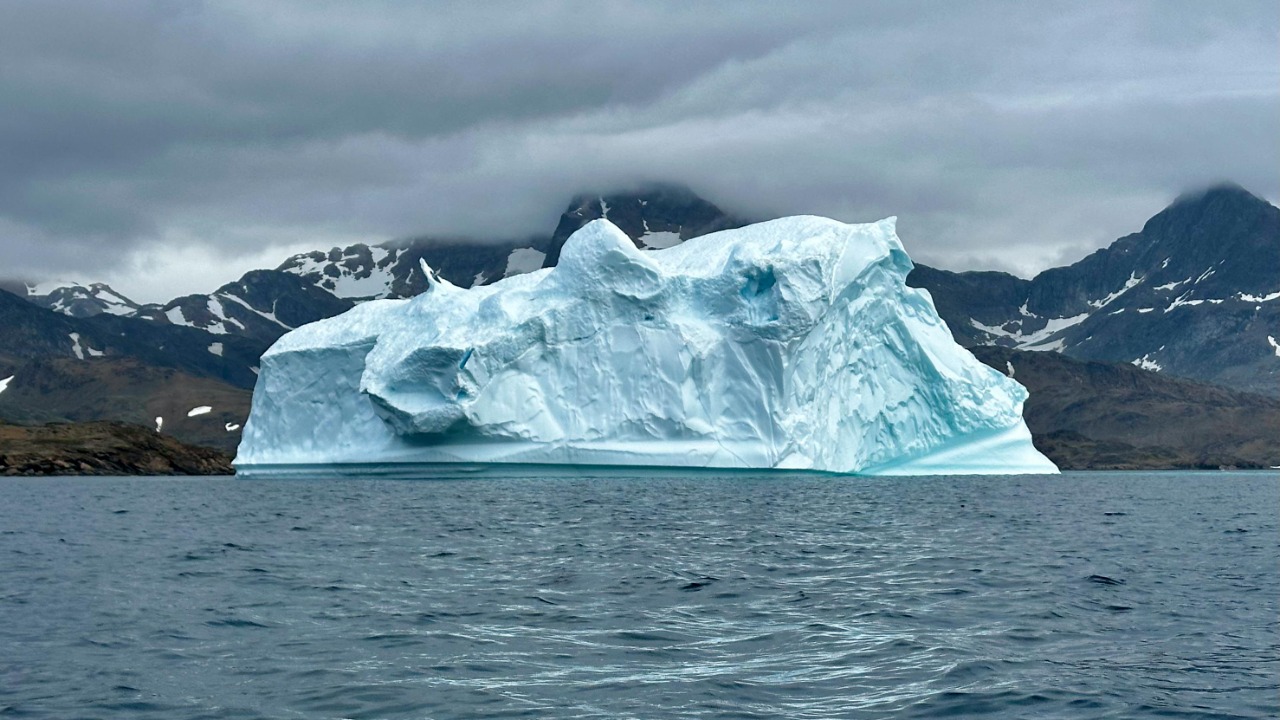

From space, Greenland looks less like a pastoral paradise and more like a frozen shield, its interior locked under one of the largest ice sheets on Earth. Yet for more than a thousand years, maps have labeled this vast, white expanse with a name that promises the opposite. The story of how a mostly icy island ended up branded as “Greenland” is really a story about Viking marketing, migration and the power of a good sales pitch.
When I trace that history, a pattern emerges: the name was never a simple description of the landscape. It was a deliberate choice, rooted in the ambitions of explorers, the language of their descendants and a long tradition of using place names to attract people to harsh frontiers.
The icy reality behind a misleading name
Any traveler flying over Greenland today sees at a glance that the label does not match the landscape. The island is dominated by an ice sheet that covers most of its surface, with only a narrow fringe of exposed rock and tundra around the coast. Modern reporting notes that Greenland is anything but lush, which is precisely why its name has puzzled generations of schoolchildren and even some geographers. The contradiction between the word and the reality sets up the central question: if the island is overwhelmingly ice, why did anyone call it green in the first place.
Researchers who study Viking history argue that the answer lies less in climate and more in communication. One historian at Arizona State Uni has described the origin of the name as “pure commercial marketing,” pointing out that the label emerged when Vikings were trying to establish new settlements in the North Atlantic. In that context, calling a forbidding island “green” was less an observation and more an invitation.
Erik the Red and the original branding exercise
The key figure in that invitation was the Viking explorer Erik the Red, remembered for his red hair, red beard and a temper that got him exiled from Iceland. According to his saga, Erik the Red left Iceland and decided to explore the land he had heard about to the west, eventually spending several years along Greenland’s fjords. Those coastal inlets, especially in the south, did offer pockets of grass and low shrubs in summer, enough to support some livestock and small farms. When his exile ended, he sailed back to Iceland with a plan to recruit settlers for a return voyage.
At that point, Erik made what one modern account calls a calculated “naming and settlement strategy.” Another source notes that Erik the Red decided on the name “Greenland” because he believed that people would be more likely to join him if the new land had a favorable name. A separate retelling of his life explains that While earlier Norsemen like Gunnbj and Ulfsson had only sighted or briefly attempted to settle the area, Erik turned it into a lasting colony by pairing his exploration with a clever rebrand.
Viking naming habits and the Iceland contrast
Erik’s choice did not come out of nowhere. Viking explorers had a habit of using vivid, sometimes aspirational names for new territories, and their descendants still live with those labels. One guide to Norse toponyms points out that the Viking way of naming places produced terms like Reykjavik, which literally means “smokey bay” because of the steam rising from geothermal vents. In the same tradition, the names Iceland and Greenland were coined by seafarers who wanted to signal something about the lands they had found, even if the signal was not strictly literal.
Modern commentators often joke that Iceland and Greenland should swap names, because Iceland is relatively mild and green along its coasts while Greenland is locked in ice. A science explainer notes that Today, Iceland’s population sits at 320,000 people, approximately two-and-a-half times smaller than Charlotte, and the island is roughly the size of a mid‑sized U.S. state. Another description of the region stresses that in Greenland, the ice sheet dominates, with only the southern portion being green enough to support farming, which helps explain why Erik highlighted that limited greenery so aggressively.
Language, ancestry and how locals see the name
Centuries after Erik’s voyage, the people who live in Greenland and Iceland still carry the linguistic legacy of those early settlers. A popular language explainer notes that the Norse settlers and their descendants, described simply as They, also have Celtic ancestry from women brought there as slaves, and that their language is directly descended from Old Norse. A second version of the same explanation repeats that Old Norse roots still shape how these communities talk about their homelands. That continuity helps explain why the medieval names stuck, even as the climate and politics around them changed.
Locals are also keenly aware of how outsiders perceive those names. One discussion thread where users like Rudy Johnson II, Gustavo Amaro and Brian Ansell America debate geography jokes that Greenland is icy while Iceland is green, then asks which place a traveler would rather visit. Another guide aimed at visitors points out that Firstly, Icelanders called Iceland Iceland, written Ísland and pronounced Ee‑island, while Greenlanders do not actually use the English word “Greenland” in daily life. Instead, they rely on their own language, even as the Norse‑derived names we use come from our Norse ancestors and continue to frame global perceptions.
From medieval gimmick to modern identity
Historians now describe Erik’s naming choice in bluntly contemporary terms. One analysis flatly calls it Greenland’s marketing ploy, a medieval version of real‑estate spin designed to make a risky migration sound appealing. A separate historical profile of Erik’s life, framed around Naming and settlement strategy, emphasizes that one of Erik’s most remarkable decisions was to call the new land something that promised fertility, then sail back with a fleet of hopeful families. In that sense, the name “Greenland” functioned as a recruitment slogan long before anyone coined the term advertising.
Over time, that slogan hardened into a national label. A modern tourism post cheerfully greeting readers with “Good morning Greenland” links to an explanation from Visit Greenland that retells Erik’s story for curious travelers. Another overview of the island’s status notes that Since 2009, the Greenlandic language has been the sole official language of Greenland, and that the island is the world’s largest that is not a continent. A separate list of Interesting Facts About highlights that only a small coastal strip is green and largely ice‑free, underscoring how far the name stretches the truth.
More from Morning Overview