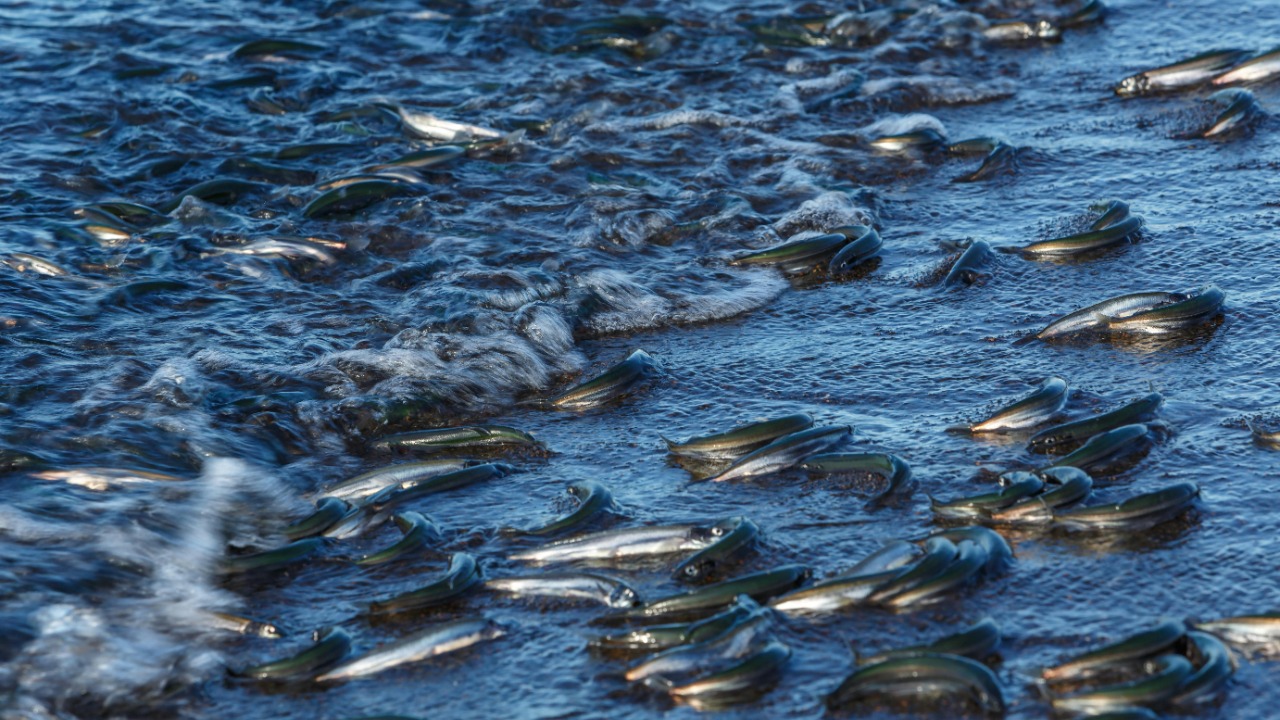

Freshwater life is vanishing at a pace that now rivals, and in some cases exceeds, losses on land and at sea. New global assessments show that roughly a quarter of animals that depend on rivers, lakes, wetlands and bogs are already sliding toward extinction, a collapse that threatens food security, clean water and cultural traditions for hundreds of millions of people. The crisis has moved beyond isolated die‑offs and into what scientists describe as a systemic spiral, where damaged habitats, climate shocks and pollution reinforce one another.
What is unfolding in these “blue veins” of the planet is not a distant warning but a present‑day emergency. From tiny insects to river giants, freshwater species are being squeezed by dams, overuse of water, invasive species and warming temperatures that push them past their physiological limits. The science is clear that without rapid course correction, the losses will accelerate and become far harder to reverse.
The scale of the freshwater extinction emergency
Researchers have now completed the first global assessment focused specifically on animals that live in rivers, lakes, streams, wetlands and bogs, and the picture is stark. Drawing on data from the IUCN Red List, scientists found that nearly a quarter of the world’s freshwater species are at risk of extinction, with many already gone. One comprehensive Nature analysis concludes that freshwater diversity is under “substantial stress”, confirming that this is not a localized problem but a global pattern.
In that work, Jan Harrison and colleagues report that One quarter of freshwater animals are now threatened, after examining groups ranging from fish and amphibians to molluscs and aquatic insects. Their study, highlighted by new research, shows that Crabs, crayfishes and shrimps are among the hardest hit, with 30% of these crustaceans considered threatened. A separate synthesis of global freshwater species underscores that habitat deterioration is the common thread tying these declines together.
What “nearly a quarter” really means for rivers and lakes
It is easy to gloss over a statistic like “nearly a quarter,” but the underlying numbers are sobering. A major Report on extinction risk examined 23,000 freshwater species and concluded that Nearly a quarter of the world’s freshwater species are at risk of extinction, a figure that includes fish, amphibians, molluscs and aquatic plants. That analysis, detailed in a global survey, stresses that most of these animals are not facing a single problem but a barrage of overlapping threats.
Another synthesis, described as the first global study of its kind, emphasizes that Nearly a quarter of all freshwater species facing extinction risk have already been pushed out of parts of their former range. That work, which framed the crisis as a turning point for rivers, lakes and wetlands, is summarized in a detailed assessment. As one analysis put it, Quarter of Freshwater Animals Face Extinction, New Study Warns, with Nearly a quarter of animals living in rivers, lakes and other inland waters now in jeopardy, a framing echoed in a warning on ecosystems.
Africa’s freshwater fish on the front line
The global numbers become painfully concrete when I look at Africa, where freshwater fish are both ecological linchpins and daily protein for millions of people. A new report by WWF finds that one in four freshwater fish species it assessed in Africa is at risk of extinction, a crisis that threatens riverine livelihoods from the Niger to the Zambezi. That alarm is captured in a WWF overview that stresses both the severity of the problem and the fact that solutions remain within reach if governments act quickly.
The World Wildlife Foundation, which leads the WWF network, reports that 26 per cent of Africa’s assessed freshwater fish species face extinction due to a mix of overfishing, pollution, dam construction and climate impacts. That figure, laid out in a regional analysis, shows how the continental picture mirrors the global one. When a quarter of fish species in Africa’s rivers and lakes are in trouble, it is not only biodiversity that is at stake but also food security, jobs in small‑scale fisheries and the cultural identity of communities that have lived with these waters for generations.
Multiple threats, one spiraling system
Behind the statistics is a tangle of pressures that interact in ways that push freshwater wildlife into a downward spiral. The IUCN has highlighted that Crabs, crayfishes and shrimps are at the highest risk among the groups studied, with 30% threatened, followed by 26% of other freshwater animals, a pattern summarized in its Red List update. A video explainer on how nearly a quarter of all freshwater species are facing extinction risk notes that Jan findings show many animals are squeezed by pollution, water extraction and invasive species at the same time, a point underscored in a broadcast segment.
Reporting on failing ecosystems has put a human face on these trends, describing how a quarter of all animals in freshwater habitats now face the threat of extinction as wetlands are drained, rivers are straightened and climate change intensifies droughts and floods. That narrative, captured in a piece on failing ecosystems, aligns with scientific summaries that 24% of freshwater species are now threatened. A separate overview from the Natural History Museum explains that New research reveals damage to rivers, lakes and wetlands is pushing freshwater animals to the edge of extinction, with 24% of species assessed at risk, a figure detailed in its freshwater briefing.
Climate change, dams and the illusion of control
Climate change is not a distant backdrop but a direct driver of this crisis. An Oregon State scientist has described an “existential crisis” for Earth’s animals as rising temperatures, shifting rainfall and more extreme weather events reshape habitats faster than species can adapt, a warning laid out in a climate interview. For freshwater wildlife, that means rivers that run too warm for cold‑water fish, lakes that stratify differently and wetlands that dry out before breeding seasons are complete.
At the same time, human attempts to control water are fragmenting habitats. Researchers in Australia have warned that, as with nearly all river systems globally, and in Australia, impacted by dams (large and small), freshwater environments are frequently fragmented by dams and other diversions, a pattern described in an analysis of water security. That fragmentation blocks migrations, alters sediment flows and changes the timing of floods that many species rely on to feed and reproduce, deepening the extinction spiral.
More from Morning Overview