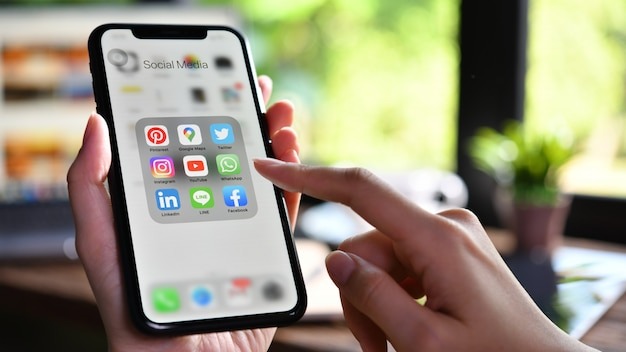

France has moved to sharply restrict how children use the internet, approving a sweeping ban on social media accounts for anyone under 15. The measure, framed as a public health and child protection push, also tightens rules on smartphones in schools and formalizes a new “digital majority” at age 15.
The decision places France at the front of a global debate over how far governments should go in limiting platforms like TikTok, Instagram and Snapchat for younger users. It also tests whether strict age-based rules can be enforced in a digital ecosystem built around frictionless sign-ups and opaque algorithms.
The new rules: a hard line at 15
French lawmakers have approved a bill that bars children under 15 from opening social media accounts, setting a bright legal line that goes beyond the parental consent models used in many countries. The legislation targets platforms where users can post, share and interact publicly, a category that clearly includes global giants such as TikTok, Instagram, Snapchat and X, and it is designed to apply regardless of whether the child claims to be older during sign-up. According to French lawmakers, the goal is to ensure that childhood is not “dictated by algorithms” and that the most addictive features of these services are kept away from younger teens.
The ban is meant to take effect quickly, with authorities pushing for enforcement from the start of the 2026 school year in September so that the new rules coincide with a fresh academic cycle. Authorities have framed that timing as a way to give schools, parents and platforms a clear horizon for compliance, while also aligning the digital rules with existing education policies that already limit phone use in many classrooms. The law sits alongside earlier French efforts to regulate minors’ online lives, including a previous requirement for parental consent for under-15s that is now being replaced by a more categorical prohibition.
Macron’s push and the politics of childhood online
The political drive behind the ban has been personal and highly visible, with President Emmanuel Macron repeatedly casting social media as a threat to children’s development and mental health. Earlier this year he declared that “we are banning social media for under-15s, and we are going to ban mobile phones in our high schools,” presenting the move as part of a broader effort to reclaim attention and time for education, sport and in-person social life. That rhetoric has resonated with parents worried about cyberbullying, explicit content and the constant pull of notifications, and it has helped turn what might have been a technical regulatory tweak into a flagship social policy.
At the same time, the politics are more complex than a simple clash between adults and Big Tech. The measure has drawn support from child protection advocates and some teachers’ unions, but it also raises questions about civil liberties and the role of the state in family life. Critics argue that a blanket ban risks criminalizing ordinary behavior and may push younger teens toward unregulated corners of the internet, while supporters counter that only a clear legal boundary can force platforms to redesign their systems and invest in robust age checks. By tying the social media ban to a parallel crackdown on mobile phones in high schools, Macron has signaled that he sees screens in general, not just specific apps, as a structural problem for adolescence.
Digital majority at 15: a new legal frontier
Underpinning the ban is a broader legal concept that France has been building: the idea of a “digital majority” at age 15. The notion is that just as there is a legal age for voting or driving, there should be a defined threshold at which a young person can independently consent to data collection, targeted advertising and the social risks that come with public online profiles. The law on Digital majority formalizes this at 15, specifying that minors under that age require parental consent to register on a social network and that platforms must verify that consent in a meaningful way.
In practice, the new social media ban tightens that framework by moving from a consent-based model to a prohibition for under-15s, while still relying on the same age threshold to define when a teenager can manage their own online presence. This creates a layered system in which a 14-year-old is treated very differently from a 15-year-old in the eyes of the law, even though their real-world maturity may not change overnight. It also puts pressure on platforms to build or adopt age verification tools that can distinguish a 13-year-old from a 16-year-old without collecting excessive personal data, a technical and ethical challenge that regulators across Europe are still struggling to solve.
Risks cited: cyberbullying, mental health and school life
Supporters of the ban point to a growing body of evidence that heavy social media use can amplify risks for younger teens, from cyberbullying to exposure to self-harm content. French lawmakers have highlighted specific harms such as online harassment, body image pressure and sleep disruption, arguing that these problems are particularly acute for children who have not yet developed the resilience or critical thinking skills to navigate algorithmic feeds. Reporting on the parliamentary debate notes that the risks listed by lawmakers include cyberbullying, exposure to violent or pornographic material and the addictive design of many apps, which can keep children scrolling late into the night.
Schools are a central stage for these concerns, since conflicts that start on Snapchat or Instagram often spill into classrooms and playgrounds. French officials have argued that previous rules limiting phones in middle schools were not properly enforced, and that a stronger legal framework is needed to back up teachers who try to keep devices out of lessons. By pairing the social media ban with a renewed push against smartphones in high schools, the government is betting that reducing screen time during the school day will help improve concentration, reduce anxiety and cut down on the constant comparison that comes with curated online personas. Whether those benefits materialize will depend heavily on how consistently the rules are applied and how well schools are supported in dealing with inevitable pushback from students.
Enforcement, platforms and the road ahead
The most difficult part of France’s new approach may be making it work in practice. Social media platforms have long struggled to keep underage users off their services, relying on self-declared birth dates that are easy to fake and moderation systems that are more focused on content than on age. Under the new law, French authorities are expected to demand more robust verification and to impose penalties on companies that fail to block accounts for under-15s, although the precise mechanisms and sanctions will matter as much as the headline rule. For global platforms, that could mean building country-specific onboarding flows, partnering with third-party age verification providers or tying accounts more closely to mobile numbers and identity checks.
From a child’s perspective, the ban may feel less like a neat legal line and more like a patchwork of restrictions that vary by app, device and setting. Some families may choose to route their children toward messaging apps that are not formally classified as social networks, while others may rely on shared family accounts or offline activities to fill the gap left by TikTok or Instagram. As I see it, the French experiment will be watched closely by other governments that are weighing their own responses to youth screen time, from age-gating and default privacy settings to outright bans on certain features. If the policy reduces harm without driving teenagers into riskier online spaces, it could become a template. If it proves easy to circumvent or disproportionately penalizes marginalized kids who rely on social media for community, the debate over how to protect children online will only intensify.
More from Morning Overview