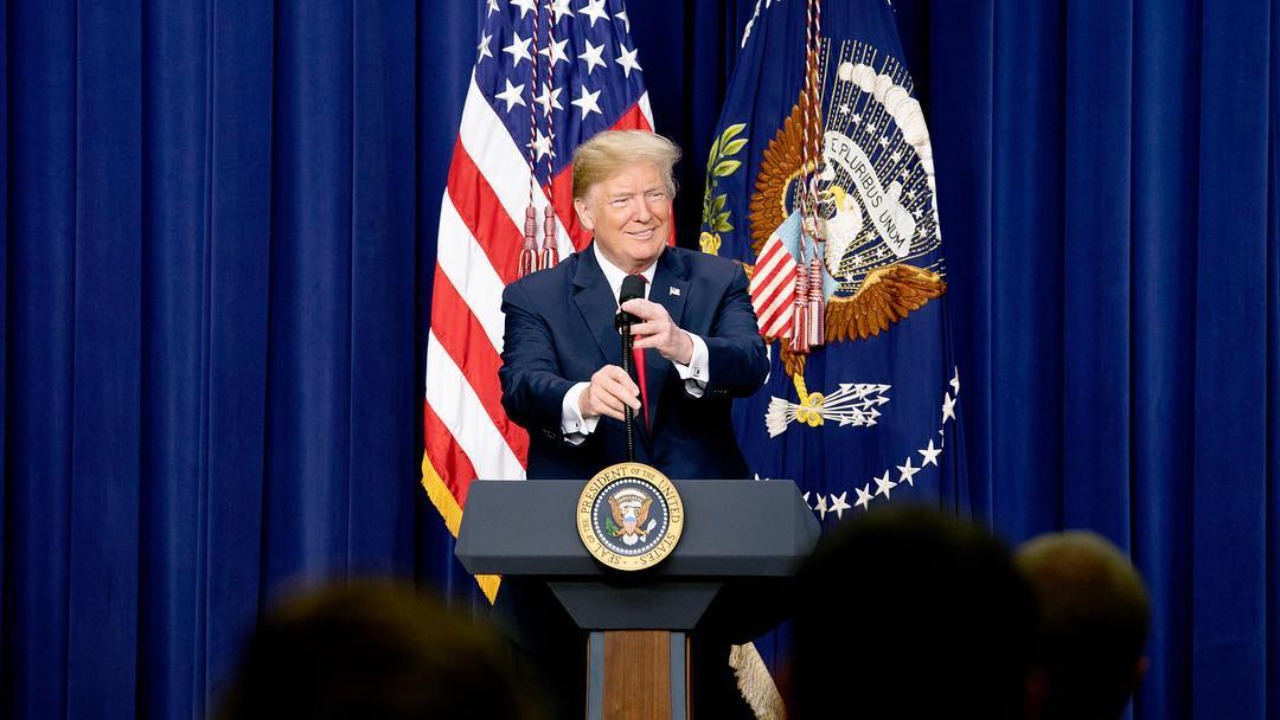

Fossil fuels still dominate the global energy mix, but the forces that once guaranteed their supremacy are now working in reverse. Prices are volatile, capital is cautious, and clean technologies are scaling faster than legacy producers can adapt. Even with President Donald Trump using federal power to favor oil, gas, and coal, the structural shift away from combustion fuels is gathering pace in ways policy alone cannot reverse.
The political story is noisy, yet the economic story is clearer: demand growth is slowing, alternatives are surging, and the infrastructure being built today is designed for a post‑carbon system. Trump can delay, distort, and subsidize, but he cannot rewrite the basic math of cost curves, climate risk, and global competition that is steadily eroding the foundations of the fossil era.
Markets are already pricing in the fossil fuel peak
Energy markets are not waiting for politicians to declare an end to fossil fuels; they are quietly adjusting to it. Official projections in the Short Term Energy Outlook show oil and gas demand still rising in the near term, but at a pace that reflects efficiency gains, electrification, and slower economic growth rather than an open‑ended boom. Forecasts for Global oil prices now hinge on modest consumption increases and the expectation that supply growth will eventually outpace improvements in drilling productivity, a signal that producers face tighter margins even before demand actually falls.
On the ground, the supply picture is shifting in ways that further undermine the old order. The U.S. Energy Information Administration notes that Brazil, Guyana, and Argentina are expected to drive crude oil growth in 2026, with global crude output rising largely from countries outside of OPEC+. That diversification, combined with multi‑year highs in Shipping rates for crude tankers, underscores how fragile the old price‑supporting cartel dynamics have become. When new producers and transport bottlenecks set the tone, long‑term investors see more risk than reward in betting on perpetual fossil expansion.
Trump’s pro‑fossil agenda is powerful, but not decisive
President Donald Trump has spent his second term trying to tilt the playing field back toward fossil fuels. His administration has framed its first year as a story of “ENDING THE WAR ON BEAUTIFUL, CLEAN COAL,” boasting that wages for coal workers are up and that coal plants across the country are being kept online through regulatory relief and support for traditional mining regions, as highlighted in an official Jan review. In the same narrative, the White House has celebrated a fossil‑heavy industrial strategy that leans on domestic extraction and combustion as symbols of national strength.
The policy toolkit has been broad. A detailed look at What Trump is promising the oil and gas sector shows a renewed focus on fossil development, streamlined permitting, and expanded leasing, all pitched as a way to boost domestic production and reduce import dependence. At the regulatory level, Trump’s EPA has embraced a fossil fuel‑friendly approach to deregulation that has reshaped environmental enforcement, shifted research priorities, and relaxed oversight of pollution from power plants and drilling operations. These moves unquestionably matter for short‑term emissions and local air quality, but they do not change the underlying economics that are making new fossil projects harder to justify.
Clean energy keeps advancing despite political headwinds
Even as the White House leans into fossil fuels, clean energy is quietly embedding itself deeper into the power system. Analysts tracking capacity additions note that the EIA expects all net new generating capacity in 2026 to come from renewables, a stark indicator that investors see more upside in wind, solar, and storage than in new coal or gas plants. A separate industry assessment of global oil markets in Jan underscores that international demand scenarios increasingly assume aggressive deployment of electric vehicles and efficiency measures, which cap long‑term oil growth even if short‑term consumption remains robust.
Trump’s own energy apparatus is not immune to this reality. In January, the Energy Department announced a $2.7 billion investment to strengthen domestic enrichment and support advanced nuclear projects that are expected to deliver 850 megawatts of electricity, a scale that directly competes with fossil generation. At the same time, the administration’s own Department of Energy has forecast that electricity consumption will reach an all‑time high and that the United States will need more power from wind, solar, and all other sources to meet these demands, as highlighted in a letter citing The Trump Administration’s own projections. In other words, even the pro‑fossil federal government is planning for a grid where low‑carbon sources carry much of the incremental load.
Coal and pipelines show how “rescue” efforts raise costs
Nowhere is the tension between political rescue and economic gravity clearer than in coal. Trump has ordered agencies to keep aging coal and other fossil fuel plants online to support reliability and industrial loads, including new data centers and mining operations. Yet experts like Goggin warn that these directives could impose significant costs on utilities, which neither needed nor requested them, effectively turning ratepayers into a subsidy base for uneconomic plants. Keeping coal on life support may preserve some jobs in the short term, but it also crowds out investment in cheaper renewables and grid upgrades that would lower bills over time.
Pipeline politics tell a similar story. President Donald Trump has recently sought to revive fights from his first term, blasting New York for holding up projects like the Constitution pipeline and portraying state‑level resistance as an attack on national energy security. Yet these battles unfold against a backdrop where demand growth for gas in power generation is slowing and where electrification of heating and transport is starting to cap long‑term throughput. For investors, the risk is that expensive new pipelines become stranded assets long before they pay back, a concern that no presidential speech can erase.
Global climate politics and “electrostates” lock in the transition
Trump’s decision to pull the United States out of a major climate treaty has undeniably made global climate policy more uncertain. Environmental advocates warn that The United States has stepped back from a leadership role at a critical moment, complicating efforts to coordinate emissions cuts and climate finance. Yet the same analysis stresses that cities, states, and other countries can still take meaningful action, and many are doing so by accelerating clean energy deployment and phasing out coal. That distributed momentum reduces the leverage any single national government has over the direction of the energy system.
Meanwhile, the rise of “electrostates” is reshaping the geopolitical logic that once favored oil and gas exporters. A detailed assessment of how fossil fuels are faring under Trump’s second term notes that Electrostates rising, powered by cheap renewables and storage, are cutting the cost of importing fossil fuels and reducing their exposure to price shocks. At the same time, a separate review of how The Trump administration has changed the energy landscape finds that its policies have increased uncertainty, project delays, and rising costs for U.S. solar and wind, but have not stopped those sectors from expanding their share of the market between 2025 and 2030. In effect, the world is building an electricity‑centered energy system that makes fossil fuels less essential with every new solar farm, wind project, and battery installation.
More from Morning Overview