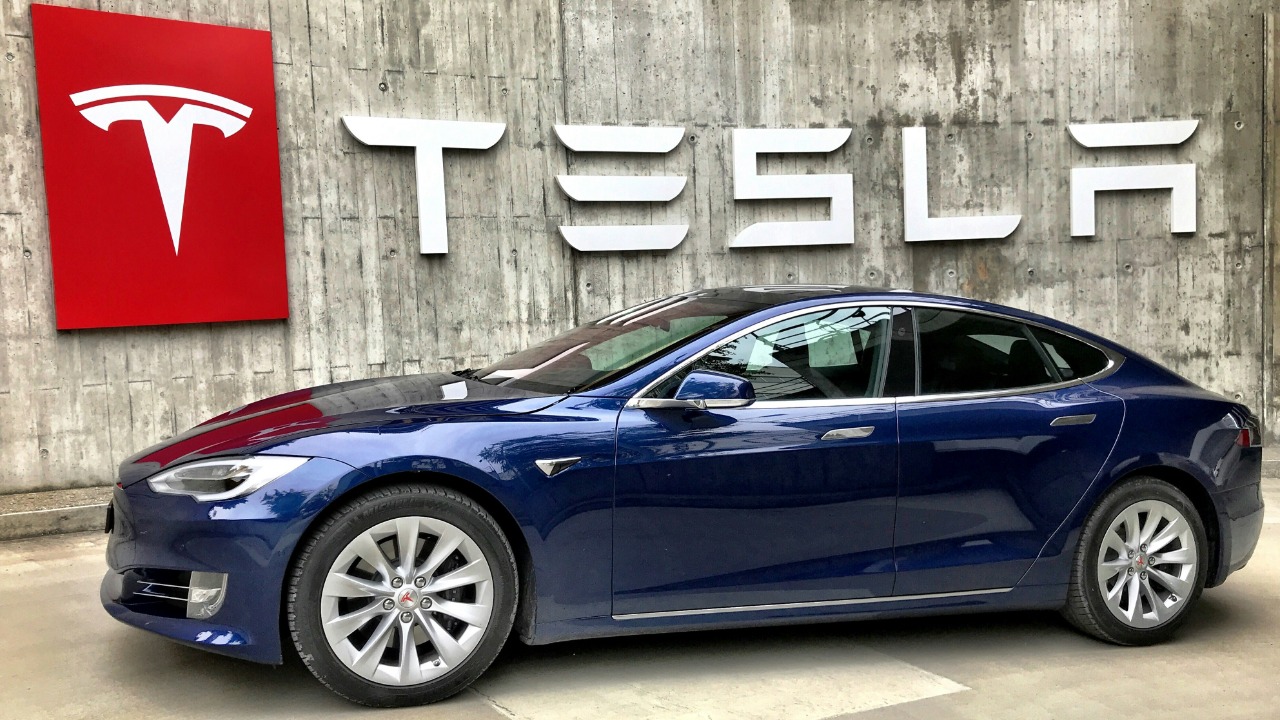

Tesla has become shorthand for the future of electric vehicles and robotics, yet one of the most intriguing robotics stories in the EV space is unfolding inside a far cheaper stock. While Tesla’s valuation reflects huge expectations for humanoid robots, a lesser-known automaker with a stake in Boston Dynamics is already field‑testing machines that can run, jump, and work alongside people. For investors willing to look past the usual mega-cap names, the real robotics upside in EVs may be hiding in plain sight.
I see a clear divergence emerging: Tesla is asking shareholders to pay up today for robotics revenue that might arrive years from now, while this lower‑priced rival is quietly embedding world‑class robots into its industrial strategy at a fraction of the market premium. The gap between hype and execution is where long‑term returns are often made.
Tesla’s $1.5 trillion robotics promise
Tesla’s entire narrative has shifted from being just an automaker to being a robotics and AI platform, and the market has rewarded that pivot. Reports note that the company’s valuation has surged to nearly $1.5 trillion, in part because CEO Elon Musk has framed the humanoid robot Optimus as the company’s next major growth engine. In public remarks highlighted under Key Points, Musk has argued that Optimus could eventually account for the majority of Tesla’s value, positioning the robot as a future factory worker, logistics helper, and even domestic assistant. That pitch has helped push Tesla stock near all‑time highs, with investors effectively paying today for a robotics business that is still in early development.
The ambition does not stop at vague promises. Separate reporting on Musk’s comments notes that he has suggested as much as 80% of Tesla’s long‑term value could come from Optimus, again tying that outlook to a roughly $1.5 trillion market capitalization. In that coverage, the Videos. Those machines are not theoretical; they already navigate warehouses, construction sites, and research labs, and they have been refined over years of real‑world testing rather than slide‑deck projections.
Investor‑focused analysis of the partnership stresses that Boston Dynamics may not be a household name, yet most people have seen clips of its robots running, jumping, or doing parkour, which has turned the company into a kind of unofficial mascot for advanced robotics. One breakdown titled What you should know about Boston Dynamics notes that these machines are now being framed as future co‑workers that could one day be “working on your next car,” a direct nod to how an automaker can integrate them into EV production lines. That is a very different robotics story from Tesla’s, because it is rooted in existing platforms and factory use cases rather than a single humanoid product that is still years away from mass deployment.
Why the “dirt‑cheap” label matters for investors
From a valuation standpoint, the contrast is stark. As of Jan. 27, As of Jan, Tesla shares were trading near record levels, reflecting the market’s willingness to pay a premium for its robotics and AI narrative. By contrast, the EV manufacturer tied to Boston Dynamics is repeatedly described as “dirt cheap,” with coverage arguing that its stock price does not fully reflect the strategic value of its robotics stake. From an investor’s perspective, that mismatch between robotics capability and equity valuation is exactly what makes the opportunity compelling.
In my view, the key is that this cheaper automaker is not asking shareholders to underwrite a moonshot. Instead, it is using Boston Dynamics technology to improve manufacturing, logistics, and safety, all of which can feed directly into margins on existing EV models. Analysis of the strategy notes that, from an investor’s perspective, the approach has already been a success, with the company’s robotics integration seen as a competitive edge rather than a speculative side project, as highlighted in the investor’s perspective commentary. That is why the “dirt‑cheap” label matters: it signals that the market may be underpricing a very real robotics asset embedded inside an otherwise conventional EV stock.
Robotics strategy: hype versus deployment
When I compare the two strategies, I see Tesla leaning heavily on long‑dated promises while the Boston Dynamics partner focuses on near‑term deployment. Reporting on Tesla’s history notes that, over its history, Over its history, Tesla has repeatedly used ambitious product roadmaps to support its valuation, from Autopilot to full self‑driving and now Optimus. That pattern has delivered enormous returns for early shareholders, but it also means new investors are buying into a story that depends on flawless execution in robotics, a field where hardware, software, and safety challenges are notoriously difficult.
The rival automaker’s robotics roadmap looks more incremental. Coverage of what you should know about Boston Dynamics emphasizes that its robots are already being tested in industrial settings, including scenarios where they could inspect equipment, move parts, or assist human workers on EV assembly lines. That kind of deployment does not generate the same headlines as a humanoid but it can steadily improve productivity and safety, which are exactly the levers that long‑term investors should care about. In other words, one company is selling a vision of robots that might transform its business, while the other is already using robots to quietly tune its operations.
How to think about robotics exposure in an EV portfolio
For anyone building exposure to EVs and automation, the choice is not necessarily Tesla or the Boston Dynamics‑linked stock, but how much to pay for each flavor of robotics risk. On one side, Tesla’s CEO Elon Musk is effectively asking investors to believe that Optimus will justify a $1.5 trillion valuation and eventually dominate the humanoid category. On the other, the cheaper automaker is using its stake in Boston Dynamics to embed proven robots into its factories and logistics networks, with the potential to scale that integration across its EV lineup. I see the first as a high‑beta bet on a single flagship robot and the second as a diversified bet on a portfolio of industrial machines that already work.
Investors do not have to navigate this alone. Platforms that specialize in Market Coverage and Stocks analysis have been dissecting how robotics fits into both companies’ long‑term plans, and the consensus across that coverage is that the cheaper EV stock offers a rare combination of real robotics capability and modest expectations. In my view, that is exactly the kind of asymmetry that can reward patient shareholders: if Boston Dynamics keeps advancing and the automaker keeps integrating those robots into its EV business, the market may eventually have to reprice the stock to reflect a robotics story that is already unfolding, not just promised for the next decade.
More from Morning Overview