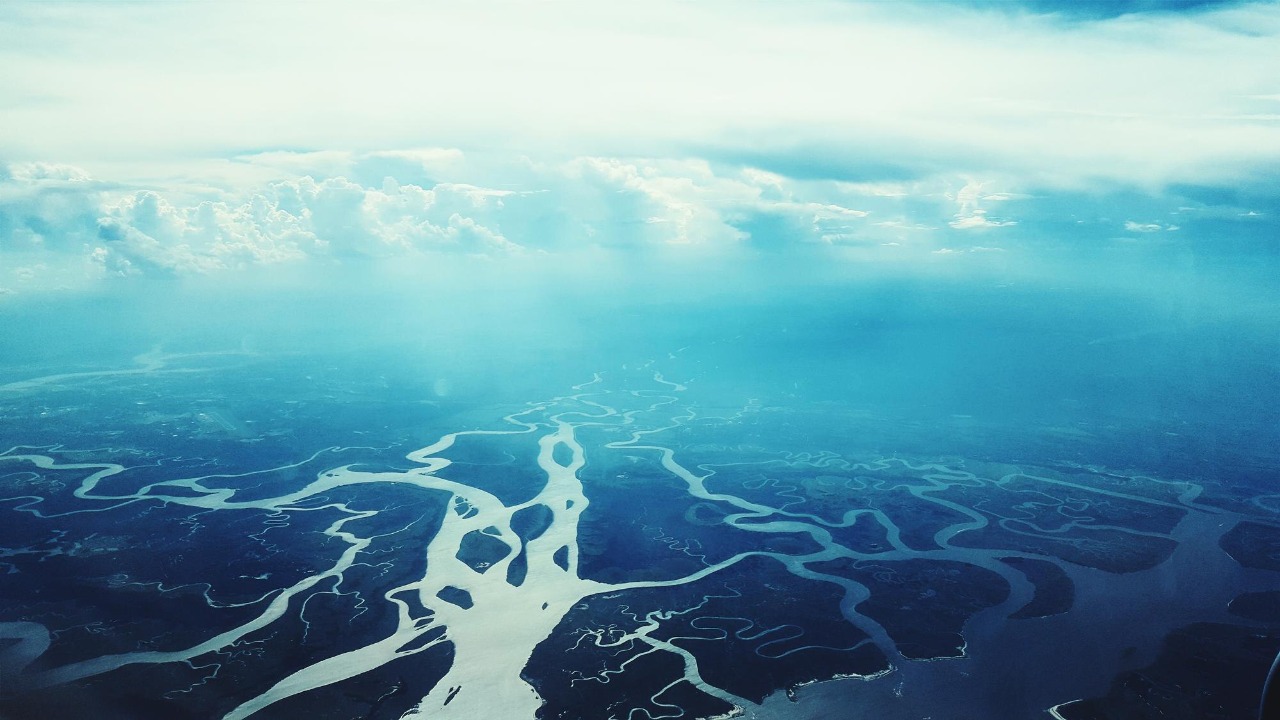

For decades, the Pacific side of Panama has relied on a predictable seasonal rhythm, when cold, nutrient rich water surges upward from the depths and briefly transforms a warm tropical gulf into a powerhouse of marine life. In 2025 that pulse faltered, and for the first time in roughly four decades the deep waters that usually rise each dry season stayed trapped below the surface. The failure of this “breath” of the sea is more than an oceanographic curiosity, it is a warning signal about how quickly a warming climate can rearrange the basic physics that coastal communities depend on.
Instead of the usual cool, green waters that fishermen and satellites expect to see, the Gulf of Panama remained stubbornly warm and blue, a visual sign that the engine feeding one of the region’s most productive fisheries had stalled. I see this event as a case study in how subtle shifts in wind and temperature can cascade through ecosystems and economies, turning a once reliable natural subsidy into a new source of risk.
How Panama’s ocean “breath” is supposed to work
To understand what failed, it helps to start with the normal pattern. During the dry season in Central America, typically between December and April, strong northern trade winds accelerate across the isthmus and through gaps in the Cordillera mountain range. On the Pacific side of Panama those winds push surface waters away from the coast, allowing colder, nutrient loaded water from depth to rise and cool the sea surface by several degrees, a process scientists describe as coastal upwelling that is especially intense during the dry months.
From January through April in a typical year, this wind driven system turns the Gulf of Panama into a seasonal oasis of productivity, with surface temperatures dropping to around 20 °C at their coolest and dense blooms of phytoplankton feeding everything from anchovies to tuna. Researchers tracking the region note that the same Atlantic trade winds that cross Panama and the Cordillera also shape conditions on the Caribbean side, but it is on the Pacific shelf where the upwelling is most visible, and where the missed cooling earlier this year signaled that the pattern described from January to April had broken down.
The year the signal vanished
In 2025 that familiar seasonal signature simply did not appear. Satellite records and in water measurements show that the usual drop in sea surface temperature was muted or absent, and the cold tongue that normally stretches across the Gulf of Panama never fully formed. One detailed reconstruction describes how the upwelling that should have begun early in the dry season instead started 42 days late, lasted just 12 days instead of the typical 66, and crucially failed to cool the surface waters in the way scientists expect, a compressed and weakened event that, as one summary put it, began with “However, in 2025, the upwelling started 42 days late.”
For four decades, the Pacific coast of Panama had shown a remarkably consistent pattern of this seasonal cooling, to the point that researchers sometimes describe the cycle as the way the sea “breathes” in and out each year. In 2025 that breath stopped, and The Panama Sea, as one account framed it, appeared to have gone still, with satellites and fishermen both reporting conditions that had never been recorded in that span of time, a break in the record that underscores how a single disruption can unsettle tropical seas for four decades.
Forty years of reliability, gone in a season
What makes this failure so striking is not only that it happened, but that it broke a record of apparent stability stretching back roughly 40 years. Long term monitoring of Panama’s Pacific shelf has shown that, despite year to year variations, the deep waters reliably rose to the surface each dry season, feeding a marine food web that supports commercial and artisanal fisheries. For the first time in at least 40 years of observations, that deep water signal vanished in 2025, leaving scientists to note that the upwelling that once appeared like clockwork had simply failed to materialize, a gap in the data that one analysis described as “for the first time in at least 40 years of” records.
Another synthesis of the event emphasizes the same timescale, noting that for the first time in over 40 years, Panama’s vital ocean upwelling system, a natural process that drives marine productivity in the region, did not behave as expected. That account also highlights the economic stakes, pointing out that the fisheries supported by this system generate hundreds of millions of dollars annually, mostly from exports, a reminder that the phrase “for the first time in over 40 years” is not just a scientific milestone but a marker of risk for coastal livelihoods.
Warm blue water where cold green should be
The physical face of this breakdown was visible from space and from the decks of small fishing boats. Instead of the usual cold, green, nutrient rich surface that signals active upwelling, observers reported warm, blue waters in the Gulf of Panama earlier this year, a clear sign that the deep, cooler layers had not reached the surface in their normal volume. Local coverage described how, for the first time on record, the cold, nutrient rich waters that sustain an entire ecosystem failed to surface in the Gulf of Pa, with experts stunned to see the typical productive zone replaced by a more stratified, oligotrophic sea where the surface layer stayed warm and was no longer being pushed away by prevailing winds Gulf of Pa.
Remote sensing specialists and field researchers pieced together a consistent picture, noting that in 2025 winds weakened dramatically, waters remained stratified and warm, and the seasonal pulse never arrived in the way it had in previous years. One climate risk assessment describes the 2025 collapse of Panama’s ocean circulation as a failure of the usual wind driven overturning, with consequences for plankton blooms and marine food webs that depend on the injection of nutrients from depth, a chain of effects that begins with the simple fact that “the 2025 collapse of Panama’s” upwelling left the surface layer cut off from its usual supply of deep water Panama’s.
Why the winds failed and what it means next
Scientists looking for causes have focused on the atmosphere above the isthmus as much as the water below. According to researchers at the Smithsonian Tropical Research Institute, weakened wind patterns prevented the usual upwelling, leaving the coastal Pacific warmer and less productive than expected. Their analysis notes that this natural cycle normally fuels fisheries and supports coastal communities, but in 2025 the altered trade winds did not generate the same offshore push, a shift summarized in one account that begins with “According to” the Smithsonian Tropical Research Institute, or STRI, and goes on to link the wind changes to the missing upwelling According.
STRI scientists have also framed the event within a longer narrative of how Panama’s rich Pacific fisheries emerged and how they might change in a warming climate. In a broader look at the “Sea of Plenty” that has long characterized Panama’s Pacific coast, they describe how upwelling and Panama’s rich Pacific ecosystems are intertwined, and how the 2025 collapse of coastal upwelling may foreshadow new conditions that will shape its future, a perspective that situates the recent failure within a continuum of past abundance and emerging uncertainty for Sea of Plenty.
More from Morning Overview