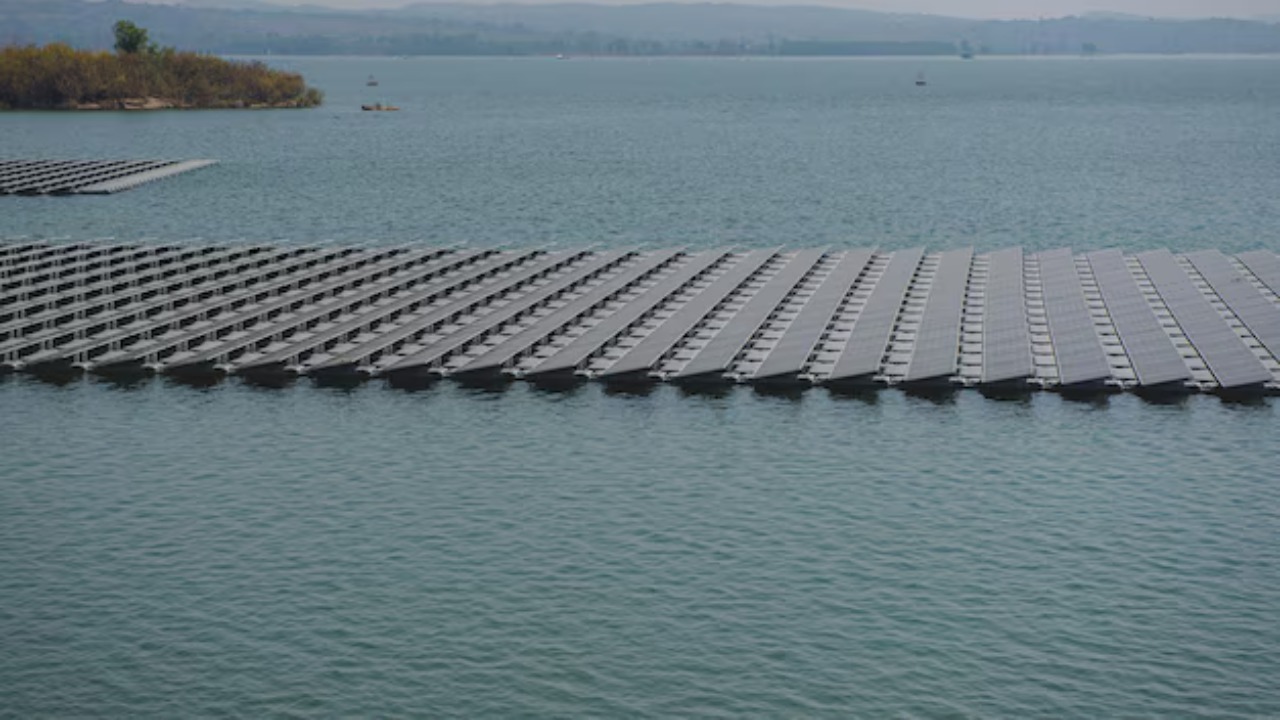

Floating solar farms have moved from novelty to serious infrastructure, turning reservoirs, lakes and sheltered coastal waters into power plants. As solar capacity races past 1,200 G worldwide, putting panels on water is no longer a side experiment but a central way to expand clean generation without fighting for land.
By lifting photovoltaics off the ground and onto pontoons, developers are unlocking cooler operating conditions, higher yields and new grid options for islands and dense cities. I see this shift as one of the clearest signs that solar is evolving from a land-hungry technology into a flexible platform that can be tailored to almost any geography.
Why floating solar is suddenly scaling up
The basic idea is simple: instead of mounting panels on steel racks, engineers attach them to buoyant platforms that sit on the surface of lakes, hydropower reservoirs or sheltered seas. As of 2026, commercial suppliers describe how these floating systems use modular pontoons, anchoring lines and walkways so that maintenance crews can treat them much like ground arrays, only with water beneath their feet, a configuration detailed by solar specialists. The water below acts as a natural coolant, which helps panels run closer to their optimal temperature and reduces the performance losses that plague overheated rooftop systems.
That cooling effect is not just a theoretical perk. In Malaysia, project developers report that floating solar delivers 5 to 15 per cent higher energy yield than conventional solar, a margin that can make or break project economics in competitive power markets. At the same time, the shade from panels can cut evaporation from reservoirs and reduce algae growth, while the absence of dust and soil erosion on the water surface lowers cleaning needs compared with dry, windy sites on land.
Asia Pacific’s waterborne power plants lead the way
The Asia Pacific region has become the proving ground for this technology, turning its dense cities and dammed rivers into a vast test bed. Analysts note that Asia Pacific is the global leader in floating solar, with the ten largest operational projects worldwide and eight of those installations sitting within Asia Pacific itself. From industrial ponds in China to hydropower reservoirs in Vietnam and Thailand, developers are pairing solar with existing grid connections and transmission corridors, which cuts both permitting friction and connection costs.
Some of the most ambitious examples are now rivaling large land-based plants. The Omkareshwar Floating Solar Project in India is cited among the largest floating solar parks globally, part of a trio of mega-installations highlighted by Omkareshwar project trackers. In parallel, island nations are turning to marine platforms to cut diesel imports, with one marine floating solar solution in the Maldives using modules that have passed stringent TÜV Rheinland tests and show power degradation significantly lower than IEC standards, a performance profile described in detail for Rheinland-certified equipment.
Technology gains: from better panels to unsinkable platforms
Hardware advances are amplifying the advantages of water-based siting. Engineers working on new module designs stress that solar energy is no longer just panels bolted to a roof or field, and that in 2026, new solar panel technology is shaping generation in the coming decade. Higher efficiency cells, bifacial designs that capture reflected light from the water surface and more robust encapsulation materials all play to the strengths of floating arrays, which see more diffuse light and harsher humidity than typical ground systems.
On the materials side, researchers are pushing the boundaries of buoyancy and durability in ways that could spill over into commercial platforms. Guo’s research group, for example, first demonstrated superhydrophobic floating devices in 2019 and has since refined designs that use two water-repellent layers to create structures that are nearly unsinkable and can even capture energy from moving water, according to experimental work on Guo‘s prototypes. While these lab-scale devices are not yet standard in commercial floating solar, they point toward future platforms that could better withstand storms and integrate wave or current energy alongside photovoltaics.
Land, markets and the business case on water
For developers, the most immediate draw is not futuristic materials but the economics of land. Industry guidance on the benefits of floating is blunt: it saves valuable land, and land is expensive. Communities that resist turning farmland into solar fields are often more comfortable with panels on industrial ponds or hydropower reservoirs that are already off limits for recreation or agriculture. From lakes to industrial ponds, floating solar opens the door to more deployment without using up valuable land, a flexibility that advocates say can significantly expand capacity compared with conventional solar systems on land, as highlighted in assessments of solar’s adaptability.
Those locational advantages are now showing up in market forecasts. Analysts tracking the sector report that the floating solar panel market size has grown exponentially in recent years, driven by rising demand for clean energy, improvements in panel efficiency and increasing energy storage adoption, a trend summarized in a global market report. Utility-scale floating arrays in particular are attracting major manufacturers, with suppliers such as Kyocera Corporation and others described as key leaders in 2026 for utility-scale floating arrays, a sign that the technology has moved firmly into the mainstream of project finance.
Grid integration, storage and the next wave of innovation
As more capacity moves onto water, the question is shifting from whether floating solar works to how it fits into the wider energy system. Engineers working on offshore and reservoir projects describe floating solar farms as sitting on the surface like high-tech seafaring vessels, and argue that they will transform global clean energy when paired with smart grid integration and energy storage solutions, a vision laid out in analyses of How Floating Solar will transform global clean energy. Co-locating batteries on shore, or tying arrays into existing hydropower dams that can ramp output up and down, turns these installations into flexible resources that can smooth out the variability of sun and demand.
At the technology frontier, perovskite cells and other emerging materials could further tilt the balance toward water. Perovskite solar panels could be the future, since they have reached higher efficiency levels than many conventional silicon modules and come with low production costs, according to assessments of Perovskite technology. If manufacturers can solve durability issues in humid environments, combining perovskites with the cooling benefits of water could yield some of the most efficient solar platforms yet. At the same time, global reviews of offshore photovoltaics emphasize that the global transition to renewable energy is accelerating, and that floating solar will increasingly be paired with storage and advanced grid controls to deliver reliable power even far from shore.
More from Morning Overview