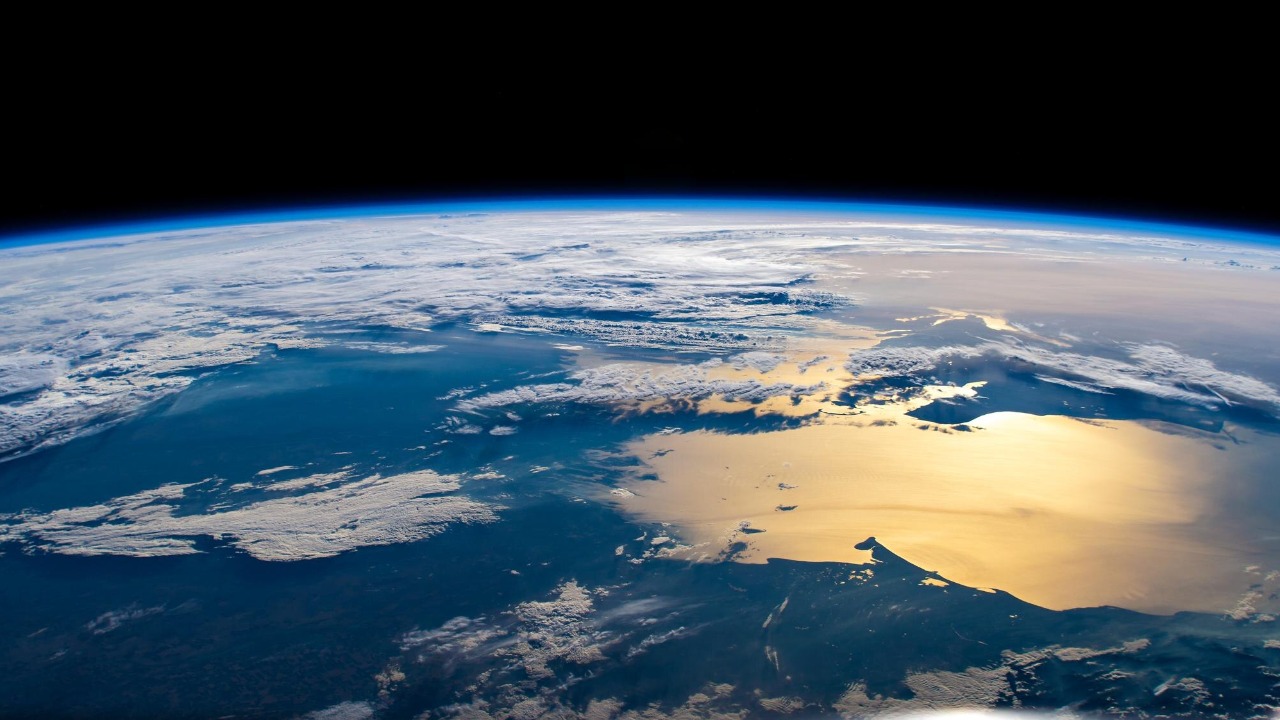

A flat earth activist recently tried to discredit NASA by circulating a doctored space photo, only to be exposed by the very image data he claimed to champion. The episode has become a case study in how conspiracy communities lean on fabricated visuals while accusing space agencies of the same sin. I see it as a revealing snapshot of how misinformation thrives on social media, and how patient, methodical debunking can still cut through the noise.
At the center of the dispute is a familiar battleground: photographs of Earth from space. Flat earthers have long targeted these images, insisting that any curvature or cloud detail must be “fake,” yet in this case one of their own quietly edited a NASA image to make it look more suspicious, then presented it as proof of a cover up. When other users traced the picture back to NASA’s own archives and compared it to the original, the manipulation was obvious and the smear collapsed.
The fake NASA image that backfired
The controversy began when a flat earth supporter posted a side by side comparison of two Earth photos, claiming both came directly from NASA and that the differences proved the agency was fabricating its visuals. The activist framed the right hand image as a pristine, untouched file, insisting that any visible curvature or color variation must be evidence of digital trickery. In reality, the “clean” version had been quietly edited, with contrast and color tweaks that exaggerated certain features while hiding others, a tactic that only became clear once skeptics tracked down the original file from NASA’s own servers.
One detailed breakdown of the incident describes how a debunker, writing in Dec, explained that they had “Take the image attached to this post” directly from the NASA website, then discovered that the photo on the right in the flat earther’s meme was an edited copy of that same file. The post notes that the activist had cropped and altered the official image to make it look inconsistent, then used that inconsistency as supposed proof of fraud, a circular trick that fell apart as soon as the unaltered NASA version was shown to the group.
How flat earth communities normalize deception
What makes this episode more than a one off embarrassment is how comfortably it fits into a broader pattern inside flat earth circles. In a widely shared discussion from Jul, critics of the movement describe how “Flerfs” have “made lying and denying an art form” because that is often the only way they can generate anything that looks like evidence for a flat “Eart.” The language is blunt, but it captures a dynamic I have seen repeatedly: when reality does not match the belief, the image or quote is adjusted until it does, and the adjustment is rarely disclosed.
Members of one globe discussion group catalogued multiple cases where flat earth promoters quietly altered photos, misrepresented diagrams, or clipped videos out of context, then doubled down when caught. In the post that called out the fake NASA image, the author pointed out that this was not an isolated slip but part of a culture where doctored visuals are passed around as “research,” while any correction is dismissed as trolling. The same thread argued that this pattern forces skeptics to debunk the same false claims again and again, because each new meme is treated as fresh proof by people who never see the original Flerfs context.
“Photoshopped” as a reflex, not a finding
Ironically, the flat earther who manipulated the NASA image was leaning on a favorite accusation inside the movement: that any inconvenient picture must be “Photoshopped.” In a later analysis of similar claims, one debunker writing in Mar described how “Photoshopped” has become the “go to” excuse whenever a space image contradicts flat earth expectations. The post argued that this reflex is rarely backed by any actual image forensics, and instead functions as a kind of conversational escape hatch, a way to dismiss evidence without engaging with it.
That same Mar discussion, titled “Debunking flat earth claims/comments Pt 15,” asked a pointed question: if someone is willing to edit a photo to fit their bias, why should their accusations about other people’s editing be taken seriously. The author contrasted the flat earther’s secret tweaks with the open, documented processing that professional image teams use when they assemble composite views of Earth, noting that one side hides its alterations while the other publishes them. The post framed the fake NASA meme as a textbook example of how some activists will quietly manipulate a picture, then loudly accuse others of doing exactly that, a pattern the author labeled Debunking by projection.
What real image analysis of Apollo and Earthrise looks like
Outside conspiracy forums, the scrutiny of space photos looks very different. When image specialists and science communicators examine NASA material, they typically start from the raw data and work forward, rather than from a meme and work backward. One detailed review of Apollo missions, for example, compares Earthrise Photos from Apollo 8 and Apollo 11 to address a specific flat earth hoax that claims the Earth in one frame is “too small” or “too big” compared with the other.
In that analysis, the author pulls the original Earthrise files from NASA’s image archive, then walks through camera settings, spacecraft position, and lens focal length to show why Earth appears at different sizes in different shots. The piece explains that the Apollo 8 Earthrise and the later Apollo 11 Earthrise were taken with different equipment and at different distances, so the apparent size of Earth in each frame is exactly what physics predicts. The same site also notes that some flat earth memes quietly crop or stretch these images to exaggerate the discrepancy, a tactic that only becomes obvious when you compare them to the unedited Earthrise originals.
Composites, context, and the limits of online “gotchas”
One of the more persistent talking points in flat earth spaces is that NASA’s use of composite imagery proves deception. In a widely circulated thread on r/flatearth, a user named Lorenofing, labeled as a Top 1% Poster, acknowledged that NASA has published several pictures of the Earth that are composites, meaning they are stitched together from multiple satellite passes to create a single, cloud free globe. For the poster, this admission was framed as a kind of smoking gun, proof that the pictures are “not real,” even though the compositing process is openly documented and widely used in Earth observation.
What the fake NASA meme incident shows is how that nuance gets stripped away when images are weaponized for quick online “gotchas.” In the Reddit discussion, some participants conceded that a composite does not mean the underlying data is fabricated, it simply means the final picture is a mosaic of real measurements. Yet in flat earth memes, the word “composite” is often presented without context, as if any stitching automatically equals fraud. The doctored side by side image tried to exploit that same confusion, implying that any difference between two Earth photos must be evidence of fakery, while ignoring the role of camera settings, vantage point, and legitimate processing in shaping how NASA presents Earth.
More from Morning Overview