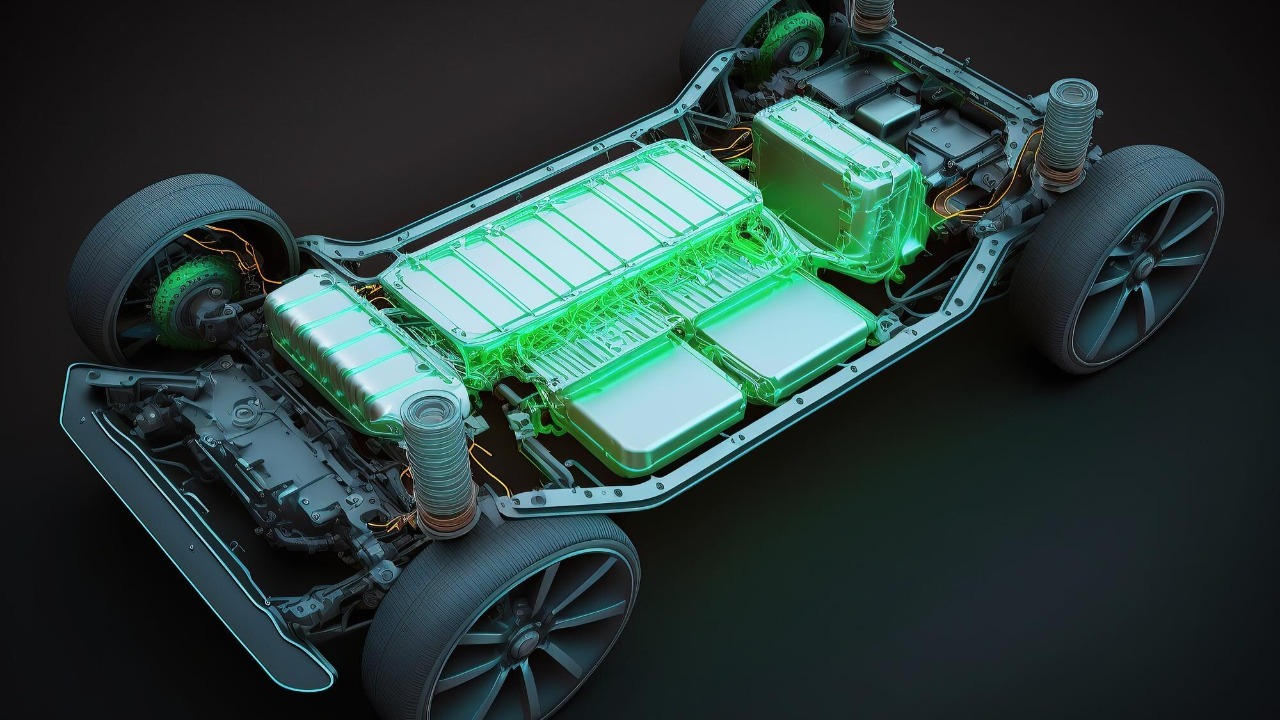

Electric vehicles have long chased a simple promise: charge as quickly as filling a fuel tank, without sacrificing range or safety. The first real shot at that vision has arrived in the form of a solid-state battery that claims to recharge in about five minutes while fitting into real cars and motorcycles. If the technology holds up under scrutiny, it could reset expectations for how drivers use public fast chargers, home power, and even the broader electricity grid.
The stakes are high because this is not just another lab cell or distant roadmap. Companies are now talking about mass-produced solid-state packs, production-ready modules, and megawatt charging systems that together hint at a genuine five‑minute charging revolution. At the same time, fierce criticism from established battery players shows how contested these claims are, and why independent validation will decide whether this breakthrough is remembered as a turning point or a cautionary tale.
What “solid-state” really changes for EV drivers
At its core, a solid-state battery replaces the flammable liquid electrolyte inside today’s lithium‑ion cells with a solid material, which can unlock higher energy density, better safety, and much faster charging. In practical terms, that means an electric car could carry more usable energy in the same space, tolerate higher currents without overheating, and be less prone to thermal runaway if damaged. In Jan, engineers and presenters in a detailed technical breakdown described how solid electrolytes can reduce internal resistance and enable aggressive fast‑charge profiles that conventional cells simply cannot survive, a point that underpins the five‑minute claims highlighted by Jan.
For drivers, the appeal is straightforward: instead of planning trips around 20 to 40 minute charging stops, a solid-state pack that can safely absorb huge power levels would make a highway recharge feel closer to a quick fuel stop. That is why a solid-state battery designed specifically for battery electric vehicles, and pitched as capable of combining rapid charging with high efficiency without inflating vehicle costs, has drawn so much attention from investors and automakers who see it as a way to remove one of the last psychological barriers to EV adoption, as detailed in a report on a world‑first mass‑produced design.
Donut Lab’s five‑minute charge claim and the backlash
The boldest current claim comes from Donut Lab, a company that says it has an all‑solid‑state EV battery ready for production that can recharge from empty to full in roughly five minutes. According to a detailed overview of its technology and performance targets, the group behind the project in Jan framed its pack as a practical, manufacturable solution rather than a distant prototype, arguing that its solid electrolyte and cell architecture can handle extreme charging currents while maintaining cycle life, a positioning that has been dissected in depth by Arguably one of the most closely watched CES announcements.
Donut Lab has gone further by saying its solid-state pack is not just a lab curiosity but is already available for real vehicles, including electric motorcycles, and that it can recharge to full in five minutes using appropriate hardware. That claim, which positions the company as a first mover in commercial solid-state deployment, has been highlighted in coverage of a solid-state EV battery that is described as available now and capable of five‑minute full charges, a description that directly credits Donut Lab with bringing the technology to market.
Why Svolt and others are calling fraud
The reaction from parts of the established battery industry has been scathing, which is why I see this moment as a stress test for how solid-state breakthroughs are vetted. Yang Hongxin, the chairman of Svolt, a battery maker spun out of GWM, has publicly argued that Donut Lab is a fraud, saying that the parameters it has disclosed for its all‑solid‑state battery are contradictory and cannot be reconciled with known electrochemical limits. In his view, the combination of energy density, charge time, and durability that Donut Lab advertises violates basic trade‑offs that companies like Svolt have run into while scaling their own advanced chemistries, a critique laid out in detail in an interview with Yang Hongxin.
The skepticism has spilled into enthusiast and investor communities as well, where discussions have amplified the accusation that Donut Lab’s “production‑ready” label is misleading. In one widely shared thread, critics pointed to the same comments from GWM and the Svolt CEO, arguing that if a major supplier with deep experience in lithium‑ion and next‑generation cells cannot reconcile the numbers, independent testing is essential before regulators and automakers commit. That debate, which centers on whether GWM and its Svolt CEO are protecting their turf or exposing hype, underscores how fragile trust can be when a small player claims to leapfrog incumbents.
Toyota, Samsung SDI and the race to credible solid-state range
While Donut Lab grabs headlines with five‑minute charging, established automakers are pursuing their own solid-state roadmaps that focus as much on range as on refueling speed. Toyota has been at the center of this narrative, with social media posts amplifying claims that its solid-state battery could deliver a 745 Mile range and recharge in about ten minutes, a combination that, if realized, would make current long‑range EVs look modest. In one discussion, commentator Robert A. Burr of Solar Plus EV, writing in a Public thread labeled BATTERIES, repeated Toyota’s assertion that its solid-state pack targets a 745 Mile capability, a figure that has become shorthand for the company’s ambitions and is cited directly in a post shared by Robert A. Burr.
Another widely circulated post in Dec framed Toyota’s work as part of a broader upheaval in the EV industry, promising to dive from the science behind solid-state batteries to how this innovation could flip the EV market on its head. That discussion, which referenced questions about how much kWh would be needed, how such a pack might power a household, and how it fits into Toyota’s official battery roadmap, shows how quickly technical details have entered mainstream conversation once five‑minute charging and thousand‑mile ranges are mentioned in the same breath. The Dec commentary, introduced with the phrase From the science behind solid-state batteries, captured that sense of disruption and was shared widely through a post that opened with the words From the science behind solid-state batteries.
Beyond Toyota, suppliers are already demonstrating intermediate steps that bridge today’s lithium‑ion packs and future all‑solid designs. Samsung SDI, for example, has showcased a solid-state EV battery breakthrough at SNE Battery Day in Seoul, describing how its technology could enable longer range and faster‑charging electric vehicles while still fitting into existing manufacturing ecosystems. That presentation, which highlighted Samsung SDI’s work at SNE Battery Day in Seoul, underlined that large, well‑funded players see solid-state as a near‑term commercial opportunity rather than a distant research project, a point captured in a detailed summary of Samsung SDI and its semi‑solid‑state progress.
Megawatt charging, infrastructure strain and what comes next
Even if solid-state cells can handle five‑minute charging, the grid and charging hardware must keep up, and that is where megawatt‑class systems enter the picture. Chinese electric vehicle manufacturer BYD has already showcased an EV platform with a 1,000 kW charging system that it describes as capable of a Five Minute Charging Time, effectively doubling the power of Tesla’s 500 kW Superchargers. In a detailed breakdown of this technology, BYD’s megawatt setup was presented as a way to slash charging stops for models like the Han and Tang, with the company emphasizing that its Showcases EV concept is built around a Megawatt Five Minute Charging Time architecture that could redefine expectations for high‑end Chinese EVs, as outlined in a report on BYD and its 1,000 kW system.
More from Morning Overview