
Finland is turning one of the planet’s most ordinary materials into a high impact climate tool, using hot sand to store vast amounts of energy and release it as heat when homes and factories need it most. By pushing heat transfer efficiency roughly tenfold and cutting heating bills by as much as 70%, these sand batteries are quietly rewriting the economics of clean heat in a cold country that has every incentive to get this right. What began as a local experiment is now scaling into industrial projects that hint at a new playbook for energy storage far beyond the Nordics.
The basic idea is deceptively simple: use cheap, abundant sand as a thermal reservoir, charge it with surplus renewable electricity, and then draw that heat back out over days or even months. In practice, it is a sophisticated fusion of materials science, power electronics, and district heating engineering, and it is already reshaping how one small European nation thinks about energy security, affordability, and decarbonisation.
From cold winters to hot sand: why Finland is betting big
Few countries have more to gain from reliable, low carbon heat than Finland, where long, dark winters and a heavy reliance on district heating have historically meant deep exposure to fossil fuel prices. That vulnerability sharpened the search for alternatives that can store energy at scale without the cost and complexity of giant lithium batteries. Sand, which can be heated to several hundred degrees Celsius and held in insulated tanks with minimal losses, emerged as a surprisingly powerful candidate for seasonal storage that can bridge the gap between windy summers and freezing Januaries.
The appeal is not just technical but economic. Sand is cheap, non toxic, and locally available, and the infrastructure around district heating networks is already in place across Finnish towns. By inserting sand batteries into those networks, operators can soak up excess wind and solar power when it is abundant and then dispatch that stored heat when demand spikes, turning volatility into value. That is the backdrop for a wave of projects that now range from small town pilots to industrial scale installations serving entire communities.
The world’s largest sand battery heats a Finnish town
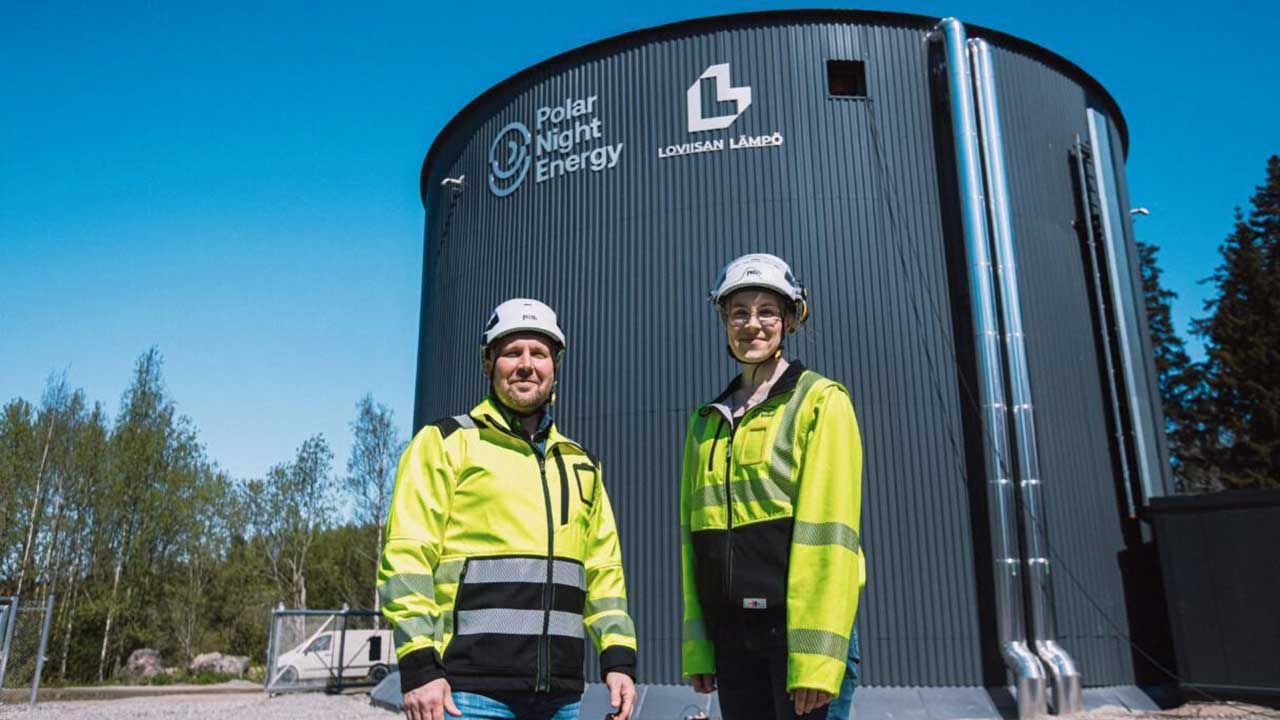
The most visible proof of concept sits in the small town of Pornainen, where an industrial scale Sand Battery has been built by Polar Night Energy for Loviisan Lämpö’s district heating network. The installation in Pornainen for Loviisan is described as the world’s largest Sand Battery, a towering thermal store that charges when electricity is cheap and then feeds hot air into the district system during peak demand periods. Video from earlier this year shows how Finland has activated this industrial scale unit in Pornainen, underscoring how quickly the technology has moved from lab concept to live infrastructure.
The operator Loviisan Lämpö has gone further, stating that its commissioned Sand Battery, developed by Polar Night Energy, can cut emissions from district heating by nearly 70 percent by displacing oil and gas. A separate technical overview notes that the Pornainen unit has a 100-MWh capacity, enough to store a town’s worth of heat and release it steadily over long periods. In practical terms, that means residents can stay warm through cold snaps while the utility leans far less on fossil backup, a tangible example of climate policy showing up in monthly bills.
Inside the tank: soapstone, sand, and 10x efficiency
At the heart of these systems is a deceptively rugged piece of engineering: a tall, insulated tank filled with granular material and threaded with heat exchangers. One widely shared walkthrough highlights a 43 foot tall tank packed with 2,000 tons of crushed soap stone, essentially fireplace scrap repurposed as a giant heat battery. Another explainer describes how this is currently the largest such unit on the planet, using hot air to charge the stone and then circulating cooler air through the mass to draw heat back out, a process that can be repeated thousands of times with little degradation.
In the small Finnish town of Pornainen, one profile notes how this approach turns crushed soapstone into a practical thermal store, with hot air moving through the rock to hold heat in a thermal tank that feeds the local network, a setup described in detail by In the Finnish Pornainen project. A separate technical assessment of a similar sand battery reports round trip thermal efficiency in the range of 85 to 90 per cent, significantly higher than many chemical batteries when used purely for heat. That high efficiency, combined with the low cost of the storage medium, is what underpins claims that the technology can deliver roughly ten times better heat transfer performance than conventional systems while still slashing operating costs.
From district heating to heavy industry and power
The technology is no longer confined to municipal utilities. A new wave of projects is targeting factories and process heat, where energy costs and carbon footprints are both under intense scrutiny. One report describes how a Finnish cleantech startup has launched a Finnish Startup Launches project, positioning sand based storage as a direct replacement for fossil fired boilers. The same pilot is framed as a Sand, Based Thermal Battery Pilot Launches at a Brewery, Aiming to Slash Energy Costs, signalling that even relatively small industrial sites see value in shifting to stored renewable heat.
On the grid side, engineers are already pushing beyond heat only designs. A reference project dubbed Sand to Power describes how the P2H2P Sand Battery will operate at higher temperatures than current models, with a focus on Technology and Efficiency that can support both electrical and thermal output. The same documentation notes that this Sand Battery will improve Electrical efficiency by optimising heat flow and system integration, hinting at a future where sand based storage can not only feed district heating networks but also return power to the grid during peak demand. If that vision holds, sand batteries could evolve from niche heat assets into multi purpose infrastructure that competes directly with more expensive battery chemistries.
Bill cuts, emissions drops, and the road to scale
The economic impact is already visible in early deployments. One analysis of Finland’s sand battery rollout reports that the new systems offer 10x more heat transfer efficiency and can cut energy bills by 70%, particularly when they replace imported fuels like oil and gas. A separate account focused on industrial users notes that the result of adopting a “sand in motion” design is Energy bills cut by as much as 70% and carbon emissions reduced by up to 90%, a combination that is hard for heavy industry to ignore. Those figures explain why The Finnish cleantech community is leaning into sand batteries as a flagship example of how to align climate goals with competitiveness.
Scaling up, the projects are getting larger and more ambitious. For the Lahti project, one plan calls for the energy storage medium to be approximately For the Lahti network to use 2,400 tons of locally available natural sand as the core of a 250 MWh storage system, underlining how easily the concept can be replicated wherever suitable granular material exists. A widely shared video tour describes how this is the world’s biggest sand battery and that it heats an entire town in Finland, essentially preventing that town from needing to burn fossil fuels for most of its heating needs. Taken together, these projects show a clear trajectory: from a single 43 foot tank with 2,000 tons of stone, to a 100-MWh unit in Pornainen, to multi hundred megawatt hour systems using 2,400 tons of sand, all pointing toward a future where hot sand becomes a mainstream pillar of clean energy infrastructure.
More from Morning Overview