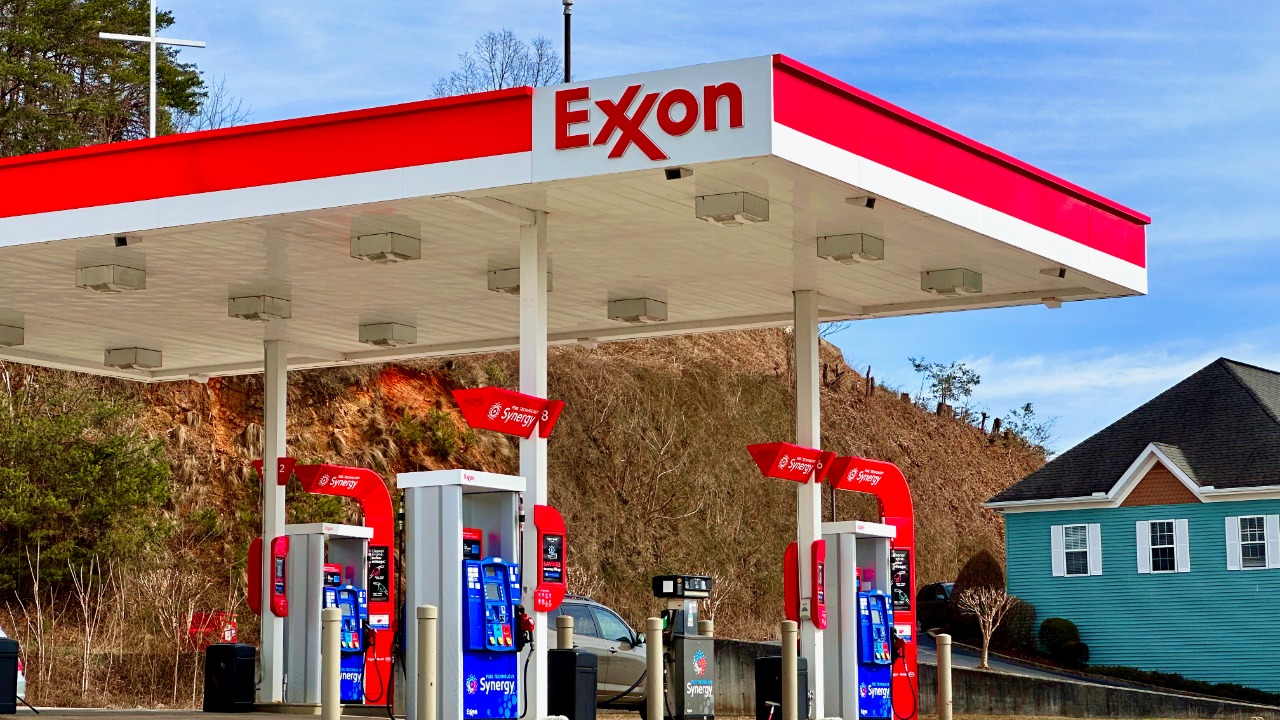

Exxon Mobil is telling investors it finally has the technology to make Venezuela’s notoriously costly heavy crude economical, a claim that, if borne out, could reshape one of the world’s most troubled oil frontiers. The pitch arrives just as Washington and Caracas grope toward a fragile thaw and global majors quietly reassess whether the country’s vast reserves can be tapped without repeating the disasters of the past. I see a gap, however, between Exxon’s technical confidence and the political and financial realities that still define Venezuela’s oil patch.
Venezuela holds some of the largest proven oil reserves on the planet, yet its production has collapsed under years of mismanagement, sanctions, and underinvestment. Turning that resource back into a profitable business will require more than clever engineering, and the way Exxon Mobil, Chevron, and others talk about the country reveals how wary they remain even as they dangle the prospect of a return.
Exxon’s big promise on ultra-expensive crude
Exxon Mobil has started telling investors that it can dramatically cut the cost of producing Venezuela’s extra heavy crude, a resource that has long been considered among the most expensive barrels in the world to bring to market. Executives say the company’s experience in other complex basins gives it a toolkit of drilling, upgrading, and processing technologies that could be transplanted into the Orinoco Belt, where the oil is so thick it must be diluted or upgraded before it can flow. In recent briefings, Exxon Mobil has framed this as a competitive edge, arguing that its approach could turn what is now a marginal, high-cost play into a profitable source of supply if the politics line up, a message that has been relayed through detailed comments on technology and cost reductions.
The company’s confidence rests on the idea that the same innovations that lowered breakevens in places like U.S. shale and deepwater fields can be adapted to Venezuela’s unique geology and infrastructure constraints. Exxon Mobil has pointed to its capabilities across the Crude and Natural gas value chain, suggesting that better reservoir management, more efficient upgrading, and integrated logistics could all push down unit costs. I read this as a classic Exxon move: emphasize engineering prowess to reassure shareholders that, if and when the country opens, the company will not be walking into the same high-cost trap that has ensnared others in the past.
From “uninvestable” to cautious optimism
The bold technical talk sits awkwardly beside Exxon’s own recent description of Venezuela as “uninvestable,” a word that captured how deeply the company distrusts the country’s legal and political environment. Earlier this month, the company was brushing off the idea of rushing back into the South American nation, citing unresolved disputes and the risk that any new investments could again be expropriated or trapped by sanctions. That skepticism is rooted in history: Exxon left Venezuela nearly 20 years ago after its assets were nationalized, and it has spent years in arbitration and political fights over compensation.
Yet in the same breath, Exxon Mobil and Chevron have begun to acknowledge a “glimmer” of potential if the right conditions emerge. In investor discussions in HOUSTON, executives from Exxon Mobil, which trades under the ticker XOM, and Chevron have said they see room for growth if sanctions are eased and contracts are strengthened. I interpret this as a hedged bet: publicly, they keep calling the country high risk, but they also want to signal to markets and to President Donald Trump’s administration that, with the right policy moves, they are ready to scale up production in the country again.
Sanctions, licenses, and the Trump factor
Any talk of unlocking Venezuela’s heavy crude is meaningless without addressing the sanctions architecture that has strangled its oil exports. The Treasury’s Office of Foreign controls the licenses that determine which companies can operate and how revenues can flow, and so far those permissions have been narrow and conditional. Chevron, for instance, has been working under a specific license from the U.S. government that allows limited operations but stops far short of a full-scale return. Executives have been explicit that “with the right changes, we certainly could see our operations in the footprint expand in Venezuela,” but that any expansion depends on what Washington will allow.
That puts President Donald Trump and his foreign policy team at the center of the story. The administration has used sanctions as leverage over Caracas, tying relief to political concessions and electoral processes, and it has also been lobbied by companies that see commercial upside in a more flexible regime. When I look at the way Chevron and Exxon talk about their “slimmest” annual results in years, I see a subtext: they are under pressure to find new growth avenues, but they cannot afford to run afoul of U.S. policy. Any decision by the Treasury or the White House to expand or tighten licenses will directly shape whether Exxon’s touted technology ever gets deployed at scale in the Orinoco.
What the technology actually changes
Stripped of the investor-friendly gloss, Exxon’s claim boils down to a bet that better engineering can turn ultra-heavy crude into a competitive barrel even in a challenging jurisdiction. Company leaders have suggested that their methods could lower the breakeven cost of Venezuelan production enough to compete with other high-cost sources, especially if global prices remain firm. In one detailed explanation, executives said they have “the technology needed for Venezuela’s high-cost crude,” a phrase that has been circulated through energy-focused platforms and echoed in a FREE investor briefing that emphasized both subsurface expertise and surface facilities.
From my vantage point, the more interesting question is not whether Exxon Mobil can technically handle heavy oil, but whether it can do so in a way that satisfies shareholders, host governments, and regulators. The company has been promoting its capabilities in Latest market updates, highlighting how its integrated model can capture more of the value chain and offset higher upstream costs. But even if the technology works as advertised, it will still have to contend with Venezuela’s fragile power grid, decayed pipelines, and the need for massive upfront capital, all in a country that many investors still view as a legal minefield.
Investors, risk, and the long road back
Behind the technical bravado and geopolitical maneuvering lies a simple financial reality: U.S. majors are under intense scrutiny over capital discipline and returns. Recent earnings have shown that Exxon Mobil and Chevron are capable of strong cash generation, but they have also posted some of their slimmest annual profit margins in the post-pandemic era as prices cooled and costs rose. That makes them wary of plunging into projects that could tie up billions of dollars for years with uncertain payback, especially in a country where contracts have been rewritten and assets seized. I read their language on Venezuela as a way to keep optionality alive without committing real money until the political and legal framework looks far more stable.
Industry analysts have noted that U.S. majors remain “cautious on Venezuela oil restart,” pointing to concerns over Financial returns, legislation, and the reliability of cash flows. In that context, Exxon’s claim to have cracked the code on ultra-expensive crude looks less like a green light and more like a marker laid down for a future in which Venezuela has reformed its oil sector and normalized ties with Washington. Until then, the country’s vast reserves, cataloged in countless profiles of Venezuela’s resource wealth, will remain largely stranded, a tantalizing prize that technology alone cannot unlock.
More from Morning Overview