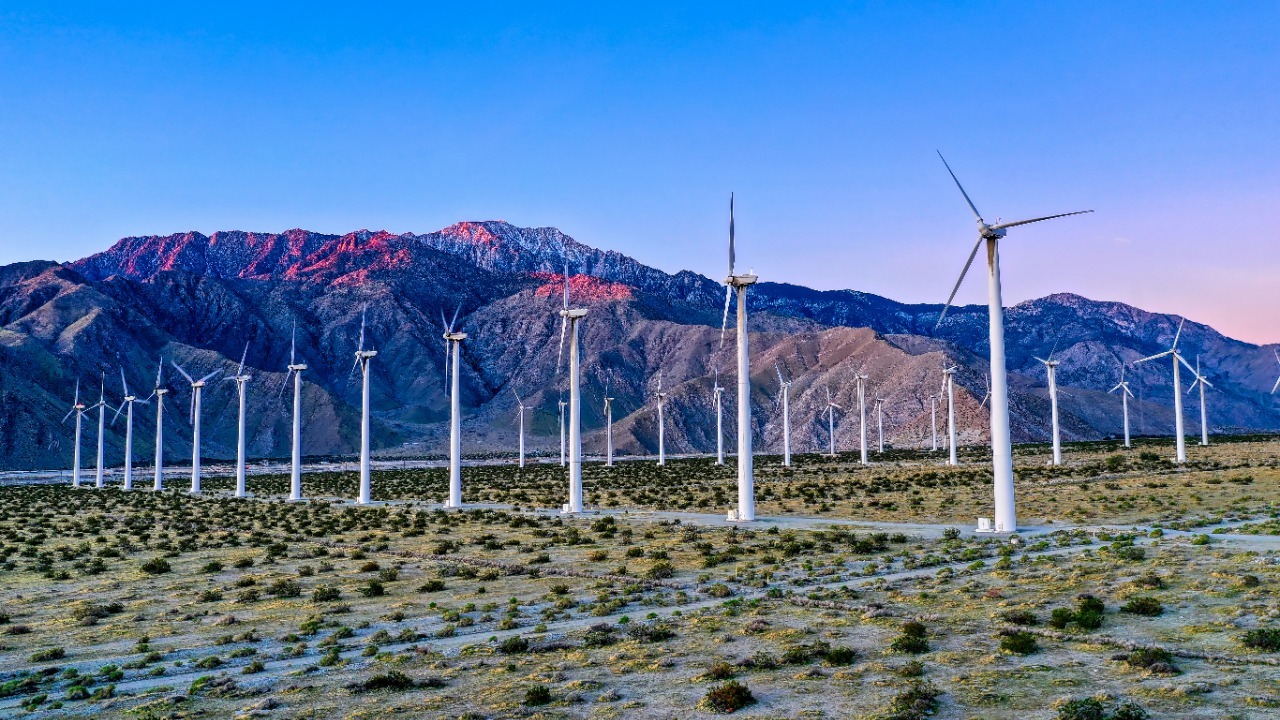

European governments are preparing a fresh push on offshore wind, even as President Donald Trump questions the value of the technology and the policies behind it. A new draft political declaration circulating among key capitals signals that, rather than slowing down in the face of criticism, Europe intends to expand wind capacity, deepen cross-border cooperation and reframe wind as a pillar of its energy security strategy. The emerging divide is not just about climate ambition, it is about who will control the next phase of the global power system.
The draft, seen by several outlets, sketches out how a group of European states with strong North Sea and Atlantic coastlines plan to coordinate investment, grid links and permitting to accelerate offshore projects. It comes as wind and solar already outperformed fossil fuels in the European Union’s power mix last year, underscoring how entrenched renewables have become in the continent’s energy economy.
Trump’s criticism collides with Europe’s wind reality
President Donald Trump has used recent public appearances to cast doubt on wind power and to frame European climate and energy policies as economically misguided. In remarks around the World Economic Forum in Davos, his broader criticism of European allies has extended to their approach on green technologies, setting up a clear contrast with governments that see offshore wind as central to their industrial strategy. Another set of comments, reported from a separate discussion on energy and trade, highlighted how he views Chinese manufacturing dominance in clean tech as a strategic problem, with references to how China has capitalised on global demand for turbines and related equipment.
European policymakers, by contrast, are leaning on data that shows wind is already reshaping their power systems. New analysis of the bloc’s electricity mix finds that Wind and solar together generated more electricity than fossil fuels in the EU last year, a symbolic tipping point that strengthens the case for doubling down rather than retreating. Industry groups have also pushed back on the idea that wind is inherently costly, pointing to figures from the UK where contracts for difference have delivered a net benefit of £104 billion to consumers while supporting 8.4GW of offshore wind, a scale that would be hard to justify if the technology were the economic “loser” its critics suggest.
Nine European governments signal a coordinated offshore push
Against that political backdrop, a draft declaration prepared for a summit in northern Europe sets out how a group of coastal states intend to expand offshore wind in their shared seas. Reporting on the document describes Nine European governments, including Germany and Britain, preparing to strengthen their offshore wind plans despite Trump’s criticism, with a focus on shared infrastructure and more predictable investment conditions. A separate account of the same draft notes that European governments including Germany, Britain and Denmark are part of the initiative, alongside France, Belgium, Ireland, Luxembourg, the Netherlands and Norway, underscoring how geographically broad the coalition has become.
The same draft underpins a more detailed description of how these states want to share the burden of new capacity. Britain and the participating EU countries are expected to pledge to meet up to 100 GW of offshore wind capacity through joint cross-border projects, according to one account of the negotiations, a figure repeated in a parallel report that also stresses that Britain and the participating EU countries will share the goal. Another summary of the draft, framed as part of a broader ESG discussion, describes how Europe is preparing “more wind power” as an explicit answer to Trump’s criticism, with Nine European nations, including Germany and its North Sea neighbours, using the declaration to signal long term policy stability.
Northwest Europe’s offshore ambitions and the North Sea advantage
Behind the diplomatic language sits a very practical calculation about geography and infrastructure. The North Sea and adjacent waters already host some of the world’s largest offshore wind farms, and governments see scope to turn this into a kind of shared power plant for the region. Reporting on the emerging strategy describes how Nine northwest European countries are set to commit to speeding up deployment of offshore wind, with a focus on new interconnectors and coordinated auctions that can lower costs for developers. A related account of the same initiative notes that this Northwest Europe Doubles Down plan is explicitly framed as a response to a Trump Jab, underlining how political criticism from Washington has, if anything, stiffened resolve in capitals around the North Sea.
Officials involved in the process also see offshore wind as a way to lock in industrial capacity and jobs. A separate report on the same summit process, framed as “Winds of Change”, describes how European governments are preparing increased financing and subsidy frameworks to support a “massive offshore wind expansion”, with a summit in a German city expected to formalise the new commitments. The same reporting highlights how the declaration is meant to give developers confidence that grid upgrades, port investments and permitting reforms will move in tandem, reducing the risk that projects are stranded by bottlenecks in national systems.
Draft language, domestic politics and the economics of wind
The draft declaration is not emerging in a vacuum, it reflects months of domestic debates over energy prices, security and industrial competitiveness. One detailed account of the text notes that Wind turbines near Parchim in Germany have become a visual shorthand for this transition, with the draft summit declaration, seen by REUTERS, setting out how governments want to expand such projects while managing local resistance. The same report underlines that some governments remain wary of the pace of expansion, but that the overall direction of travel is toward more capacity, not less, as Europe seeks to cut gas imports and meet climate targets.
Another account of the draft, summarised for a maritime and offshore audience, stresses that Europe doubles down on wind power despite mounting criticism from Trump, with governments including Germany, Britain and Denmark reinforcing their plans to expand offshore capacity. That same report notes that the declaration is expected to be endorsed at a summit in Germany and that leaders will “Follow Us” language in their communications to signal continuity of policy, even as they acknowledge concerns about costs and grid stability. For investors and utilities, the key takeaway is that, while the politics around wind remain contested, the combination of falling technology costs, the EU power mix shift and the new cross-border commitments make a sharp policy reversal unlikely.
Why Europe is betting its energy future on wind
From my perspective, the most striking feature of this draft is how explicitly it treats wind as a strategic asset rather than a niche climate tool. The combination of Nine European governments, including Germany and Germany and its neighbours, committing to shared targets and infrastructure suggests that offshore wind is being woven into the fabric of European integration itself. That is reinforced by the way Britain and the participating EU countries are prepared to share responsibility for up to 100 G W of capacity, as described in the Britain and the focused reporting, even though the UK is no longer part of the EU’s formal institutions.
Trump’s criticism, and the references to how They in China have profited from global demand for turbines, clearly resonates with some European concerns about supply chains. Yet the policy response on this side of the Atlantic is not to retreat from wind, but to double down on building a domestic industrial base, backed by coordinated offshore projects in the North Sea and beyond. The emerging declaration, the North Sea cooperation described in the Northwest Europe Doubles reporting and the “Winds of Change” summit in Germany all point in the same direction: Europe is treating wind as a cornerstone of its energy future, regardless of what the White House thinks.
More from Morning Overview