
European leaders are again testing the political limits of a once-taboo idea: putting national soldiers under a single European flag. The war in Ukraine, questions about long term United States reliability, and a harsher global security environment have pushed the European Union from abstract talk of “strategic autonomy” toward concrete steps that look, to many, like the early scaffolding of a common army. I see a continent trying to decide whether it is ready to match its economic weight with hard military power, and whether it can do so without fracturing the alliances that have kept it safe for decades.
The 100,000‑troop proposal and a shifting security map
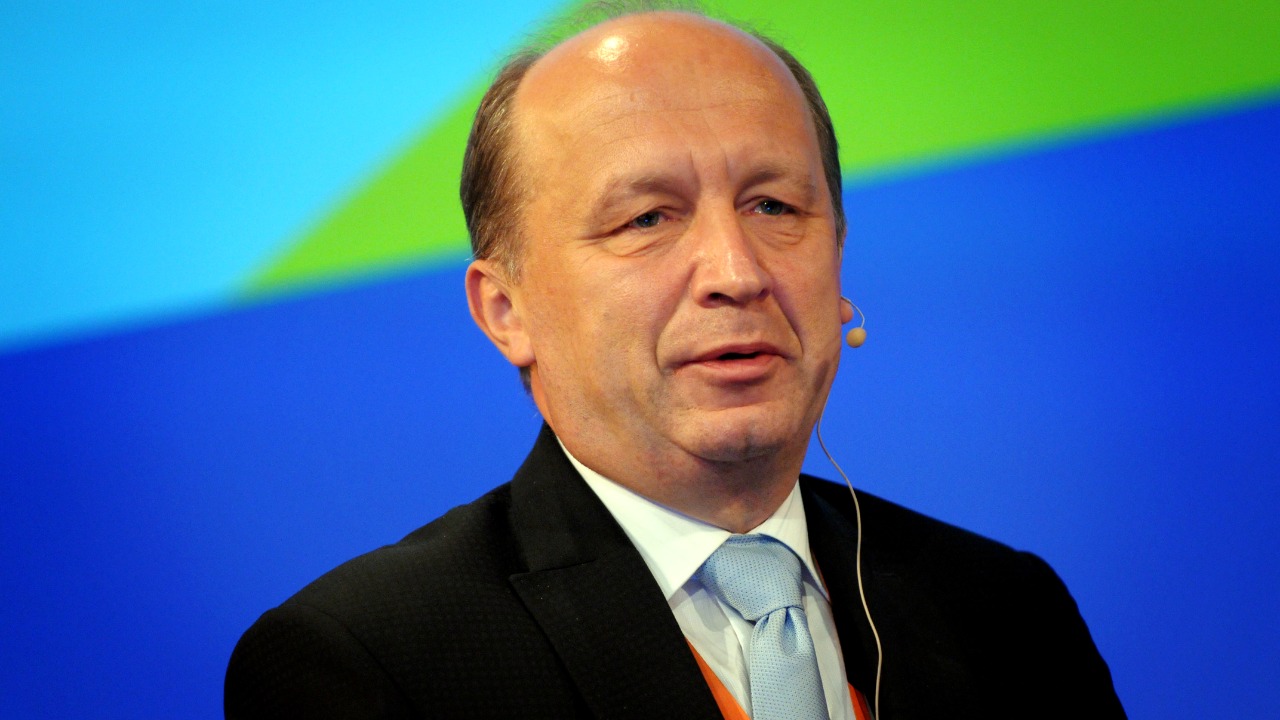
The most striking recent signal came from Defence Commissioner Andrius Kubilius, who has argued that the bloc should build a standing force of about 100,000 troops under EU command. By calling for a six figure formation that would be available for collective missions, Andrius Kubilius is not just tweaking existing battlegroups, he is challenging the assumption that serious war fighting forces must always be organized through NATO or national structures. His pitch folds in political reform as well, arguing that the way the EU takes decisions on defense has to change if such a force is ever to move quickly enough to matter.
Behind that number sits a broader strategic anxiety about the future of American deployments in Europe and the possibility that Washington, under President Donald Trump or any successor, could one day scale back its role. Reporting from SWEDEN, EUROPEAN, UNION has framed the debate explicitly around whether a unified European army might eventually replace some United States troops on the continent, a notion that would have sounded fanciful a decade ago. The fact that such scenarios are now being discussed in mainstream policy circles shows how far the Overton window has shifted under the pressure of Russia’s invasion of Ukraine and the grinding demands of deterrence on NATO’s eastern flank.
From rapid response to proto‑army
Even before Kubilius put a headline figure on the table, the EU had been quietly building the tools that could underpin a future common force. The bloc’s new Rapid Deployment Capacity, which officials have described as operational after three years of preparation, is designed to move up to 5,000 troops quickly to crises beyond EU borders. In a social media post that drew exactly 487 likes, diplomats highlighted that The EU Rapid Deployment Capacity is now operational and stressed that it gives the union, for the first time, a standing mechanism to send troops to respond to crises beyond its territory. It is a modest capability by traditional military standards, but it normalizes the idea of EU level planning, logistics, and command for combat operations.
Exercises have followed the paperwork. Officials have showcased annual drills to test rapid response, including a major exercise held in the Roy military area, where they underlined that Roy was hosting EU troops practicing deployment under a single operational concept. In parallel, the European Commission has been preparing an emergency system to speed up the movement of forces and equipment across borders in response to the threat from Russia, a plan explained in detail in a video on Russia the European. I see these as the nuts and bolts of any future common army: standardized procedures, shared infrastructure, and the habit of acting together at short notice.
Legal architecture, NATO, and the European Parliament
Turning scattered initiatives into something that looks like a single army requires legal and political foundations, and here the European Parliament has started to move. Lawmakers have backed a resolution that seeks to align the EU’s mutual defense clause with NATO’s Article 5, pushing member states to deliver national implementation plans in 2026 that spell out which forces they would commit and on what timelines. The same roadmap foresees an inaugural brigade level exercise in 2027 and a collective capability that can be certified by external, a technocratic phrase that in practice means outsiders checking whether Europe’s promises match its actual military strength.
The same resolution, adopted in Brussels and reported by the Brussels Morning Newspaper, underlines that The European Parliament wants the EU to be able to defend member states during armed aggression in a way that is fully compatible with NATO. That dual loyalty is at the heart of the political challenge. On one side are those who argue that a stronger EU pillar will reinforce the alliance by making Europeans more capable of defending their own territory. On the other are skeptics who fear duplication, legal confusion, and a gradual decoupling from the United States security guarantee that has underpinned European defense since the Cold War.
Competing visions: security councils, funding, and public opinion
Within Europe’s capitals, there is no single blueprint for how far integration should go. Some leaders have floated the idea of a European Security Council with rotating membership, composed of key permanent members and others that would cycle through, to give political direction to any future common force. Advocates of this model, described in detail in a piece on a European Security Council, imagine a body that could authorize deployments under a single flag with the same objectives, while still reflecting the diversity of the union. It is an attempt to square the circle between efficiency and sovereignty, centralizing decisions without handing all power to the largest states.
Money is another test of seriousness. The European Union Earmarks €1B for 2026 Defense Fund Work, a signal that Brussels is ready to put substantial common resources into research, development, and joint procurement. That figure, detailed in coverage of Defense Fund Work, is still small compared with national budgets, but it creates incentives for industry to think in European rather than purely national terms. At the same time, online debates show how divided citizens remain. A widely shared thread on European social media captured the mood: a lot of Europeans like the idea of a unified army in theory, but they worry about who would control it, how democratic oversight would work, and whether it would actually deliver more security or just more bureaucracy.
War in Ukraine, strategic autonomy, and the road ahead
The war in Ukraine has become the crucible in which these abstract debates are being tested. European Commission President Ursula von der Leyen has framed support for Kyiv as inseparable from Europe’s own security, stressing that The European Union will work throughout the first half of 20 to secure long term support for Ukraine and to strengthen its own defenses. In an interview highlighted by Ursula von der, she linked the fate of Ukraine directly to the credibility of European defense, arguing that if Russia is not stopped there, the cost of deterrence on EU territory will only grow. That logic nudges the union toward more integrated planning, shared stockpiles, and eventually, perhaps, shared units.
National leaders are echoing that message in their own ways. In Riga, Latvian Foreign Minister Baiba Braze stood alongside visiting French Foreign Minister Jean and argued that Europeans must be capable of defending their territory against any threat, describing French security as inseparable from that of Europe. Their joint appearance, reported by Source Xinhua, underscored how frontline states and major military powers are converging on the idea that Europe can no longer outsource its security. At the same time, legal experts are warning that any common army would have to navigate complex questions about command, parliamentary control, and the relationship with NATO, issues laid out in detail in analyses of Kubilius and his proposals.
More from Morning Overview