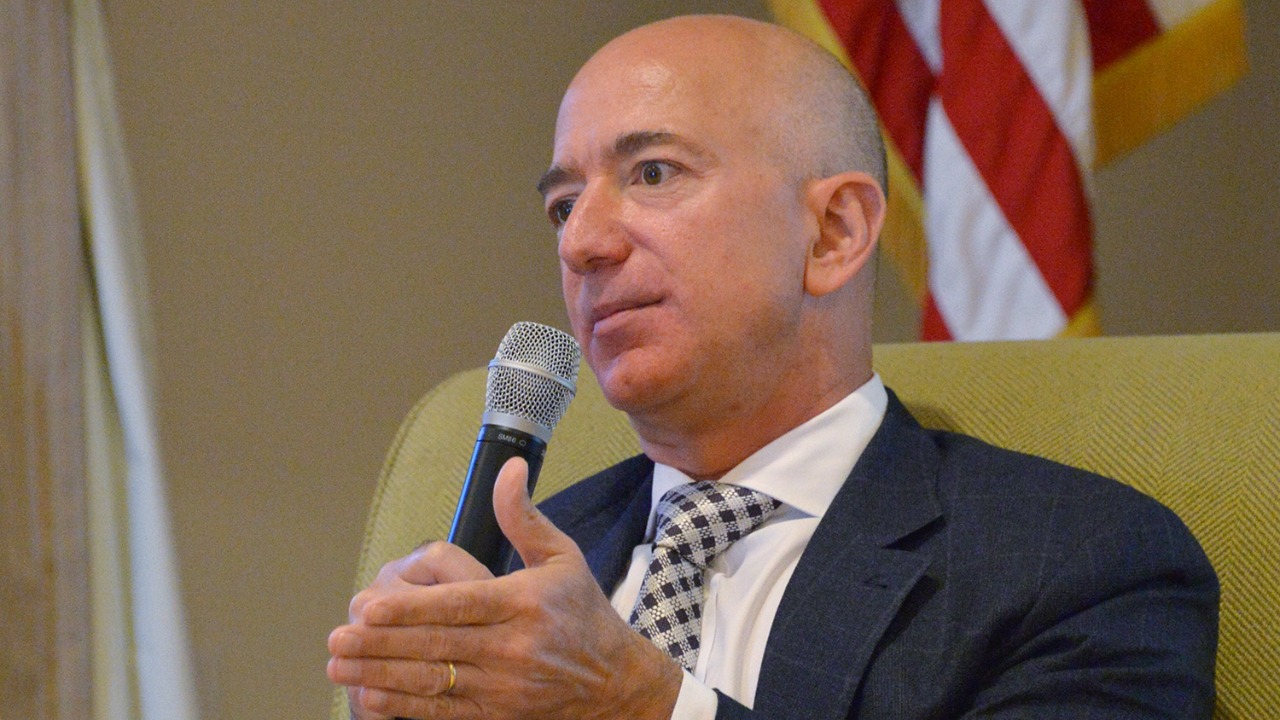

Energy startups once seen as moonshots are edging toward the stock market, and some of the most aggressive contenders carry the backing of Jeff Bezos and Bill Gates. From geothermal wells to fusion reactors and AI-guided mineral exploration, these companies are positioning themselves as the next generation of energy infrastructure just as public markets rediscover an appetite for climate technology.
I see a clear pattern emerging: deep-pocketed founders of the digital era are now underwriting capital intensive hardware, betting that investors will accept long development timelines in exchange for technologies that could reshape power grids and supply chains. Their portfolio companies are raising hundreds of millions of dollars, lining up offtake deals and, increasingly, preparing to go public.
Geothermal and fusion move from lab to listing
The most immediate test of public market appetite is coming from geothermal. The Houston startup Fervo Energy has filed confidential IPO papers with the SEC, according to reporting that cites Fervo Energy as having already secured $688 m in financing. The same report notes that the company has raised another $688 million, underscoring how much capital is now flowing into enhanced geothermal systems that can provide round the clock clean power in regions far from traditional hydrothermal resources.
Fervo Energy sits within a broader wave of energy firms backed by Jeff Bezos and Bill Gates that are now openly contemplating IPOs. Coverage of these energy firms highlights how their backers are using their reputations to help de risk technologies that still face execution and regulatory hurdles. For investors, the pitch is that geothermal and other firm clean power sources can complement solar and wind, reducing reliance on gas peaker plants and stabilizing grids that are already straining under electrification.
AI powered mining chases critical minerals and public markets
On the supply chain side, the most aggressive push toward the public markets is coming from AI driven mineral exploration. Reports describe an AI powered mining firm backed by Bill Gates and Jeff Bezos that is now worth $2.96 billion as it takes on Chinese rivals in the race to secure copper, lithium and other metals. The company, often cited as part of the Silicon Valley elite’s climate portfolio, uses machine learning to sift geological data and identify promising deposits, positioning itself as a Western counterweight to Chinese control of critical minerals.
Funding rounds for this sector are now explicitly framed as stepping stones to the stock market. One report notes that Bill Gates And Jeff Bezos Backed Mining Startup Raises $537 Million, Targets Going Public In Few Years, describing how the company has pulled in $537 M, or $537 Million, to accelerate exploration of copper, cobalt, lithium and nickel. The same coverage emphasizes that Bill Gates And Jeff Bezos are using their capital and networks to help the startup secure long term offtake agreements that could underpin a future IPO, while another analysis of the Company Backed, Bill Gates and Jeff Bezos Now Worth Billions, What Are the Investment Options, explains that Only accredited investors can currently access shares through private markets, a reminder that retail investors are still waiting on a listing before they can participate directly in this AI mining story.
Fusion startups test investor patience and SPAC structures
Fusion energy, long the archetype of a technology that is always decades away, is suddenly flirting with public markets as well. A detailed presentation from Commonwealth Fusion Systems the largest and most advanced private fusion company in the world describes how the company has raised $863 million to push its compact tokamak design toward a demonstration plant, positioning fusion Energy as a potential baseload complement to renewables. The same narrative is echoed in coverage of Commonwealth Fusion Systems as a flagship example of how private capital is now willing to fund multi year, high risk hardware development in pursuit of zero carbon power.
Another fusion player is taking a more direct route to the market. In a note to investors, General Fusion declared, We are taking fusion public, outlining a plan to merge with Spring Valley Acquisition Corp. III to go public through a special purpose acquisition company. The commentary, which includes the aside, Yep, it is 2026, and we are still using SPACs, underscores how General Fusion and Spring Valley Acquisition Corp, III are betting that a merger can provide both capital and visibility even before commercial reactors are online. A separate reference to the same deal reiterates that General Fusion intends to list primarily to raise money, a candid acknowledgment that the path from prototype to grid scale deployment will require far more than the hundreds of millions already raised.
Nuclear bets from TerraPower to Seaborg
Beyond fusion, Bill Gates has been steadily building a portfolio of advanced nuclear projects that are now large enough to matter for public markets. TerraPower, the nuclear energy company founded by Bill Gates, recently closed a major $650 m round tied to its Natrium reactor design, bringing total financing to more than $1.4 billion. The same report notes that the $650 million injection, which also involves strategic partners like Nvidia, is intended to move Natrium from design into construction, with the goal of delivering flexible nuclear plants that can ramp alongside renewables, a proposition that could eventually support a listing if regulators and communities accept the technology.
At the smaller end of the spectrum, Seaborg, a Denmark based startup, is developing compact molten salt nuclear reactors designed to limit waste and improve safety. An earlier rundown of Bill Gates backed clean energy ventures lists Seaborg with $6 million in funding and describes What it is, Denmark based Seaborg is working on modular units that could be deployed on barges or in remote grids. While Seaborg is far from the scale of TerraPower, its inclusion in a curated set of early stage bets shows how Bill Gates is seeding a range of nuclear options, from large Natrium reactors to smaller concepts that might one day seek capital on public exchanges once regulatory pathways are clearer.
How much risk public investors are really being asked to take
For all the excitement around these companies, the path from private rounds to IPOs is not straightforward. Mining exploration, for example, requires significant upfront capital and carries high geological risk, a point underscored in an analysis of the AI Company Backed, Bill Gates and Jeff Bezos Now Worth Billions, What Are the Investment Options, which notes that Only certain investors can currently access shares through secondary platforms. The same piece highlights how private valuations in the billions, such as the $2.96 billion figure attached to the AI powered miner backed by Bill Gates and Jeff Bezos, may not translate cleanly into public market pricing once quarterly scrutiny and liquidity demands come into play.
On the power generation side, the capital intensity is even more pronounced. News of the fundraise for Commonwealth Fusion Systems B2 round of $863M came shortly after Google agreed to buy 200 MW from the planned ARC power plant, a sign that corporate offtakers are willing to sign early contracts to support commercialization. That same report notes that the company plans to hire aggressively following the round, which will further increase its burn rate long before any revenue from selling electricity arrives. In parallel, TerraPower’s $650 million Natrium raise, detailed in a separate account of how Bill Gates and partners are financing the reactor, shows how even advanced nuclear designs require repeated injections of capital before they can be considered bankable by traditional infrastructure investors.
More from Morning Overview