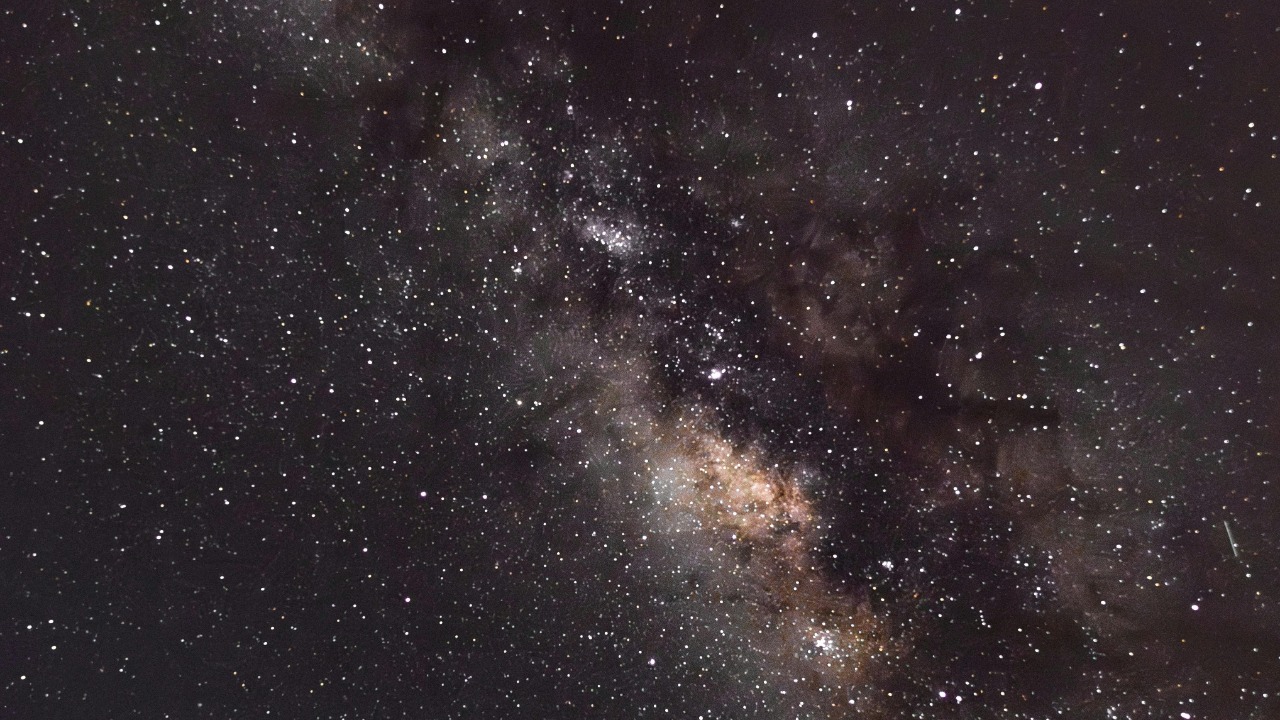

The world’s darkest observatory skies have just survived one of their biggest industrial scares. After months of mounting pressure from scientists, Chilean authorities and an energy giant have pulled the plug on a vast hydrogen complex planned near the Paranal Observatory, a decision that reshapes the balance between clean energy ambitions and the protection of a globally important window on the universe.
The cancellation of the INNA project, backed by AES Andes, removes a $10 billion threat from the Atacama Desert’s pristine night, but it also exposes how fragile these conditions remain as governments race to decarbonize. I see this as a test case for whether the world is willing to treat dark skies as critical infrastructure, not just a romantic backdrop for stargazing.
The INNA megaproject that ran into the stars
At the heart of the dispute was INNA, a renewable hydrogen and ammonia complex designed to turn the Atacama’s fierce sunlight and steady winds into exportable fuel. The plan called for a $10 billion investment and a footprint of 7,500 acres of industrial infrastructure in one of the driest places on Earth. Developed by the U.S. headquartered energy company AES, INNA promised green jobs and export revenue, but it also meant pipelines, processing plants and a new industrial skyline within range of some of the world’s most sensitive telescopes.
For several years, the project’s local arm, AES Andes, pitched INNA as a flagship of Chile’s green hydrogen strategy, arguing that modern lighting and mitigation could keep light pollution in check. According to According to the company’s own descriptions, the complex would have included green hydrogen and ammonia production plants, storage facilities and export infrastructure, all in the same desert that hosts Chile’s most advanced observatories. That proximity, more than the technology itself, turned INNA into a flashpoint.
Why Paranal’s darkness matters to the world
The Paranal Observatory sits on Cerro Paranal, 8,645 feet above sea level, high enough to float above most of the atmosphere’s turbulence and dust. It is home to The Paranal Observatory and the Very Large Telescope, a quartet of 8.2 meter instruments that have captured some of the most detailed images of distant galaxies and exoplanets. Much of their success depends on the almost total absence of artificial light, which keeps the background sky dark enough to detect faint signals that would be drowned out near any city.
Those conditions are so rare that a poll of global astronomy sites has repeatedly ranked Mount Paranal as the least light polluted major observatory on Earth. The telescope, apart from its size, benefits from the exceptionally dark sky above Mount Paranal, which lets astronomers push deeper into the cosmos and gather cleaner data on everything from dark energy to the atmospheres of distant worlds. Any new industrial glow on the horizon risks raising that background, effectively erasing the faintest objects from the record.
Astronomers mount a global campaign
As INNA advanced through planning, scientists responded with an unusually coordinated public campaign. A group of Eminent astronomers, including Award winning researchers from around the world, signed an open appeal urging Chile to protect the Paranal skies from encroaching light. They argued that the observatory’s discoveries are a global public good, and that once lost, the darkness that makes them possible cannot be restored on human timescales.
Others took their case directly to the public, urging readers to Grow their awareness of how industrial projects can affect the night. Campaigns invited people to Subscribe to a Science Newsletter and framed the Atacama as a shared laboratory for understanding the universe, not just a national asset. In parallel, a separate group of renowned researchers warned that if the sky is becoming brighter from artificial light around us, the most delicate observations are simply lost, a point captured in the phrase If the sky brightens, They cannot do these observations anymore.
Energy giant backs down under pressure
The turning point came when the energy company itself acknowledged that the project had become untenable in its proposed location. In early Feb, reports surfaced that an Energy company had canceled a controversial project near the world’s darkest skies, citing a mix of regulatory hurdles and social concerns. The decision effectively killed INNA in its original form and signaled that the cost of fighting the scientific community, and potentially damaging Chile’s reputation as a steward of astronomy, outweighed the benefits of the chosen site.
On the same day, a post on X confirmed that the energy giant AES Andes had announced the cancellation of the INNA project, noting that Astronomers had warned the proposed industrial complex would compromise observations. Another detailed report on the cancellation described how the Andes subsidiary had been under sustained scrutiny from the scientific community, which framed the issue not as opposition to renewable energy, but as a demand to move the project farther from the observatory.
Chile’s choice and what comes next for dark skies
Chilean authorities ultimately sided with the astronomers, with officials confirming that the country had canceled an energy project that threatened astronomy in the Atacama. Government statements cited the unique conditions around Paranal and the need to preserve them for future generations of research, a stance that aligned with the earlier appeals from Paranal scientists. In effect, Chile chose to treat the darkness above Cerro Paranal as a strategic resource on par with the minerals and energy that lie beneath the desert floor.
For me, the INNA saga underscores how quickly light pollution is spreading, with one analysis warning that sky brightness is increasing by about 10 percent each year in many regions, a trend highlighted in coverage of the Energy project’s demise. Other reports on Chile’s night sky have stressed that Subscribe campaigns and a Science Newsletter can only do so much if regulations do not keep pace, a point echoed in coverage that warned But that may not be enough to counter the global spread of artificial light. As more countries pursue large scale renewable projects, the Paranal decision will likely be cited as a precedent for moving heavy infrastructure away from the world’s last truly dark observatory sites.
Scientists who pushed to protect Chile’s cherished night sky have been blunt that the fight is far from over. One widely shared warning noted that They see similar threats emerging near other observatories, and that what happened in the Atacama is part of a broader pattern. For now, though, the cancellation of INNA near Paranal stands as a rare example of an energy giant stepping back from a lucrative project in order to keep the universe in view.
More from Morning Overview