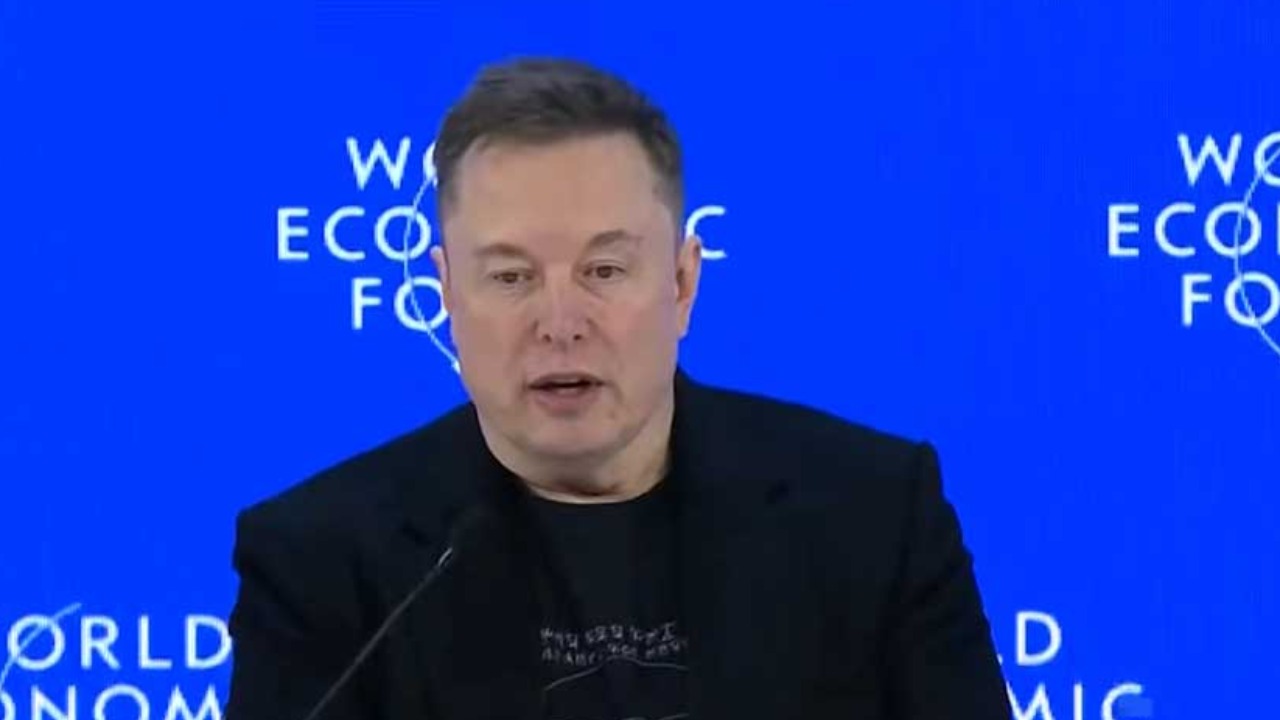

Elon Musk turned a high-profile stage in Davos into a venue for needling President Donald Trump, using a wordplay gag about the White House’s new Board of Peace to question whether the project is about diplomacy or territorial ambition. His taunt, wrapped in a Greenland joke and delivered in front of global elites, signaled how far a once-friendly relationship has shifted into open mockery. It also raised a sharper question: when the world’s most powerful tech magnate publicly ridicules the sitting president’s flagship peace initiative, what does that say about the state of American power and political culture?
The exchange was brief, but it crystallized years of tension between Trump and Musk, from early alliance to estrangement and partial reconciliation. By turning the Board of Peace into a punchline, Musk was not just trolling an old political ally, he was also inviting the Davos crowd to laugh at the very idea of Trump as a peacemaker.
The Davos stage where a joke became a jab
Musk chose one of the most symbolically loaded venues on the planet to take his shot. At the Annual Meeting of the World Economic Forum in Davos, he appeared on stage as a star guest, with cameras trained on him and a room full of political and financial leaders listening closely. Reports describe Elon Musk seated alongside BlackRock chief executive Laurence Fink, a pairing that underscored how central he has become to global debates about technology, markets, and geopolitics.
In that setting, Musk opened his remarks with a riff on Trump’s new Board of Peace, playing on the similarity between “peace” and “piece.” According to accounts of the session, he asked whether the president wanted peace or a piece of other countries, turning a bureaucratic-sounding initiative into a joke about carving up foreign territory. The gag landed awkwardly with some in the room, with one description noting that the line prompted a moment of confused silence before scattered laughter, as the audience processed that the world’s richest tech figure was openly mocking the American president’s signature peace body at the World Economic Forum.
From “peace or piece” to Greenland
The wordplay was only the start. Musk quickly sharpened the joke by invoking one of the most notorious episodes of Trump’s first term, when the president floated the idea of buying Greenland. On stage in Davos, he suggested that perhaps the Board of Peace was really about getting a “piece of Greenland,” turning an old diplomatic controversy into a fresh punchline. Coverage of the event notes that the tech billionaire, introduced as a leading figure in global innovation, used the Greenland reference to underline his skepticism about Trump’s intentions and to hint that the new Gaza-focused board might be more about leverage than reconciliation, a point echoed in reports that tech billionaire Elon Musk framed the board in terms of taking pieces of other nations.
Other accounts of the same exchange emphasize how Musk leaned into the Greenland motif as a shorthand for Trump’s appetite for grand, sometimes outlandish geopolitical moves. One detailed write-up notes that “Elon Musk Uses Greenland Reference To Mock Donald Trump,” describing how he folded the island into his Board of Peace joke as a way of suggesting that the president’s idea of peace might involve acquiring strategic territory rather than simply brokering ceasefires. That framing, attributed to Elon Musk Uses, captured the sting in his humor: the joke was not just about spelling, it was about whether Trump’s peace agenda is really a cover for old ambitions.
A strained alliance laid bare
To understand why the Davos quip resonated, it helps to remember how intertwined Musk and Trump once were. Early in Trump’s first term, Musk accepted advisory roles and publicly engaged with the administration on issues like manufacturing and space, before later distancing himself over policy disputes. Reports on the Davos appearance note that the two men have had a falling out and a subsequent reconciliation, a cycle that left their relationship brittle even before Musk’s latest comments. One account of the panel, which described him “appearing on stage at the World Economic Forum in Davos to be interviewed by BlackRock’s Laurence Fink,” stressed how he seized the opportunity to shade Trump’s newly minted peace body, underscoring that appearing with Fink gave him a global megaphone for that critique.
Another detailed account of the Davos session points out that Musk’s swipe at Donald Trump’s Board of Peace “touched a nerve” precisely because the two were once seen as close allies. The same reporting notes that their relationship has shifted from cooperation in the early days of Trump’s presidency to a more transactional and sometimes hostile dynamic, with both men using public platforms to send signals about power and loyalty. In that context, Musk’s decision to mock the Board of Peace in front of a global audience looked less like a stray joke and more like a deliberate act of political distancing, a point underscored by descriptions of how Musk’s swipe marked a shift from backroom influence to open mud-slinging.
How the Board of Peace became a punchline
The Board of Peace itself was supposed to project seriousness. Announced by President Donald Trump as a new instrument of American diplomacy, it was framed as a way to coordinate efforts around conflicts such as the war in Gaza. Yet Musk’s gag turned that branding on its head, suggesting that the name was little more than a marketing gloss on a more familiar Trumpian instinct to seek advantage. One account of the Davos event notes that at the start of Elon Musk’s session at the World Economic Forum in Davos, Switzerland, he drew laughter by contrasting “piece” and “peace” regarding Trump’s Board of Peace, a moment captured in video that shows At the very beginning of the session he was already turning the board into a comedic foil.
Other reporting on the same theme notes that Musk’s joke about the Board of Peace appeared to fall flat with parts of the audience, at least initially, before some in the room caught on to the wordplay. A detailed write-up of the reaction describes how the line prompted a brief, awkward pause, then scattered chuckles, as listeners realized he was implying that Trump might want a “little piece of Venezuela” or other countries rather than simply mediating conflicts. That interpretation is reinforced by a separate account that quotes Musk’s “peace or piece” line and notes that he was explicitly referencing the idea of taking slices of foreign territory, a detail highlighted in coverage that described how he joked about wanting “a little piece of Venezuela” in a segment summarized under Media Error but still captured the substance of his jab.
Family reactions and the broader political fallout
Musk’s mockery did not unfold in a vacuum. His own family dynamics have intersected with his public stance on Trump and the Board of Peace, adding another layer to the story. Earlier coverage of his political comments noted that Elon Musk’s estranged daughter had a harsh reaction to Trump and to her father’s engagement with the president, reflecting internal tensions over his alignment with the White House. In that reporting, she was described as responding to his Greenland joke about Trump’s board by stressing that “all we want is peace,” a line that underscored how even within Musk’s orbit, the Board of Peace had become a symbol of contested values, as highlighted in accounts that say Elon Musk mocks Trump’s board with a Greenland joke while his daughter pushes back.
More from Morning Overview