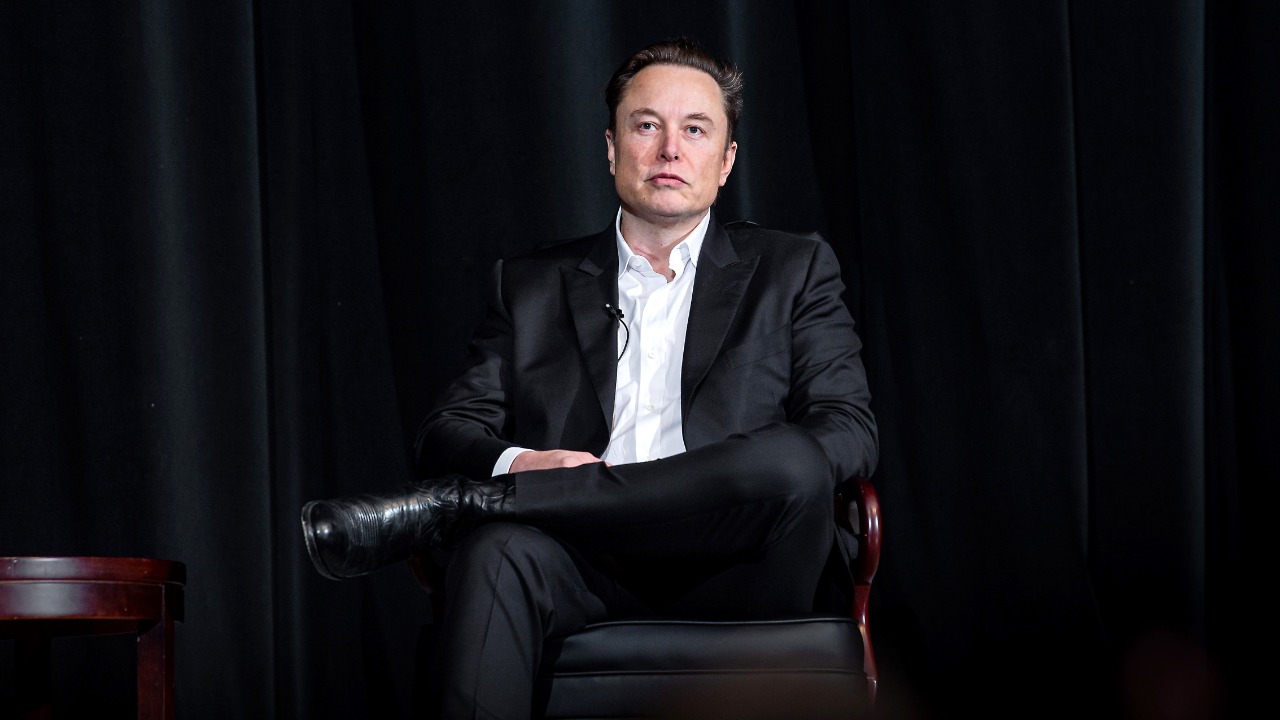

Elon Musk has a new target in his sights, and it is not Mars or a self-driving car. In recent comments, he has argued that humans are effectively “pre-programmed to die” and that longevity is a “solvable” engineering problem, treating mortality less as destiny and more as a bug in the code of biology. The claim pushes a long-running debate about anti-aging science into sharper relief, forcing medicine, ethics, and public policy to confront what it would mean if death really were a design flaw.
The engineer who treats aging like a software bug
Musk’s latest remarks fit a familiar pattern, where he approaches human limits as if they were constraints in a system that clever engineers can rewrite. He has framed the human body as a network of cells that gradually fall out of sync, suggesting that the processes that make people “pre-programmed to die” could, in principle, be reprogrammed. In his telling, the same mindset that sends rockets into orbit or coordinates fleets of electric vehicles could be turned on the molecular machinery of aging, with longevity recast as a problem of control systems and error correction rather than fate.
In an interview earlier this month, Jan Elon Musk described human longevity as “extremely solvable,” arguing that the biological pathways that drive aging could be manipulated if researchers learned how to keep cellular processes aligned across tissues. He has leaned on emerging research that tracks how cells accumulate damage and lose coordination, and he has suggested that, with enough data and computation, those patterns could be reversed or slowed. In that conversation, he said humans are “pre-programmed to die,” and he treated the idea that a person might one day have a body that “never dies” as a serious, if distant, technical possibility, a view reflected in detailed coverage of his longevity comments.
From “people must die” to “longevity is solvable”
What makes Musk’s new rhetoric striking is how sharply it contrasts with his own earlier skepticism about extreme life extension. In a widely cited conversation in Apr, Musk told Insider that he did not think society should try to keep people alive for a “really long time,” warning that it would cause what he called “asphyxiation of society” if leaders never cycled out and new generations never had room to shape institutions. At the time, he framed death as a necessary turnover mechanism, not a bug to be patched, and he distanced himself from the wave of billionaire-backed anti-aging ventures that were pouring money into longevity labs, a stance captured in his remarks about avoiding longevity research.
By late last year, however, his tone had shifted. In Dec, a report on a public appearance summarized his position under the line “Elon Musk Says He Could ‘Probably’ Extend Human Lifespan, ‘But I Don’t Want To’ Because People Must Die For Society To Progress.” In that discussion, he argued that he could “probably” help “extend human lifespan” through technology, but he reiterated that he did not want to pursue it aggressively because he believed social and political systems would “freeze” if people never left the stage. His argument was framed as a warning against pursuing immortality simply because technology allows it, even as he acknowledged that the underlying science might be within reach, a tension that was laid out in detail in the coverage of how “Elon Musk Says He Could” Probably Extend Human.
Bold predictions about doubling life and the future of work
Musk’s new confidence in treating death as a fixable problem sits alongside a broader set of predictions about how technology will reshape work and lifespan. In a recent exchange about the future of jobs, he endorsed the idea that people will live significantly longer, and he linked that to a world where automation and robotics handle most labor. One analysis of his comments on the future of work highlighted “Prediction 3,” in which he suggested that people will “all live longer” and even floated the possibility that some might become “immortal,” a scenario that would upend assumptions about retirement, pensions, and the arc of a career, as summarized in coverage of his bold predictions.
Those comments intersect with a separate conversation involving Anthropic CEO Dario Amodei, who has speculated that human lifespans could nearly double in the coming decade. In a Jan discussion about the next ten years, Musk was asked what he thought of Anthropic CEO Dario Amodei’s prediction that human lifespans would expand dramatically, and he responded by leaning into the idea that advances in biotechnology and artificial intelligence could push life expectancy far beyond current norms. A detailed write-up of that exchange described how he treated the prospect of a near doubling of human life as plausible, especially as “the computers are getting better,” and it framed his remarks as part of a set of four sweeping forecasts about the future, captured in a report on his four predictions.
Science, religion, and the 200-year human
Behind Musk’s rhetoric is a real scientific push to stretch human life, though even the most optimistic researchers stop short of promising immortality. Some scientists are exploring whether people could live for as long as 200 years by targeting the cellular pathways that drive aging, experimenting with gene therapies, senolytic drugs that clear out damaged cells, and regenerative techniques that reset biological clocks. A social media post that circulated alongside Musk’s recent comments noted that “There are real scientists working on how to prolong life for as long as 200 years,” while also invoking a religious counterpoint that “GOD capped it at 120 years,” capturing the tension between laboratory ambition and theological limits in a single exchange that framed human death as a potentially “solvable problem” in the language of FutureScience and Technology.
That mix of scientific optimism and spiritual caution mirrors the broader public reaction to Musk’s framing of mortality as a design flaw. On one side are technologists who see aging as a disease process that can be measured, modeled, and eventually controlled, pointing to advances in cellular reprogramming and cross-tissue coordination as evidence that the “pre-programmed” nature of death might be rewritten. On the other side are ethicists and religious thinkers who argue that even if a 200-year lifespan were technically possible, stretching life far beyond the traditional 120-year boundary would raise profound questions about meaning, inequality, and the distribution of risk, especially if only a narrow slice of humanity could access the most powerful interventions.
What it means to call death “pre-programmed” and “solvable”
When Musk says humans are “pre-programmed to die,” he is echoing a mainstream scientific view that aging is not random but follows a set of biological scripts, from telomere shortening to epigenetic drift. In his recent remarks, he suggested that if researchers could understand and manage the way cells fall out of sync across tissues, they might be able to slow or even halt the cascade of failures that leads to death. Detailed reporting on his comments described how he cast longevity as “solvable” and framed the human body as a system whose components could, in theory, be kept aligned indefinitely, a perspective laid out in coverage of his claim that humans are pre-programmed to die.
At the same time, his comments have been filtered and amplified through multiple outlets, including republished versions that emphasized how his remarks were originally featured elsewhere and highlighted the scientific context around cellular aging. One widely shared article noted that Jan Elon Musk’s comments about humans being “pre-programmed to die” and longevity being “solvable” were paired with references to research on how aging patterns emerge across tissues, and it stressed that his views were part of a larger debate about the future of health. That piece, which pointed out that the story was originally featured on another platform, underscored how his framing of death as a fixable design problem is now circulating far beyond the tech world, as seen in the republished analysis of his solvable longevity.
More from Morning Overview