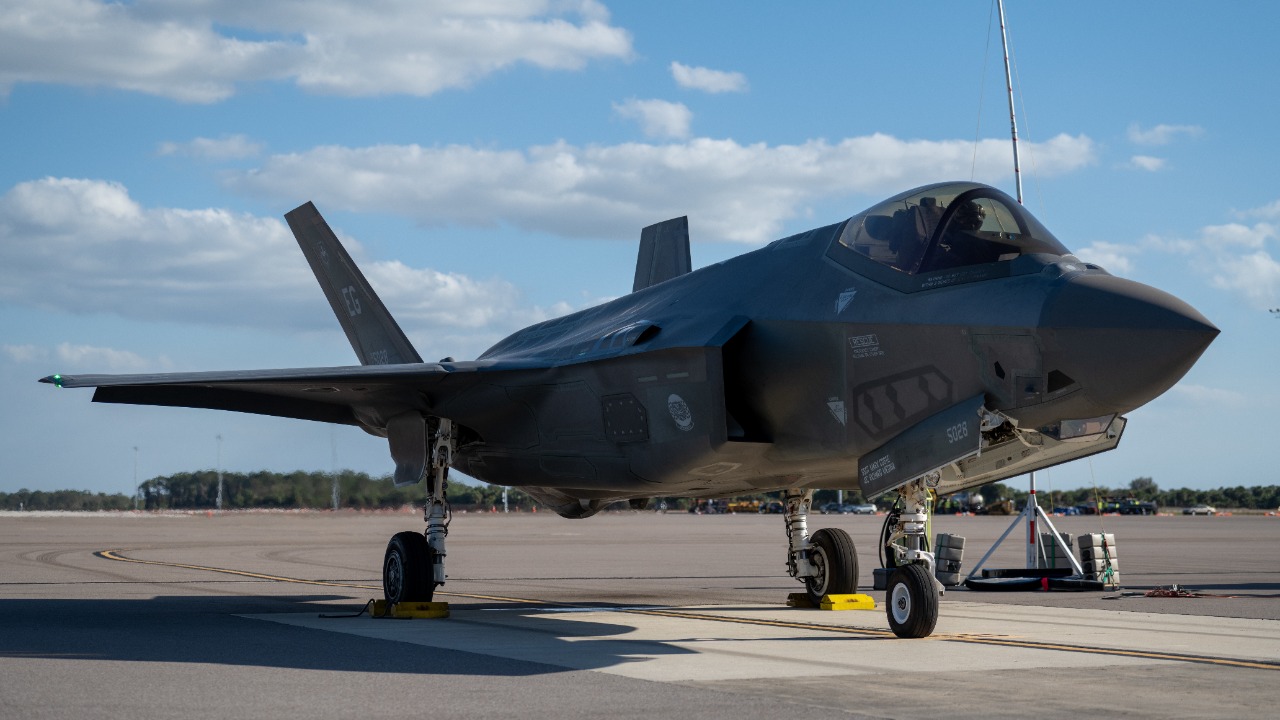

The first confirmed combat kill by a Dutch F-35 inside NATO airspace was tactically clean and politically reassuring, but financially it was a gut punch. A fifth generation stealth jet, built for high end warfare, ended up destroying a cheap Russian drone that later turned out to be part of a decoy wave, forcing the alliance to spend millions of dollars to swat what was essentially flying bait. The incident crystallized a brutal reality for NATO: in the age of mass-produced unmanned aircraft, the cost curve is tilting sharply in favor of the attacker.
What looked like a textbook air policing success over Poland has quickly become a case study in strategic imbalance. The Dutch F-35s proved they could intercept and destroy intruding drones on short notice, but they did so with weapons that cost hundreds of times more than the targets, raising hard questions about sustainability, deterrence, and whether Western airpower is structurally misaligned with the drone-heavy battlefield that Russia is shaping.
The interception that lit up NATO’s balance sheet
When unmanned aircraft crossed into allied skies over Poland, Dutch and Polish fighters scrambled as part of NATO air defences. The Dutch F-35s were operating in a standing mission to protect the alliance’s eastern flank, and they moved to intercept after the drones entered NATO airspace and triggered standard procedures. According to the Dutch Ministry of Defence, the unmanned aircraft had penetrated alliance territory, prompting Polish and Dutch jets to coordinate the response and demonstrate the ability to defend Alliance territory.
At least four drones were destroyed in the episode, most of them by Dutch F-35A fighters, with later analysis confirming that some of the aircraft were decoys rather than high value strike platforms. Reporting on the engagement notes that least four drones were brought down, and that several were ultimately classified as decoy models designed to probe and saturate air defences rather than inflict major damage. In other words, the alliance had just spent a fortune to destroy what were, in part, disposable test targets.
Sticker shock: a $2.8 million missile for a $10,000 drone
The financial mismatch at the heart of the incident is stark. Dutch F-35s reportedly used AIM-9X Sidewinder missiles to engage Russian drones valued at roughly $10,000 each, turning every trigger pull into a multi million dollar transaction. One detailed account describes how Dutch F-35s brought down Russian $10K drones in Poland With AIM-9X missiles that cost about $2.8 million per shot, a ratio that would be ruinous if repeated at scale.
The same reporting underscores the absurdity of the exchange rate by spelling out that the alliance effectively paid $2.8 million to eliminate a single low cost unmanned aircraft. A follow on breakdown of the engagement notes that the intercept occurred in Sep, when Dutch jets were scrambled to Down Russian Drones in Poland With AIM missiles that were never designed to be the default answer to cheap quadcopters and decoy UAVs. The numbers are not just eye catching, they are strategically corrosive, because they show how easily a patient adversary can bleed NATO’s high end inventory.
From tactical win to strategic warning
Alliance officials have framed the drone incursion as a deliberate test of NATO’s resolve and reaction time, rather than a random navigation error. Defence leaders across the bloc described the episode as a probe of air defences, with Defense officials inside NATO arguing that Such incursions are meant to measure how quickly and how forcefully the alliance responds when its borders are crossed. In that sense, the Dutch F-35s passed the test, showing that even small unmanned aircraft will be met with lethal force if they violate allied airspace.
Yet the same success story doubles as a warning about long term sustainability. Russia has already shown in Ukraine that it can flood the battlefield with cheap drones, and in this case Russia insisted it had not planned to target NATO territory even as the incursion highlighted how demand for interceptors now outpaces supply on air defences. The Royal Netherlands Air Force was flying its F-35s as part of a broader Royal Netherlands Air contribution to NATO forces that downed Russian drones over Polish airspace, but every such sortie consumes finite missile stocks and pilot hours that cannot be easily replaced.
Kill marks, decoys and the politics of prestige
Visually, the incident has already been immortalised on the fuselage of at least one Dutch jet. A Royal Netherlands Air Force F-35A of the 313th Squadron was photographed with a drone silhouette painted below the canopy rail, a Royal Netherlands Air marking that signalled the aircraft had opened fire against the Russian drones. Another account notes that an F-35A of the Royal Netherlands Air, tied to Poland Reports Airspace Violation by Objects from Belarus, now carries a visible emblem of that first unmanned kill, underscoring how quickly modern air forces turn operational moments into symbols.
Those symbols have travelled widely. Photos show an F-35 flaunting a fresh kill marking after the stealth jet downed a Russian drone, with analysts pointing out that Taking down cheap drones far below the kind of high end hostile threats that the 35 was built for has raised questions about sustainability and whether this is the best use of such an advanced platform. Video segments have amplified the imagery, with one clip highlighting how a NATO jet shows off a kill mark after the first ever shoot down of a NATO F-35 against a Russian drone, and another discussion asking at what price the Netherlands’ F-35s shot down Russian drones over Poland in Sep, a debate that leans heavily on the 35’s prestige versus the modest nature of its target.
Cheap drones, expensive jets and a recast battlefield
The deeper problem is that this was not an isolated oddity but part of a broader shift in warfare. Analysts have been warning for years that low tech, low cost drones can impose high costs on sophisticated militaries, as seen when Houthi forces used simple UAVs to harass better equipped opponents. One study of those attacks concluded that The attacks are more a military nuisance than a decisive blow, but they demonstrate how low cost technologies can conduct harassment and can kill small numbers of soldiers while forcing defenders to spend disproportionate resources. The Dutch F-35 engagement over Poland fits that pattern almost perfectly, with a nuisance level threat triggering a very expensive response.
Some defence commentators argue that They, Russia, have essentially recast the modern battlefield by leaning into massed drones and artillery, rendering many advanced systems like strike fighters less central to the infantry battles prevalent in the Ukraine theatre. A detailed assessment notes that They ( Russia ) essentially recast the modern battlefield and rendered many advanced systems like strike fighters greatly less potent in the kind of infantry battles prevalent in the Ukraine theatre, a critique that lands squarely on the F-35’s shoulders when it is used to chase decoy drones. For NATO, the Dutch shootdown is therefore less a triumph than a flashing warning light that its most prized jets are being drawn into a cost exchange they cannot win.
More from Morning Overview