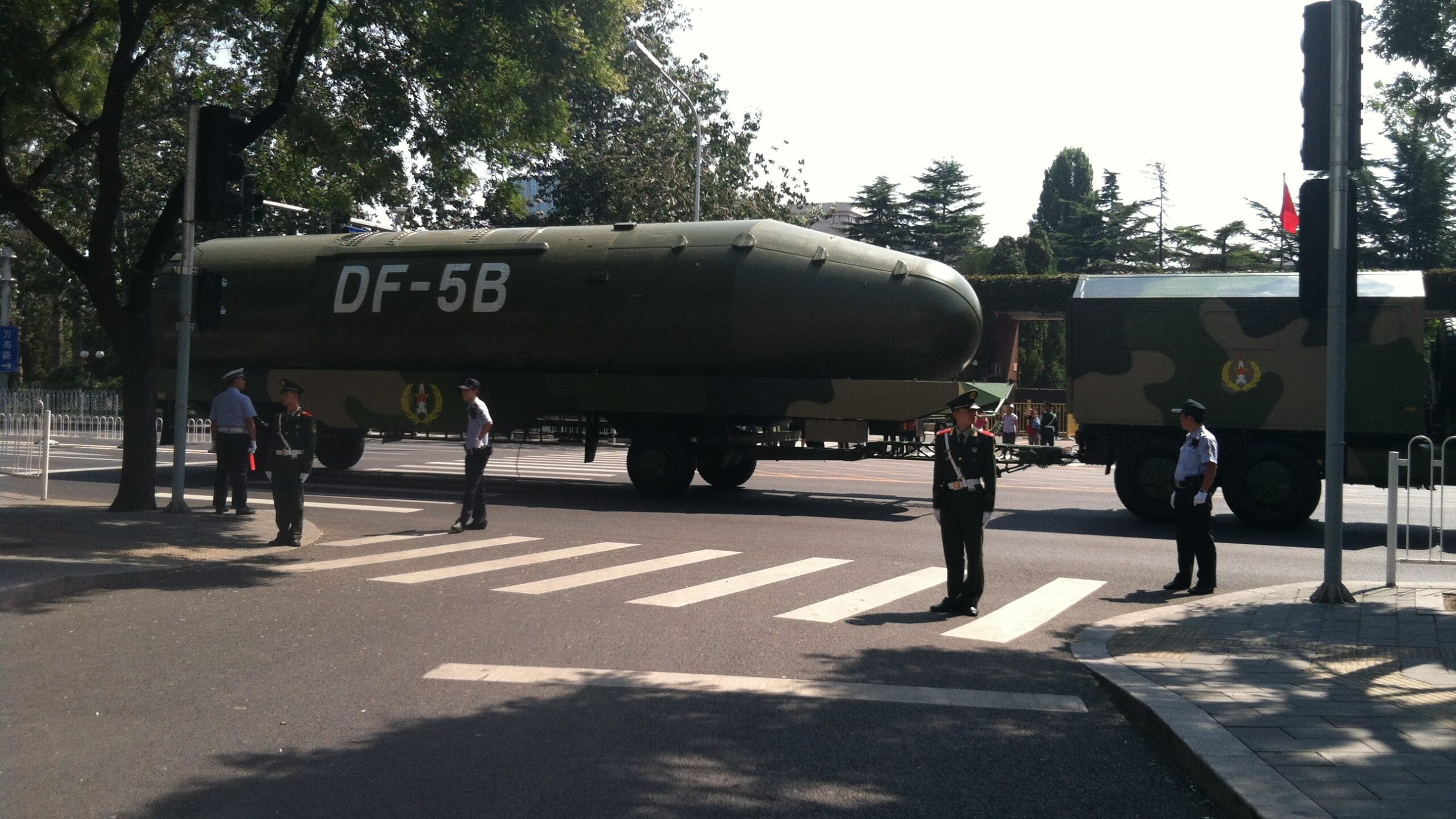

China’s most secretive weapons branch is at the center of an almost surreal allegation: that some of its nuclear missiles were found filled with water instead of fuel. The claim has collided with a historic purge of generals and defense executives, inviting a simple but explosive narrative that one scandal triggered President Xi Jinping’s sweeping crackdown. I see a more complicated picture emerging, where embarrassing technical failures, entrenched graft, and Xi’s own political calculus all intersect.
To understand whether contaminated missiles really detonated Xi’s purge, it helps to separate what is firmly reported from what remains unverified, and then look at how those facts fit into his long project to reshape the People’s Liberation Army into a force capable of fighting, and winning, a high‑tech war.
How the “water in the missiles” story emerged
The basic allegation traces back to US assessments that some missiles in China’s strategic forces were discovered with water where rocket fuel should have been. Those assessments, relayed by people familiar with the intelligence, described the problem as one example of how corruption had hollowed out key capabilities, with officers and contractors allegedly cutting corners and siphoning money from maintenance and procurement. Follow‑on reporting said The US assessments cited several instances of faulty equipment and missing funds, painting a picture of a Rocket Force that looked formidable on parade but was less reliable in the field.
Later accounts amplified the drama. One report relayed that “There would be no reason to put water in the missiles unless it was deliberate sabotage,” attributing that line to The Asia Times. Another summary of the same story, also citing earlier intelligence leaks, linked the water‑filled missiles directly to Xi’s decision to remove senior commanders and defense industry bosses, suggesting that the scandal may have even now led to a broader reassessment of China’s nuclear readiness. Unverified based on available sources is any detailed technical description of which missile types were affected, how many systems were compromised, or whether the contamination was discovered during routine checks or specific readiness drills.
From intelligence leak to political earthquake
What is clear is that the intelligence surfaced just as Xi Jinping was moving aggressively against the leadership of the People’s Liberation Army Rocket Force and related arms suppliers. One detailed account of the episode said The US assessments were shared at senior levels in Washington and interpreted as evidence that graft was undermining China’s ability to sustain combat over the long term. Another summary, citing Peter Martin and Jennifer Jacobs, said Bloomberg US reporting indicated President Xi Jinping’s purge followed internal briefings that his prized missile force was not as ready as he had been led to believe.
Chinese authorities have never publicly confirmed the water‑in‑missiles detail, but they have acknowledged a sweeping reshuffle. Beijing abruptly removed senior Rocket Force commanders and later sacked the defense minister, while state media offered only vague references to “discipline” problems. One analysis noted that Beijing did not explain the move, but on Jan, Bloomberg attributed the purge to “widespread corruption [that] undermined [Xi’s]” efforts to build a modern fighting force. A separate summary of the same episode stressed that Jan reporting framed the shake‑up as part of a trend under Xi’s regime, in which anti‑graft drives repeatedly intersect with efforts to tighten political control.
Corruption, not chemistry, at the heart of the purge
When I look across the available reporting, the throughline is less about a single technical fiasco and more about systemic graft inside the missile industry. One detailed study of the episode argued that the Rocket Force and its suppliers had become a prime target because of the vast sums flowing into new weapons programs, describing how Rocket and Powered Corruption were intertwined in procurement chains. That analysis, titled Why the Missile Industry Became the Target of Xi, Purge, said The People’s Liberation Army was experiencing a broader anti‑graft campaign that reached from uniformed officers to executives in state‑owned defense conglomerates.
Other accounts echo that theme. One summary of Chinese commentary said PRC armed forces had been undergoing a major overhaul under Chine leader Xi Jinping, and that corruption within the military may be undermining Xi Jinping’s military modernisation drive. Another report, citing Sources familiar with intelligence assessments, said Sources quoted by Bloomberg believed Chinese President Xi Jinping’s recent extensive military reshuffle was aimed at rooting out corruption within the military.
How serious were the missile flaws for China’s deterrent?
Even if some missiles were compromised, analysts are divided on how much it matters for China’s nuclear posture. One technical assessment argued that the episode, while embarrassing, did not fundamentally change the balance of power, contending that China’s waterlogged missiles were unlikely to affect its ability to retaliate in a nuclear exchange. A related analysis, titled China, Waterlogged Missiles Don, Matter, noted in its Introduction that China maintains a diversified arsenal and that On December, Xi Jinping removed nine top military officials in what it described as a political as well as operational move, suggesting the purge was about more than a single readiness issue.
US officials appear to share that nuanced view. One summary of American briefings said US intel shows China’s army had missiles filled with water instead of fuel in a corruption scandal that led to Xi’s military purge, but also that Washington does not see the episode as crippling China’s ability to fight a protracted conflict. Another report, focused on the same intelligence, said China’s army was plagued by other examples of graft such as faulty equipment and fake training records, reinforcing the idea that the water incident was symptomatic of a broader problem rather than a singular catastrophe.
Inside the Rocket Force: rot, risk and reshuffle
On the ground, the allegations of rot inside the Rocket Force are strikingly concrete. One account described how Chinese soldiers atop mobile rocket launchers were paraded even as internal inspections uncovered serious maintenance failures, and that a Rocket Force commander was removed before being replaced in October. Another report, urging readers to Follow Matthew Loh and noting that Every time Matthew publishes a story, you get an alert when you Sign up, used those details to illustrate how ceremonial displays masked operational weaknesses.
Chinese and foreign commentators have also highlighted the political shock of the purge. One video report framed the episode as Shocking, saying reports reveal that some of China’s nuclear missiles were filled with water instead of fuel, causing launch failures and exposing nuclear leaks, bribery, and weakening combat readiness. Another summary of the same narrative said China faced a scandal that raised questions about how deeply corruption had penetrated units entrusted with nuclear weapons.
More from Morning Overview