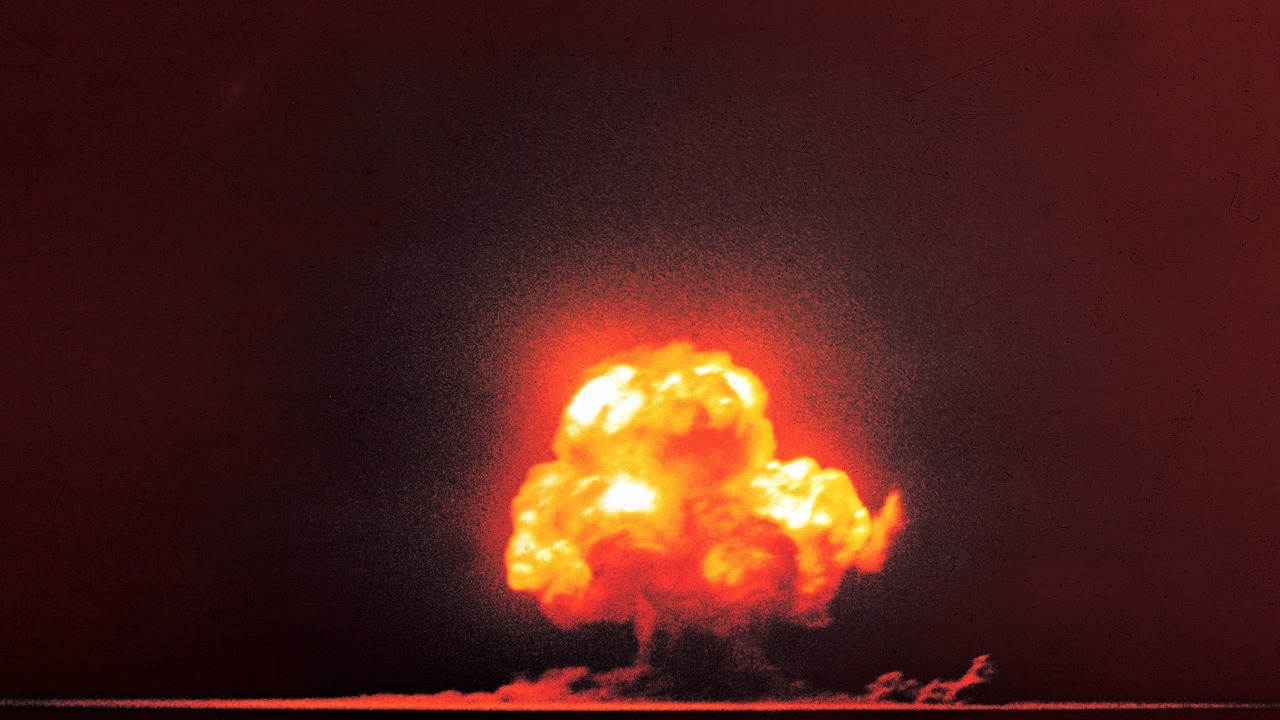

A strong 5.2 quake rattling the ground near Iran’s Bushehr nuclear plant would be alarming in any week. Coming just as Washington and Tehran edge toward a direct clash over nuclear sites, it has supercharged speculation that the shaking was not natural at all but the product of a covert nuclear test. I want to separate what is known from what is rumor, and explain why the science so far points firmly to an earthquake, not an underground blast, even as the politics grow more combustible.
The tremor’s proximity to a working reactor, the timing amid U.S. war talk, and a swirl of online claims have fused into a potent narrative that Iran’s nuclear program has literally shaken the earth. The evidence, however, tells a more prosaic story of a seismically active region colliding with a moment of extreme geopolitical tension.
The Bushehr shock: what actually happened in southern Iran
Seismologists recorded a Strong Mag 5.2 event centered near Bushehr, roughly 27 km Southwest of Mohr in Fars, Iran, at 08:41 in the morning local time. The quake’s magnitude, listed precisely as 5.2, and its shallow depth are consistent with the kind of crustal faulting that regularly affects this stretch of the Zagros belt. Instrument readings place the epicenter onshore, in a region where tectonic plates grind together and have produced repeated damaging quakes over recent decades.
Regional outlets described a 5.2-magnitude shock striking the Asaluyeh area in Iran’s southern Bushehr province, with reports from SRINAGAR noting that the Magnitude 5.2 Earthquake Strikes Iran in a zone that has seen both industrial expansion and rapid population growth. Another account from the Gulf region referred to a 5.2-Magnitude Earthquake Strikes Southern Iran, with officials in Tehran, citing the Richter scale, confirming a magnitude of 5.2 in bulletins carried by QNA. Together, these technical and local reports sketch a familiar pattern: a moderate but widely felt quake in a country that, as other coverage notes, is regularly hit by earthquakes.
Rumors of a nuclear test collide with a war scare
The reason this particular tremor has drawn such intense scrutiny is not its size but its location and timing. The quake struck near the Bushehr nuclear power plant, and Tremors were also felt in parts of the UAE, Qatar and Iraq, feeding a sense across the Gulf that something extraordinary had happened. Iranian media highlighted that the shaking hit close to critical energy infrastructure at Bushehr, while social networks quickly filled with claims that an underground nuclear experiment had gone wrong.
Those rumors landed in an atmosphere already thick with talk of conflict. On January, U.S. officials signaled a harder line, and On January 31, President Donald Trump declared that a U.S. naval armada was in place to pressure Iran over its nuclear facilities. That deployment, described as aimed at potential strikes on nuclear sites and even contingency plans to secure nuclear materials from wreckage, has raised fears in Tehran that the country’s nuclear infrastructure could become a battlefield. In that context, a 5.2 shock near Bushehr was instantly folded into a larger narrative of looming war, regardless of what the seismology actually shows.
What the seismology says about quakes versus nuclear blasts
From a scientific standpoint, the key question is whether the Bushehr event looks like a natural earthquake or an artificial explosion. A detailed catalog from Bushehr lists the shock as a tectonic Strong Mag 5.2 Earthquake, with waveforms and depth estimates that match a fault rupture rather than a contained blast cavity. Natural quakes typically show a mix of shear and compressional waves and align with known fault systems, while nuclear tests tend to produce a more spherical, compressional signature that global monitoring networks are trained to spot.
Those networks, coordinated through the Comprehensive Test Ban Treaty Organization, have a long track record of distinguishing between the two. A study Led by Johns Hopkins scientists examined how online narratives miscast a 2024 Iran quake as a nuclear test, even though CTBTO sensors showed a classic tectonic event. The researchers warned that misinterpreting seismological data, or ignoring it altogether, can fuel conspiracy theories that are hard to dislodge once they spread. In the current case, there is no indication from these international monitoring systems, based on available reporting, that a nuclear explosion occurred near Bushehr.
A pattern of debunked nuclear-test claims around Iran
The Bushehr rumors are not an isolated episode. Over the past two years, almost every sizable quake in Iran has spawned claims of clandestine nuclear activity, only to be knocked down by specialists. Coverage of an earlier incident in the Alborz region quoted Experts who described that Alborz shock as a “classic reverse fault earthquake” and stressed that Iran and the Iraqi border area, which also saw a 5.6-magnitude event, sit on one of the world’s most active seismic belts. They noted that the Iraqi and Iranian sides of the frontier have experienced several major quakes in recent decades, none of which had any credible link to weapons testing.
International monitoring bodies have taken the unusual step of addressing these rumors directly. A briefing cited by Arms Control Today explained that International sensors detected two earthquakes in Iran on Oct. 5, both of which matched natural seismic events, and dismissed the nuclear testing rumor. That pattern is repeating now: a moderate quake, a flurry of online claims, and a body of technical evidence pointing back to the same conclusion that the shaking is geological, not nuclear. The persistence of these narratives says less about the data and more about the deep mistrust surrounding Iran’s nuclear file.
How media narratives turn a 5.2 quake into a nuclear scare
Even as seismologists stress the natural origin of the Bushehr event, some coverage has leaned into the most dramatic framing possible. A video segment circulating online, titled in part “Iran’s Nuclear Test Triggers? 5.2 Quake Hits Near Bushehr Plant Amid U.S. War Tension,” stitches together images of shaking buildings, graphics showing a 5.2 to 5.3 m magnitude range, and archival footage of explosions. The effect is to imply causation where none has been demonstrated, inviting viewers to connect the dots between a natural hazard and a secret weapons program without presenting the underlying seismic evidence.
More conventional outlets have been careful to emphasize the country’s vulnerability to ordinary tectonic forces. One Gulf-focused liveblog reported that a 5.2-magnitude earthquake hits southern Iran and noted bluntly that the country is regularly hit by earthquakes. Another regional dispatch on a 5.2-magnitude quake in Iran underscored the same point, framing the Bushehr shock as part of a long and tragic history of seismic disasters rather than a singular geopolitical plot twist. The contrast between sober seismology and sensational packaging is stark, and it shapes how audiences interpret an event that, on the numbers alone, looks routine for this part of the world.
More from Morning Overview