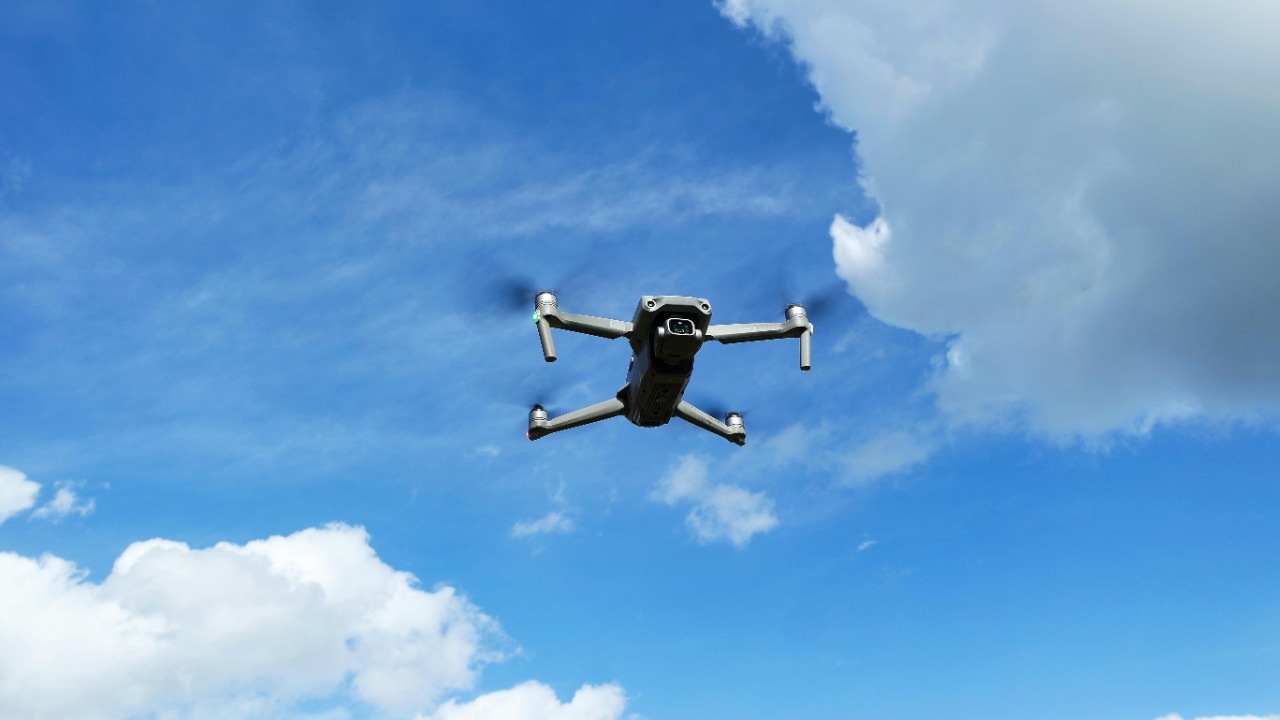

Talk of a future where Democrats send spy drones to hover over backyards in the name of climate enforcement has become a staple of partisan rhetoric. The reality that emerges from current drone rules, counter‑drone proposals, and environmental policy is more complicated, and far less cinematic, than that dystopian image suggests. The legal and technical landscape points to a tug of war between privacy, security, and environmental monitoring, not a ready‑made blueprint for a hardline green surveillance state.
There is, however, a genuine policy debate over how far government should go in using uncrewed aircraft and related sensors, from policing airspace to tracking pollution. As I walk through the statutes, federal directives, and political fights now in motion, the picture that forms is of a system that still treats drones as tightly constrained tools, even as some Democrats push for broader authorities in the name of safety and, at times, environmental oversight.
What current law actually allows over your backyard
The first check on the nightmare of climate cops peering into every yard is that many states explicitly restrict what government drones can do. Florida’s statute on surveillance technology, for example, states that “a law enforcement agency may not use a drone to gather evidence or other information” except in narrow circumstances spelled out in subsection (4), a limit that directly reins in routine aerial snooping over private homes through state law. The same framework also bars agencies operating under section 11.45 from using a drone equipped with an imaging device to record images of privately owned real property or its occupants, a prohibition that is written to cover the owner, tenant, occupant, invitee, or licensee of that land and that even specifies the figure “11.45 m” in the text of the restriction in Chapter 934.50. Those kinds of provisions do not read like a green light for mass environmental surveillance, they read like a bipartisan attempt to keep government cameras out of backyards unless a judge or emergency exception says otherwise.
Federal aviation rules add another layer of constraint that makes the idea of constant low‑altitude monitoring of every lawn technically and legally awkward. Recreational pilots are told to “Keep your drone within the visual line of sight” or rely on a visual observer who is physically co‑located and in direct communication, a standard spelled out in the Federal Aviation Administration’s guidance for hobbyists that also situates small aircraft inside the broader “national airspace system” overseen by the FAA. Commercial and government operators face even stricter certification and remote identification rules, and a recent overview of “Regulatory Updates” notes that The FAA and State Authorities have stepped up restrictions around Remote ID and other compliance tools, underscoring that The FAA is tightening, not loosening, the leash on uncrewed aircraft in ways that are detailed in drone restrictions. For a national climate‑enforcement grid to materialize, lawmakers would have to rewrite both privacy statutes and aviation rules that currently treat low‑level airspace as something to be protected, not saturated with government sensors.
How Democrats are actually using drones: security first, not climate
When Democrats on Capitol Hill talk about expanding drone powers, they are usually focused on security threats, not carbon footprints. A recent bipartisan bill led by a Democratic chair would give law enforcement agencies authority to disable drones that pose an immediate danger, with the sponsor arguing that “Drone technologies continue to become more accessible and more affordable” and that police need clear tools to respond to offenses committed using a drone, an argument laid out in a press release on the Peters bill. Another effort described as a bipartisan Senate push would extend lapsed counter‑drone authorities so that DHS and DOJ can interdict errant civilian drones above certain locations, with a Top Senate Homeland Security Dem backing the idea that the Department of Homeland Security and the Department of Justice should be able to take down rogue aircraft over sensitive sites, a position detailed in a counter‑drone effort. Those proposals are about disabling drones, not launching more of them, and they are framed around stadiums, prisons, and critical infrastructure rather than suburban compost bins.
National security concerns are also driving executive branch moves that shape which drones can even be bought with federal dollars. The Federal Communications Commission has added foreign produced uncrewed aircraft systems to a “Covered List” of restricted communications equipment, then carved out exemptions for certain Department of Defense approved products, with the Federal Communications Commission explaining that On December it moved to exempt DoW‑approved systems from a broader ban in a notice that repeatedly refers to the FCC as the arbiter of these exemptions. A separate FCC document, labeled DA 25‑1086 and released in Dec, describes how the U.S. government’s executive branch interagency body is referring certain uncrewed aircraft systems to the Commission for action, a sign that the national security bureaucracy is preoccupied with Chinese‑linked platforms and critical communications risks in the DA 25‑1086 proceeding. None of that is about enforcing recycling rules, it is about keeping suspect hardware out of the communications backbone and giving agencies the power to knock dangerous drones out of the sky.
Environmental agencies and the slow creep of aerial monitoring
Where environmental policy does intersect with drones, the story is more incremental than ideological. The Environmental Protection Agency has adopted an Unmanned Aircraft Systems Policy Directive, labeled Directive No 2137.1, that sets internal rules for how staff can use uncrewed aircraft for inspections, sampling, and emergency response, and the document notes on Page 5 of 9 that IT/IM directives are reviewed annually for content, relevance, and clarity, with the template marked as Form Rev 06 in the EPA directive. That kind of bureaucratic language signals a cautious rollout of drones as one more tool in a larger kit that already includes satellites, fixed sensors, and on‑site inspectors, not a sudden leap to constant aerial patrols over every neighborhood garden.
Local and federal security agencies are also experimenting with aerial and infrared technology in ways that sometimes overlap with environmental monitoring but are driven by safety concerns. In one televised segment, a reporter describes how DHS have deployed infrared cameras and drone detection technology to ensure the drones in the sky do not pose a threat, a setup that shows the Department of Homeland Security using sensors to watch the airspace rather than to peer into homes, as explained in a local report. Another broadcast on federal preparations for the World Cup notes that counter‑drone plans for the tournament include deputization of local partners, with the World Cup framed as a test case for how to manage crowded skies around major events in a World Cup segment. Those examples show how security and crowd safety are driving the most aggressive drone deployments, while environmental agencies move more slowly and within formal policy directives that are subject to annual review.
The politics of “spy drones” and the China factor
Republican critics have seized on mysterious drone sightings and Chinese‑linked hardware to argue that Democrats are not doing enough to protect privacy and sovereignty, even as they warn of future overreach. In New Jersey, for instance, Sen Stei used a string of unexplained flights to argue that “recent mysterious drone sightings across New Jersey have blown a hole in our national security conversations,” and he faulted Democrats for failing to move a bill in either session that would have tightened controls, a charge laid out in a New Jersey alert. South Dakota Governor Kristi Noem has gone further rhetorically, telling a national interviewer that “We need to take these drones down” as she described air, land, and sea as the military’s charge and talked about seeing the land secure and the maritime borders getting more attention, a stance she laid out in a televised interview. Those arguments are aimed at Chinese surveillance and border security, but they also feed a broader narrative that any expansion of drone authority, including for environmental purposes, is a slippery slope to constant monitoring.
More from Morning Overview