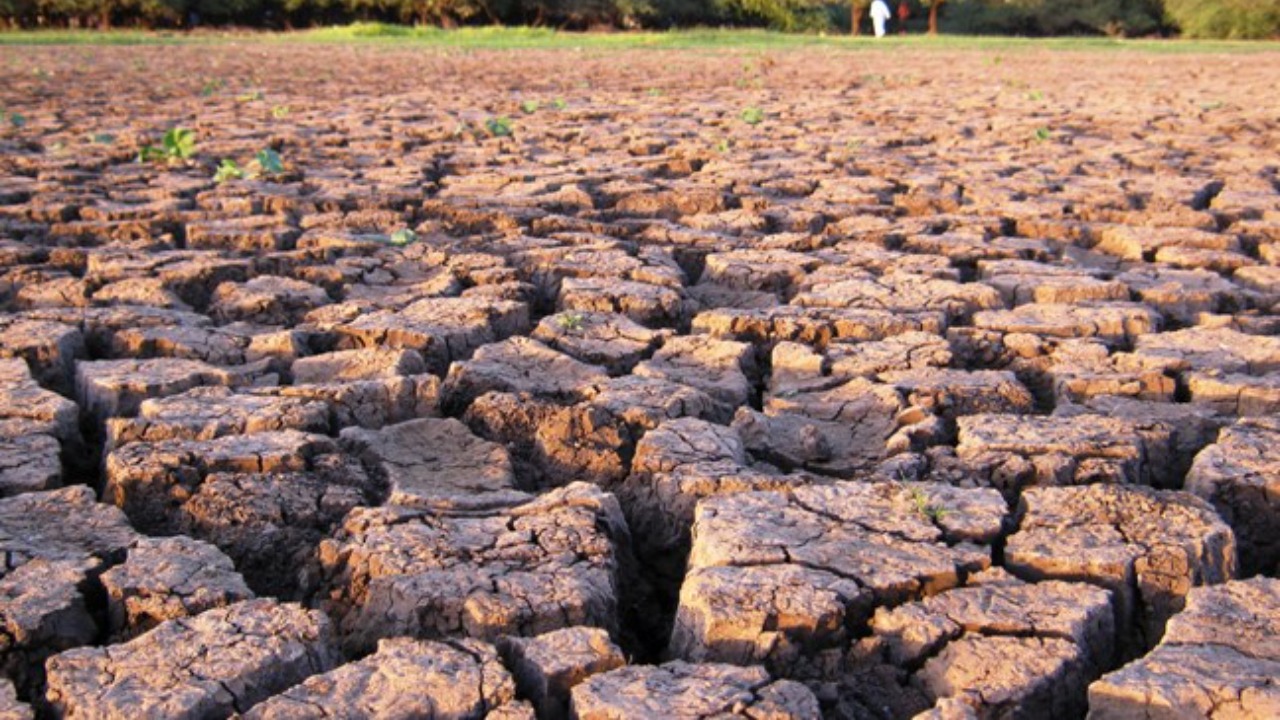

Across the world, the dark truth about water is that some countries are quietly running out of supply even before most people notice the taps slowing. From megacities flirting with “Day Zero” to river basins pushed below survival thresholds, the numbers now rival classic definitions of crisis. I see a pattern of overuse, climate stress and political delay converging into a global warning signal.
1. South Africa’s Cape Town on the Brink of “Day Zero”
South Africa’s Cape Town came closer than almost any modern city to physically running out of water. Between 2015 and 2018, a severe drought drove the city’s reservoirs to about 20% capacity, and officials publicly circled April 12, 2018 as the moment “Day Zero” would shut off municipal supplies. The World Resources Institute’s Aqueduct Water Risk Atlas later highlighted how this near miss exposed structural overreliance on a few surface reservoirs and limited backup storage for a fast‑growing coastal metropolis.
Researchers writing on the crisis note that Between periods of normal rainfall, Cape Town had failed to diversify sources, leaving households and businesses exposed when the drought hit. One analysis in Towards a water secure future argues that the emergency restrictions, which cut personal use to roughly a bucket per person per day, showed how fragile urban economies become when taps slow. Another study on The Cape Town crisis describes how “Day Zero,” first framed by Olivier and Xu, has since become shorthand for the moment a modern city’s network effectively runs dry.
2. India’s Looming Absolute Scarcity by 2025
India illustrates how national‑scale scarcity can build quietly beneath economic growth. The country holds about 18% of the world’s population but only 4% of global water resources, a mismatch that a 2018 NITI Aayog assessment, cited in UN Water’s 2020 World Water Development Report, warns could push India into absolute water scarcity by 2025. That report estimates groundwater depletion at 25 cubic kilometers per year, a volume being pumped out of aquifers faster than monsoon rains can recharge.
Because groundwater underpins irrigation for key crops and supplies many urban neighborhoods, this 25 cubic kilometer annual loss threatens both food security and city taps. The same national planning analysis flags that several major cities are already classified as high risk for running out of accessible groundwater, while rural wells are being drilled ever deeper. If current trends continue, India’s demographic weight means its scarcity will reverberate through global grain markets and regional migration patterns.
3. China’s Yellow River Drying for 200 Days Annually
China’s water crunch is most visible in the fate of the Yellow River, historically described as the cradle of Chinese civilization. A 2021 study by the Chinese Academy of Sciences, summarized in a Global Water Forum analysis, reports that China now extracts about 80% of its renewable water resources each year. That level of pressure has contributed to stretches of the Yellow River running dry for up to 200 days annually in some sections.
When a river that supports major industrial hubs, irrigation districts and cities intermittently disappears, the implications go far beyond local inconvenience. Factories depending on steady cooling water, farmers tied to canal deliveries and downstream ecosystems all face periodic shutdowns. The same analysis notes that heavy upstream withdrawals, combined with pollution and climate‑driven shifts in rainfall, are forcing authorities to juggle competing demands in ways that leave little margin for error.
4. Pakistan’s Indus Basin Per Capita Drop to 1,017 Cubic Meters
Pakistan’s Indus River basin, lifeline for about 200 million people, has seen its water cushion erode to the edge of scarcity. According to the Pakistan Council of Research in Water Resources, summarized in the World Bank’s South Asia Water Assessment, per capita availability in the basin has fallen from 5,260 cubic meters in 1951 to 1,017 cubic meters in 2021. That shift moves Pakistan from relative abundance into the category widely described as water‑stressed.
Other assessments echo the same trajectory. One overview notes that According to the National Water Policy, surface water availability has already plunged from 5,260 cubic meters per person, while separate work on In Pakistan cites World Bank figures of 1,050 cubic meters by 2010. Academic research on Water Scarcity records a drop from 5,260 to 908 cubic meters, and another study notes that the IMF has tracked Pakistan’s decline from 1500 to 1017 cubic meters by 2021. Together these numbers show a system where irrigation, population growth and climate stress are converging into what one commentator called a geopolitical ticking time bomb.
5. Iran’s 92% Consumption and 20 cm Annual Subsidence
Iran is quietly mining its future water at a pace that is now deforming the land itself. A national assessment by the Iranian Ministry of Energy, cited in the UN’s State of Food and Agriculture report, finds that the country consumes about 92% of its renewable freshwater each year. It also concludes that roughly 80% of aquifers are overexploited, meaning withdrawals exceed natural recharge and long‑term storage is being drained.
The physical consequence is visible in Tehran, where the same report links this overpumping to land subsidence of up to 20 cm per year. That figure, detailed in an Iranian case study, means parts of the capital are sinking fast enough to damage buildings, roads and buried infrastructure. For farmers, shrinking aquifers translate into saltier wells and rising pumping costs, while urban residents face growing dependence on distant surface transfers that are themselves vulnerable to drought.
6. Mexico’s High-Risk Index and 70% Drought Coverage
Mexico’s water stress is concentrated but severe, particularly around the Valley of Mexico where the capital sits. The national water authority reports that by 2022 the country’s water stress index had reached 2.5, a level categorized as high risk, while aquifers in the Valley of Mexico were being depleted at a rate of about 1,000 cubic meters per second. A climate analysis links this depletion to both chronic over‑pumping and hotter, drier conditions.
Compounding the structural deficit, a 2021 drought affected roughly 70% of Mexico’s territory, according to the same CONAGUA reporting. For residents of Mexico City and northern industrial hubs, that meant tighter restrictions, intermittent service and growing reliance on tanker deliveries. For farmers in already arid states, the combination of aquifer decline and widespread drought translated into crop losses and heightened competition between agriculture and cities for every remaining cubic meter.
7. Chile’s Millennium Drought Squeezing Santiago’s Supplies
Chile’s central region, including Santiago, has been locked in what researchers now describe as a millennium‑scale drought. A study from the University of Chile, highlighted in a regional water security brief, finds that from 2010 to 2020 precipitation in this zone was 30% to 50% below the long‑term average. Reservoirs that feed Santiago’s taps and irrigate surrounding farms were reported at only about 40% capacity in 2022, a level that sharply narrows the buffer against another dry year.
Hydrologists analyzing hyperdroughts note that Since 2010, the area around Santiago has experienced a continuous dry spell layered on top of rising temperatures. That combination increases evaporation from reservoirs and soils, so each missing millimeter of rain hurts more. For Chile’s fruit exporters and urban planners, the implication is that twentieth‑century assumptions about Andean snowpack and river flows no longer hold, forcing a rapid rethink of storage, reuse and demand management.
8. Spain’s Andalusian Reservoirs at Critical 20% Levels
Spain’s Guadalquivir basin in Andalusia shows how a modern agricultural powerhouse can edge toward structural shortage. The Spanish Ministry of Ecological Transition reports that in 2022 reservoir levels in this basin dropped to about 20% of capacity after a prolonged drought. That collapse in stored water hit just as irrigation demand peaked, leaving authorities to ration supplies among farmers, towns and ecosystems along one of southern Europe’s key river systems.
The same hydrological reporting notes that agriculture accounts for roughly 80% of Spain’s national water use, a figure detailed in the ministry’s planning documents and reflected in a broader European assessment. When reservoirs in a region so dominated by irrigated olives, citrus and vegetables fall to 20%, the economic stakes extend across export markets and rural employment. It also exposes how dependent Mediterranean farming has become on stable surface storage that climate change is steadily undermining.
9. UAE’s Desalination Dependence Amid 70 Cubic Meters Per Capita
The United Arab Emirates has built one of the world’s most desalination‑dependent economies, yet its underlying freshwater balance is deeply precarious. The country’s National Water Plan 2021‑2050, summarized in a water security analysis, notes that about 42% of national supply now comes from desalination plants. At the same time, groundwater is being depleted at an estimated 2.5 billion cubic meters per year, a rate that steadily erodes the last natural buffer against outages or energy shocks.
Per capita renewable water availability in the UAE is about 70 cubic meters annually, far below the commonly cited scarcity threshold of 500 cubic meters, according to Aqueduct country rankings and the national plan. That figure places the Emirates among the most water‑poor states on earth in natural terms, even as its cities present an image of limitless supply. Analysts warn that heavy reliance on energy‑intensive desalination, combined with vanishing groundwater, leaves the country exposed to power disruptions and long‑term environmental costs.
Supporting sources: Better Forests, Better, New research shows.
More from Morning Overview