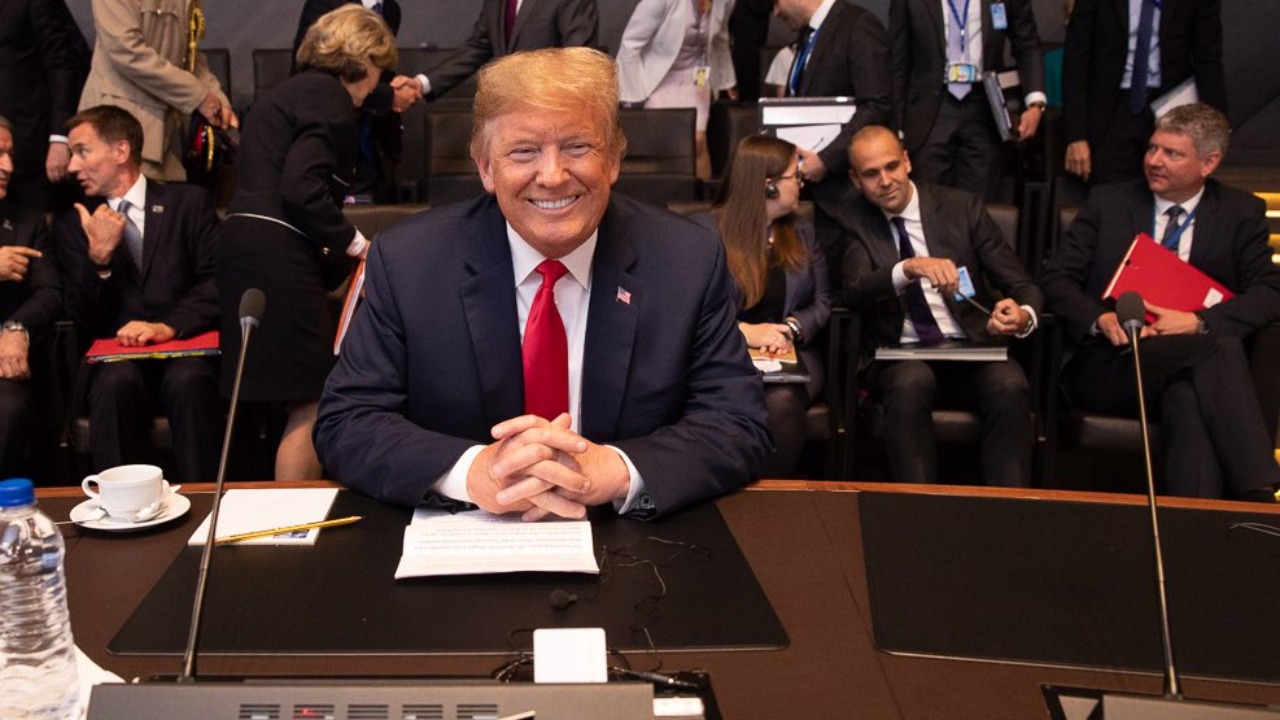

Greenland has suddenly shifted from icy abstraction to the hottest fault line in transatlantic politics. As President Donald Trump toys aloud with the idea of taking the island by force if a purchase fails, the question is no longer academic: could a small European kingdom really shield the world’s largest island if the world’s dominant military power decided to move in?
To answer that, I need to look beyond raw firepower and into treaties, geography and political will. On paper, the balance between the United States and Denmark is absurdly lopsided, yet the legal and alliance architecture around Greenland makes a unilateral land grab far more complicated than a simple David versus Goliath clash.
Why Greenland matters so much to Washington
Strategically, Greenland is no remote curiosity. It sits astride the North Atlantic and Arctic approaches, a vast ice-covered platform that shortens flight paths between North America and Europe and offers early warning vantage points over the polar route. American planners have long treated the island as a key node in continental defense, which is why the Senior Researcher Mikkel description that “Greenland matters for American security” is not a metaphor but a literal statement of doctrine. From radar chains to airfields, the island underpins how Washington watches the skies and seas to its north.
That logic dates back to the early Cold War, when Jan and other Western leaders watched Eastern European countries fall to Soviet-backed communist revolutions and scrambled to lock in a defensive perimeter. In April, twelve nations including the United States created NATO, and soon after, Washington and Copenhagen signed a 1951 agreement that explicitly allowed a permanent American military presence in Greenland in response to the perceived Soviet threat at the height of the Cold War, as detailed in the 1951 agreement. That deal, updated in 2004 to add Greenland, which had established self-governance in 1979, as a signatory, still shapes what is legal and what is not on the island today.
A tiny kingdom with a sprawling Arctic responsibility
On the surface, the idea that Denmark could stand alone against the United States is almost absurd. According to Global Firepower’s 2025 rankings, the US is placed at number one, while Denmark ranks 45th among 145 countries, a gap that captures the sheer difference in scale between a superpower and a small European state, as highlighted in the According assessment. A separate comparison of Denmark vs USA military capabilities underscores that Copenhagen’s armed forces are structured for limited expeditionary roles and Arctic patrols, not for high-intensity war with a global hegemon, and that its doctrine leans heavily on alliances rather than standalone confrontation, as the Denmark vs USA comparison makes clear.
Yet this small force carries responsibility for a territory that stretches across the North Atlantic and deep into the Arctic. Greenland, formally part of the Kingdom of Denmark, is the world’s largest island and home to critical sea lanes and resource prospects, as any basic profile of Greenland makes clear. Strategically, Denmark punches above its weight, but militarily, they rely heavily on alliances, a point that underpins the analysis of Denmark’s Force Structure as a Smal but professional military tailored to niche roles rather than massed combat, as explored in the Strategically discussion.
What a US move would look like on the ground
Any attempt by the United States to take control of Greenland would be highly complex. Beyond diplomatic and legal challenges, a military operation would have to contend with brutal weather, limited infrastructure and the political shockwaves inside NATO, a reality spelled out in a recent video analysis that stresses that Any attempt by the United States to seize the island would be seen as a rupture in the Western alliance and that both Denmark and Greenland are treating the threat seriously, as described in the Any attempt segment. The Trump administration has already escalated rhetoric by suggesting that if it cannot buy Greenland, it may take it by military force, a threat reportedly voiced by Top aide Stephen Miller and framed as part of a broader pattern of US imperial ambitions, according to the account that notes how The Trump team has not been deterred by traditional diplomatic niceties, as detailed in the The Trump report.
Crucially, Washington does not need to start from scratch. The 1951 defense agreement, updated in 2004 to include Greenland as a signatory after it gained home rule in 1979, already gives the US a legal foothold to expand its military presence, something analysts have described as an open door for more bases and infrastructure as long as Copenhagen and Nuuk formally consent, as explained in the Greenland analysis. Members of the US Army Corps of Engineers are already working at facilities like Camp Century, a once top secret US military base built into the ice, and Danish officials have acknowledged that the legacy of such sites still stirs political trouble as questions mount over environmental risks and the scale of the American footprint, as reported in coverage that shows Members of the US Army Corps of Engineers at Camp Century and notes the concerns of Danish officials, captured in the Members of the account.
Denmark’s real deterrent: alliances, not tanks
When I look at the raw numbers, the mismatch is brutal. The disparity is even clearer in air power: the US operates roughly 1,790 fighter jets and 5,843 helicopters, while Denmark has just a handful of modern combat aircraft and no heavy bomber fleet, a contrast laid out starkly in a video comparison that notes how Denmark’s assets are concentrated on the Danish mainland, making rapid troop mobilisation to Greenland difficult, as highlighted in the Denmark breakdown. Another assessment of Denmark vs USA military strength frames the contest as a David vs Goliath scenario in Arctic conditions, stressing that Copenhagen’s forces are designed for limited deployments and Arctic sovereignty patrols rather than full-scale war with a superpower, and that its leaders openly acknowledge reliance on alliances rather than standalone confrontation, as the Denmark vs USA piece underlines.
Yet history suggests that even capable middle powers struggle to project force without US help. French forces, for example, relied on US transport planes for logistical support, US aerial refuellers for their fighter aircraft, and US intelligence and command systems during operations that were nominally European-led, a reminder that Washington still provides more enabling capabilities than any other country in global power projection, as the French case study shows. For Denmark, that asymmetry is even sharper, which is why Copenhagen’s real deterrent is not its own order of battle but the political and legal tripwires that would be triggered if an ally turned aggressor in Greenland.
Could Europe and NATO really ride to Greenland’s rescue?
That is where the European and NATO dimension becomes decisive. Danish Prime Minister Meto Hedexen has warned that in the case of a US military attack, a collective response from European partners would be expected, and a widely shared fact check has pressed the question of whether the EU could defend Greenland if the US attacks, highlighting how Jan debates inside European institutions are no longer theoretical, as seen in the European discussion. Under EU law, Article 42.7 TEU enables a Member State to request assistance from other Member State when armed aggression occurs on its territory, and legal analysts have warned that if Denmark invoked 42.7 in response to an American move on Greenland, it would test the credibility of both the EU and NATO to breaking point, as argued in a paper that bluntly asks whether such a scenario could mean the end of NATO and describes it as a horrific, unforgivable aberration, as set out in the Article analysis.
More from Morning Overview