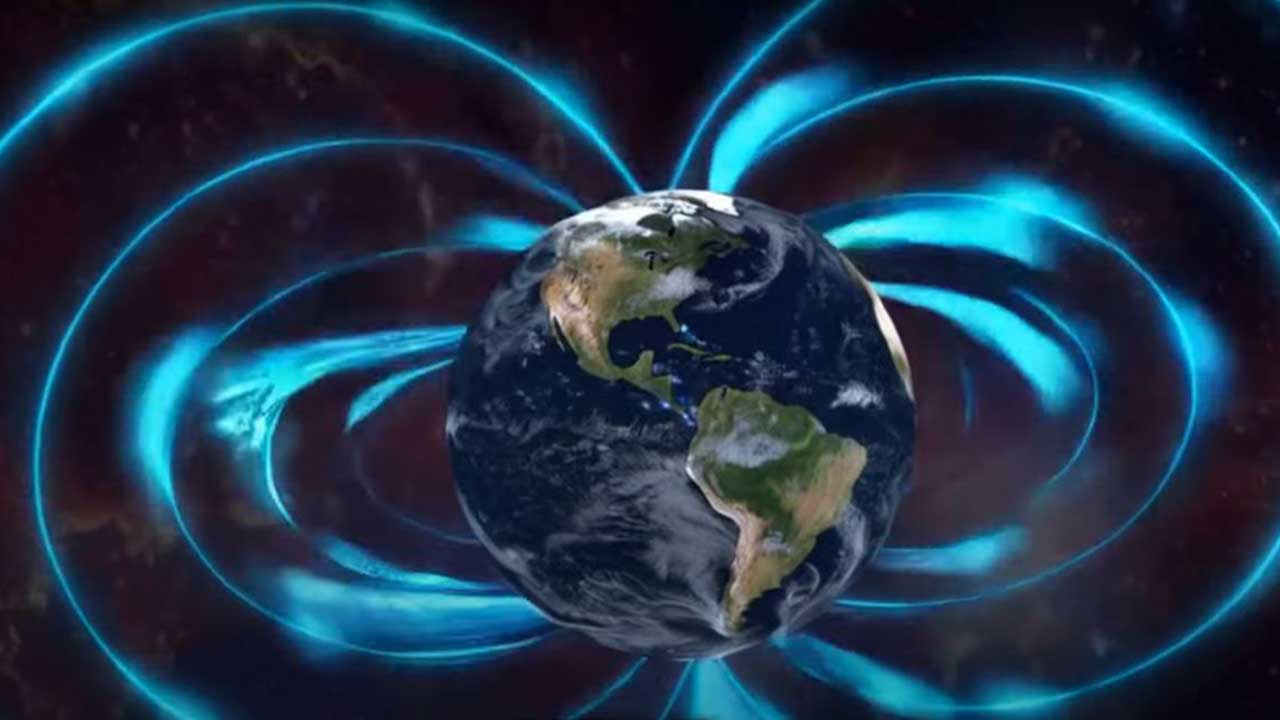

In a discovery that’s shaking up the physics world, a team of researchers has introduced a groundbreaking and controversial device that appears to generate usable power directly from the Earth’s rotation. Described by some experts as “convincing and remarkable,” the device could open the door to an entirely new class of clean energy technologies if it holds up to scrutiny.
This innovation taps into a rarely considered energy source: the rotational energy of our planet. If confirmed, it could mark a pivotal moment in energy science, offering a steady, low-impact alternative to traditional power generation. But not everyone is convinced, and the scientific community is buzzing with both excitement and skepticism.
Tapping Into the Earth’s Motion

The device reportedly works by interacting with the Coriolis effect — a force that arises due to Earth’s rotation and influences everything from weather systems to ocean currents. By using a combination of ultra-sensitive gyroscopes and electromagnetic systems, the researchers claim they can extract tiny amounts of kinetic energy from this planetary movement and convert it into electrical power.
While the energy output is currently modest, the implications are enormous. Earth’s spin is a virtually limitless and consistent source of energy — unlike solar or wind, it doesn’t depend on weather or daylight. The team claims that even small-scale arrays of these devices could power remote systems, satellites, or sensor networks in perpetuity.
Scientific Community Reacts with Cautious Optimism

Unsurprisingly, such a bold claim has ignited intense debate. Some physicists warn that the device may be violating basic principles of thermodynamics, or may be simply misinterpreting subtle environmental effects. However, the inventors have published detailed data and opened the design to peer review, encouraging independent verification.
A few prominent researchers have come out in cautious support. “It’s a compelling result,” said one quantum physicist. “If the underlying physics is sound, we’re looking at a new way of thinking about motion and energy conservation — without violating known laws.” Others are urging patience and replication before jumping to conclusions.
Potential Applications and Disruptive Promise

If validated, the technology could have revolutionary implications for the energy sector. Think of low-power devices in remote areas, deep-sea sensors, or even spacecraft — all running indefinitely by harnessing planetary or celestial rotation. This approach could complement, rather than replace, existing green energy solutions, especially where sunlight or wind is inconsistent.
Beyond the practical uses, it also forces physicists to reexamine assumptions about inertial systems and energy transfer. Could this inspire new ways to extract energy from fundamental forces without traditional fuel or mechanical friction? That possibility alone is enough to keep researchers riveted.
Final Word: Science or Sensationalism?

The line between revolutionary discovery and pseudoscience is often razor-thin — and history is full of bold claims that didn’t survive rigorous testing. Still, every transformative breakthrough begins with skepticism. Whether this device becomes a footnote or a foundational invention will depend on what the next wave of experiments reveals.
For now, one thing is clear: this device has sparked a serious conversation about rethinking how we understand motion, energy, and what’s truly possible when it comes to clean power.