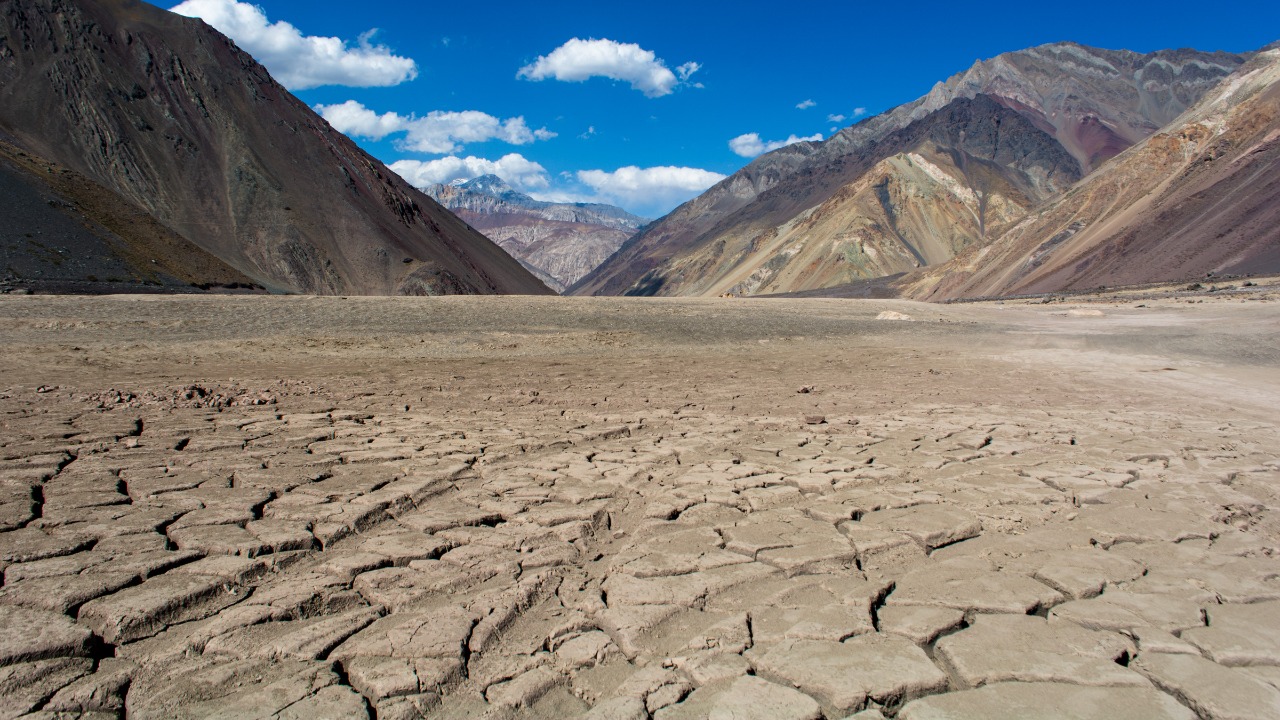

Water utilities have long leaned on conservation campaigns as their first line of defense against scarcity, urging households to fix leaks, swap out toilets, and let lawns go brown. A growing body of research now suggests that, on a rapidly warming planet, those measures will not be enough to keep taps running. The emerging message is blunt: cutting demand is essential, but without deeper structural changes to how societies store, price, and govern water, conservation alone will not save our supplies.
That warning lands at a moment when scientists say the world has already crossed into a new era of chronic shortage, with aquifers, rivers, and glaciers depleted faster than they can recover. I see a widening gap between the comforting promise that small individual sacrifices can solve the crisis and the harder reality that the entire water economy, from farm fields to megacities, is running a long term deficit.
Why efficiency gains are hitting a hard ceiling
For years, utilities and local governments have treated conservation as a near limitless resource, assuming that better technology and public awareness could always squeeze more savings from the same pipes. Research from Pennsylvania State University challenges that optimism, arguing that as temperatures rise and supplies shrink, efficiency alone cannot guarantee reliable municipal service. I read that work as a reality check on the idea that utilities can simply keep asking customers to do more with less while avoiding tougher choices about infrastructure, pricing, and land use.
The Penn State team, which includes Jan in the College of Earth and Mineral Sciences, points out that hotter conditions increase both evaporation and demand, eroding the gains from low flow fixtures and leak detection. In practice, that means cities can hit a point where every reasonable conservation measure is already in place, yet reservoirs still drop because climate stress and population growth outpace savings. I see this as the water sector’s version of the “efficiency paradox”: without parallel investments in new supplies, smarter storage, and demand management that reaches beyond households into agriculture and industry, conservation becomes a holding action rather than a long term solution.
The world’s slide into “water bankruptcy”
Global assessments now describe the crisis in stark financial terms, warning that humanity is drawing down its liquid assets faster than nature can replenish them. A landmark United Nations analysis, summarized by UN scientists, concludes that the planet has entered an “era of global water bankruptcy,” where many regions have already consumed the reserves on which they depend. In that framing, rivers, lakes, glaciers, and aquifers function like savings accounts that have been quietly emptied to prop up short term growth.
Researchers quoted in a separate assessment say this is not a passing emergency but a structural shift in which underground aquifers, glaciers, and ecosystems have been pushed beyond the point at which they can realistically recover, a trend detailed in a recent U.N. report. When I look at that language, I see a direct challenge to the comforting notion that a few dry years will be followed by a return to normal. Instead, the science suggests that “normal” has been redefined by decades of over pumping and warming, and that many communities are now living off overdrafts that conservation campaigns alone cannot repay.
Billions already live with insecure supplies
The scale of that overdraft is staggering. According to a U.N. backed analysis, Three quarters of the world’s population, about 6.1 billion people, now live in countries where freshwater supplies are insecure. That figure alone undercuts any suggestion that the problem is confined to a handful of arid nations or mismanaged cities. It describes a world in which water stress is the default condition for most people, not an exception.
On the ground, that stress shows up in places as varied as the Jaguari Jacarei dam in Joanopolis in Sao Paulo in Brazil, where a recent drought left the reservoir shrunken and exposed, a scene captured in reporting on The Jaguari. It is visible in Tehran, where years of unsustainable withdrawals have combined with drought to leave taps unreliable and protests simmering, a pattern described in detail in accounts of Water bankruptcy signs. When I connect those dots, it is clear that the crisis is not just about dry riverbeds, it is about political stability, migration, and public health in countries that span every income level.
Freshwater is vanishing faster than policy can keep up
Behind these local emergencies lies a global pattern of physical loss. A major international study led by scientists earlier this year found that freshwater is disappearing at alarming rates on every continent, with satellites and ground measurements showing shrinking lakes, rivers, and aquifers. One of the lead authors argued that the research “clearly shows that we urgently need new policies and groundwater management strategies on a global scale” to address the growing freshwater crisis, a conclusion detailed in a global study.
Another U.N. focused analysis describes how this depletion reflects the rapid exhaustion of the planet’s natural “water savings accounts,” reducing buffers against drought, amplifying climate damage, and intensifying social conflict, a dynamic laid out in a recent global assessment. I read that as a warning that the crisis is not only about how much water flows from taps today, but about the loss of resilience that once allowed societies to ride out bad years. When those buffers are gone, even modest dry spells can trigger cascading failures in food systems, energy grids, and urban services, no matter how efficient individual households have become.
From household fixes to systemic reform
If the world is already in water bankruptcy, the logical question is what comes after the emergency conservation phase. One answer, offered by U.N. Under Secretary General Tshilidzi Marwal, is that water scarcity is becoming a driver of fragility, displacement, and conflict, and that the deeper the deficit grows, the harder it becomes to restore balance, a point underscored in a recent statement from Water experts. In that light, I see conservation not as a standalone fix but as one tool in a broader strategy that must include rethinking subsidies, reallocating water from low value uses, and investing in infrastructure that can cope with more volatile flows.
The Penn State research suggests that public policy can and must bolster municipal provision by pairing demand reduction with measures like diversified supply portfolios, upgraded distribution networks, and pricing structures that reflect scarcity without cutting off the poorest households, an approach outlined in the Pennsylvania State University analysis. When I put that alongside the U.N. warnings about depleted savings accounts and the lived reality in places from Joanopolis to Tehran, the conclusion is unavoidable: personal restraint remains vital, but only governments and large water users can close the structural deficit. The era of easy wins from low flow showerheads is over; what comes next is the harder work of redesigning entire water systems to live within the planet’s means.
More from Morning Overview