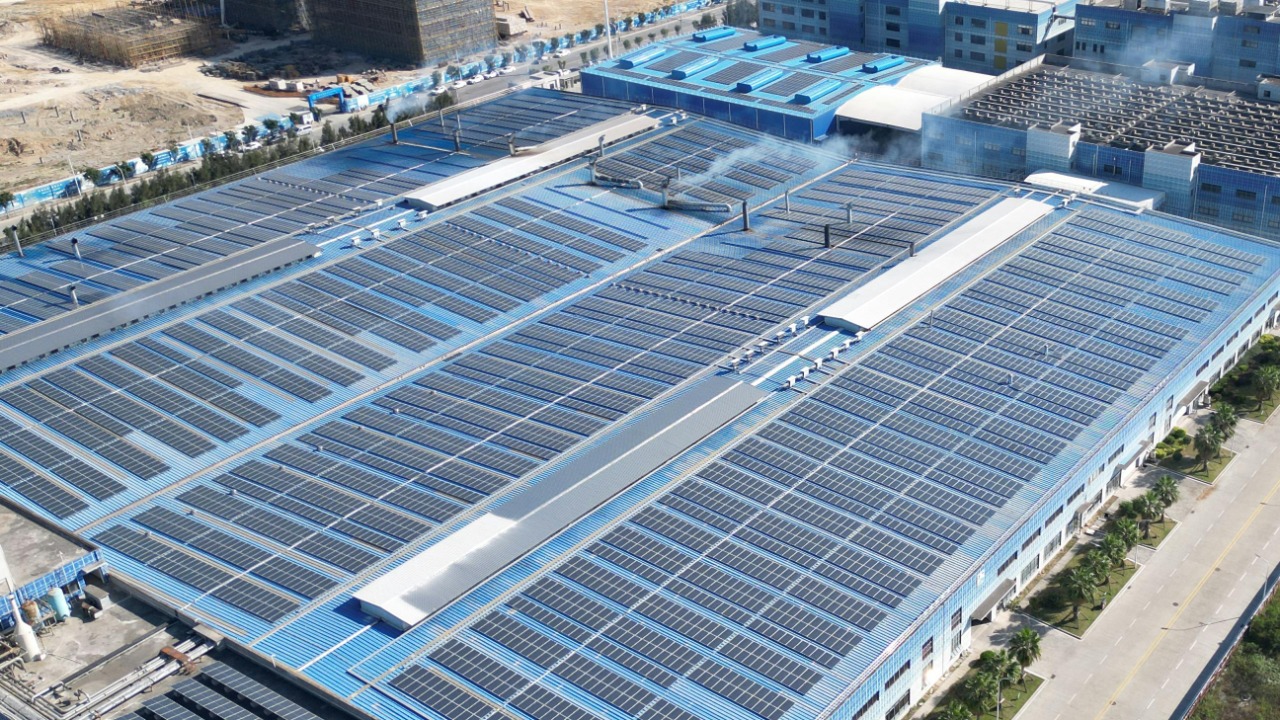

China’s latest wave of solar mega‑factories is not just adding capacity, it is redefining the scale at which a single country can manufacture and install clean power. From desert complexes the size of small nations to export lines that flood global markets with ultra‑cheap cells, the country’s new output levels are stretching the limits of what energy planners thought possible. I see a system that now produces so much solar hardware, and builds so many plants at home, that the rest of the world is being forced to rethink how fast the transition away from fossil fuels can move.
Behind the headline‑grabbing projects sits a tightly integrated industrial machine that runs from polysilicon to panels, backed by state planning and relentless cost cutting. The result is a solar manufacturing base that dominates global supply chains, a domestic grid racing to absorb record volumes of new power, and a growing debate over whether this pace is sustainable or even manageable.
From factory floors to global dominance
The starting point is the sheer industrial weight that China has built around solar. Analysts tracking manufacturing capacity expect the country to account for more than 80% of global solar manufacturing capacity through the middle of this decade, a level of concentration that has no real parallel in other clean‑tech sectors. A separate deep dive into factory build‑outs finds that China is building around seventeen times more new solar manufacturing capacity than India, widening a technology and cost gap that competitors will struggle to close. On the ground, that dominance is visible in plants near hubs like Shanghai, where long production lines of blue‑tinted cells run almost continuously.
This industrial machine is not just serving domestic demand, it is flooding export markets with ever cheaper components. In the first half of 2025, In the export data, cells and wafers made up over 40% of China’s exported solar products, and Cells now account for a bigger share of growth than finished panels. Another breakdown notes that Cell and wafer exports are, for the first time since For the customs agency GACC split the categories, driving overall solar export growth. I see that as a sign that the newest factories are tuned to feed a global build‑out, not just domestic rooftop demand.
Record‑shattering build‑out at home
On the installation side, the numbers are just as startling. Official tallies show that China installed a record 315 G of new solar capacity in 2025, a figure that would have seemed implausible only a few years ago. A separate forecast notes that BNEF sees installations having peaked at 372 G of deployed capacity in China in 2025, and After that expects a modest slowdown rather than continued vertical growth. Even with that caveat, the country is adding more solar in a single year than the entire world did not long ago.
Those annual additions sit on top of an already enormous base. By late 2025, China Becomes the in the World to Surpass 1,000 G of installed Solar Power Capacity, while China Doubles New in the same period. A community summary of broader clean‑energy deployment notes that after installing 430 G of wind and solar in 2025, Economy watchers on that thread, including a MOD with a Stickied and Edited comment, describe the poster as a Top contributor. Even if that figure blends technologies, it underlines how quickly capacity is stacking up.
Solar mega‑projects that stretch the imagination
Behind those national totals are individual projects that almost defy visual comprehension. In the northwest, social media posts highlight China Just Built’s Largest Solar Farm, described as Huge Spanning over 13,300 hectares, nearly the size of Paris, as a solar power station in the Gobi Desert. Another viral clip shows a complex in the The World’s Largest Solar Plant high on the plateau near the Taklamakan Desert In Taklamakan Desert, where panel arrays stretch to the horizon. These are not demonstration projects, they are grid‑connected power plants feeding industrial centers thousands of kilometers away.
Other installations show how far the build‑out has penetrated into previously untouched landscapes. A widely shared drone video from Last year captured an entire mountain range in China’s Guizhou province blanketed in panels, a visual shorthand for how quickly rural terrain is being converted into power infrastructure. Offshore, video explainers describe how china just built an enormous solar farm on the ocean that is large enough to power a small city, while another clip framed as Jan content underscores how these floating projects are moving from experiment to scale. To my eye, these mega‑projects are the physical expression of a policy choice to treat solar as core infrastructure, not a niche add‑on.
The world’s solar engine, and its growing pains
China’s factories are not only feeding its own mega‑farms, they are powering a global boom. In the first half of 2025, In the global data, China installed more than twice as much solar as the rest of the world combined and accounted for 54% of new capacity. A separate review of national markets notes that in the first half of the year China again installed more solar than all other countries together, contributing to a Global rise of 22% over 2024. Forecasts for 2026 compiled in an Jan analyst note, framed as an Analyst Deep Dive into The Divergence, still expect BNEF’s First Dip warning to be offset by growth in other regions, but they still cast China as the central player.
Yet the same engine is already showing signs of strain. Industry representatives speaking in late 2025 stressed that NEW MANUFACTURING CAPACITY is now DOWN, and that FUTURE demand is uncertain after a period of overcapacity and heavy losses. Domestic policy shifts are already biting: according to the National Energy Administration, China’s solar installations have slowed significantly after major subsidy reforms, a trend one industry outlet described as an Unexpected dip. To me, that mix of global reliance and domestic volatility is the core risk baked into today’s mind‑boggling output.
What this scale means for the energy transition
For all the turbulence, the implications for climate and geopolitics are profound. A decade ago, experts visiting factories near Shanghai were already calling the country’s installation rates “absolutely mind blowing”, as workers in blue uniforms and white lab coats turned out square solar cells by the million. Today, that early impression has been validated at continental scale: the country’s build‑out is now so large that it effectively sets global panel prices and determines how quickly other regions can decarbonize. A general China knowledge panel will show an economy still heavily reliant on coal, but the solar numbers suggest that balance is shifting faster than many expected.
At the same time, the concentration of manufacturing raises strategic questions that go beyond kilowatts. Reports that China will dominate advanced cell technologies after P‑type, and that it is set to dominate the solar supply chain into the 2030s, mean that any policy shock in Beijing will ripple through projects from Texas to Tunisia. Video explainers that frame China’s build‑out as more of a revolution than a mere competitive advantage capture that tension well. As I see it, the world is getting an unprecedented acceleration of clean power, but it is also tying a critical part of the energy transition to the fortunes of a single, extraordinarily productive solar powerhouse.
More from Morning Overview