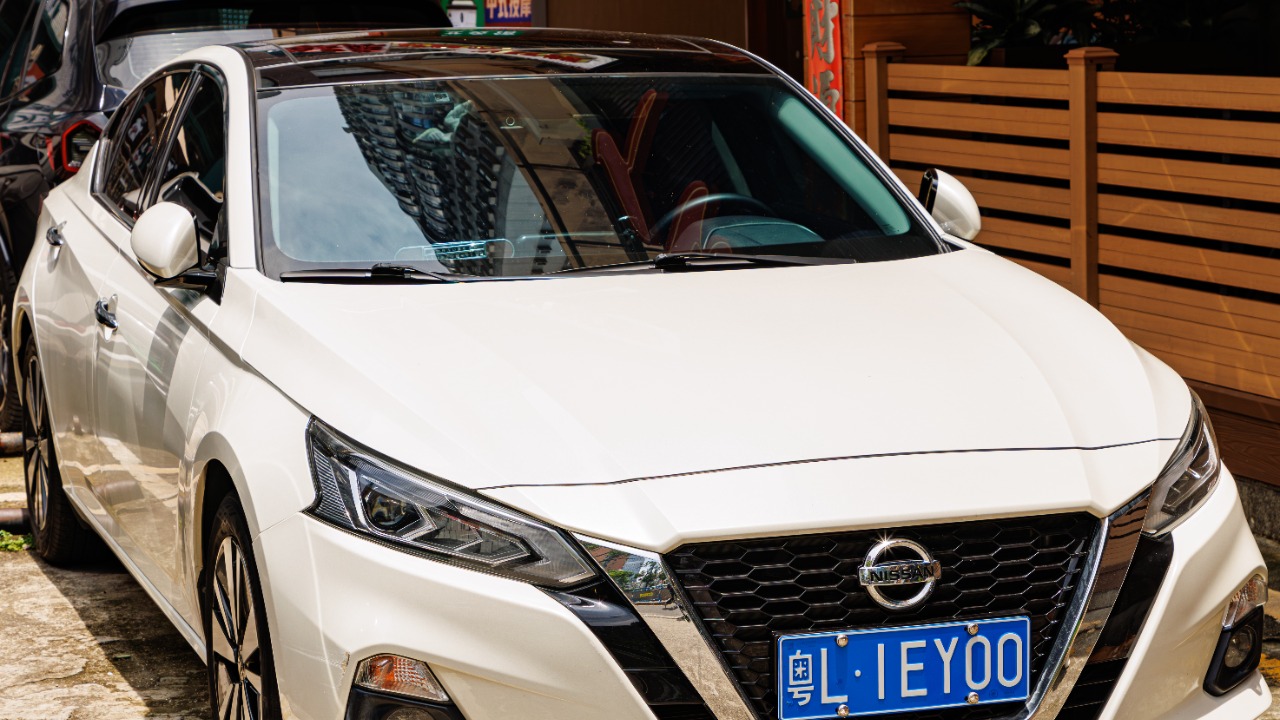

In China, Nissan’s midsize sedan strategy has quietly split in two. Chinese buyers are getting a richly equipped Teana and a more upscale Altima, while American shoppers are left with a more conservative version of the same basic car. The gap is not just about chrome and screens, it reveals how differently Nissan now values its sedan customers in the world’s two biggest car markets.
As the Teana and Altima evolve into tech-laden, near-premium sedans for China, the United States is being steered toward a safer, lower-investment path. I see that divergence as a window into how Nissan is reading demand, risk and regulation on each side of the Pacific, and what it thinks American sedan loyalists will tolerate.
China gets the nicer Nissan sedans
China has become a priority market for global carmakers, and Nissan is treating it as the place where its sedans can still move upmarket. Reporting on the latest Chinese-market Altima notes that China Gets the, with buyers there shifting back toward well-appointed gasoline cars even as electric vehicles crowd the market. That shift gives Nissan room to justify more ambitious hardware and design than it is willing to fund for the United States, where sedan volumes are shrinking and crossovers dominate.
The Chinese-market Altima leans into that opportunity with materials and lighting that are explicitly described as more premium than the American car. One key detail is the use of a lens material that is clearer and handles light better than regular polycarbonate, which helps create lighting that looks deep and high end, a choice highlighted in coverage of how it’s clearer and than the plastic used on the U.S. car. That kind of detail work signals that Nissan sees Chinese sedan buyers as willing to pay for visible craftsmanship, not just basic transportation.
Teana as China’s tech-forward Altima twin
Alongside the Altima, the Teana has become Nissan’s main sedan showcase in China, and its specification underlines how far the company is willing to go when it believes the audience is there. The latest Teana is described as a New sedan for China that comes standard with Level-2 ADAS and Huawei’s HarmonySpace 5.0, integrating advanced driver assistance and a domestic tech ecosystem in a way that is tailored to local expectations. Official material from Dongfeng Nissan adds that this system will be adopted across all grades of the Teana sold in China, with a price range of 139.9 to 167.9 thousand RMB, and that the cabin audio is tuned for a Sim theater-like experience. That combination of pricing and standard tech positions Teana as a value-rich alternative to premium German and domestic Chinese sedans.
The design work is just as deliberate. Patent imagery and early reporting describe how customers will be choosing between a simple white paint and a two tone finish featuring a black roof, with one source noting that For the exterior, Nissan has uploaded photos that show a more expressive look than the U.S. Altima. A separate look at the production car notes that the radiator grille has new accents at both sides, the bumper looks redesigned, and the headlights can now throw their high beams farther, with the Teana’s continuously variable transmission offering eight imitated gears for transmission, details laid out in Nov coverage of the China lineup. The result is a sedan that feels tuned to local tastes in both tech and styling, rather than a global template.
The U.S. Altima’s cautious evolution
In the United States, the 2026 Altima is evolving, but in a more incremental way that reflects a market where sedans are fighting for survival. Nissan’s own material describes the 2026 model as priced from $27,580 and highlights that the Nissan Altima SR builds on the SV grade with 19 inch wheels, paddle shifters, sport tuned suspension and Active Ride Control, along with available Intelligent All Wheel Drive. Those are meaningful upgrades for driving dynamics, but they are evolutionary rather than transformative, and they do not match the Teana’s emphasis on integrated local tech platforms or theater style interiors.
Dealer oriented research material reinforces that framing, describing how the 2026 Nissan Altima represents a major step forward compared to the 2025 model, with Significant improvements in refinement and features. Yet the core package remains a conventional gasoline sedan aimed at value conscious buyers, not a tech flagship. That conservative approach is underscored by Nissan’s decision, reported by Car News under its Green Wheels banner, to walk away from dedicated electric versions of its midsize sedans, with Nissan Ditching Plans versions of the Altima and Maxima that had been code named LZ1F and LZ1E. For American buyers, that means the Altima is being kept relevant, but not radically reimagined.
Design and lighting: where the gap is most visible
The most immediate way to see the split between China’s Altima and the U.S. car is in the exterior detailing. Chinese coverage of the latest Altima emphasizes how its lighting hardware uses a material that is clearer and handles light better than regular polycarbonate, which helps create lighting that looks deep and high end, a point repeated in a separate look at how it’s clearer and in a way that elevates the front end. That kind of investment in headlamp optics is not just cosmetic, it is a signal that Nissan is willing to spend on perceived quality where it thinks it will be noticed.
American buyers do see some of that attention, but in a more restrained form. Marketing material for the U.S. Altima highlights available exterior elements that include the expressive V motion grille with dark chrome finish and LED projector headlights with signature lighting, details spelled out in a description that begins with the word Available and calls out the LED units explicitly. Yet when I compare that to the Chinese Teana’s redesigned bumper, new grille accents and extended high beam reach, as detailed in Nov reporting, the U.S. car feels more like a careful refresh than a statement piece. The visual difference is subtle in photos, but it reflects a deeper split in how much Nissan is willing to invest in sedan desirability.
Future tech: plug in hybrids, patents and what America misses
Looking ahead, the technology roadmap for Nissan sedans again tilts toward China. One of the most striking examples is a new plug in hybrid sedan referred to as the N6, introduced with the phrase Meet the N6, which is framed as making the Altima look dated. Coverage of that car reminds readers that, Since 1993, the Nissan Altima has served as the brand’s competitor to the Camry and Accord, and has since become a staple of the midsize segment. Yet the N6’s advanced plug in hybrid system is being aimed at markets like China where electrified sedans still have room to grow, while the U.S. Altima remains a conventional gasoline model.
Patent filings and enthusiast discussions around the 2026 Teana reinforce how much of Nissan’s sedan experimentation is happening in China. One thread titled New Redesigned 2026 Nissan Altima (Taena) Unveiled in China points out that the new 2026 Nissan Altima, called Teana in China, was recently Unveiled there, with commenters openly wishing Nissan would offer this new Altima here too. A separate look at the patent images notes again that For the exterior, Nissan has uploaded photos that show a more dramatic two tone finish and that the facelift retains this powertrain option. When I set that against the U.S. decision to cancel dedicated electric Altima and Maxima projects, as reported in Car News coverage of Green Wheels strategy, the pattern is clear. China is where Nissan is willing to push its sedans into new territory, while America is being asked to accept a more modest evolution of a once central nameplate.
More from Morning Overview