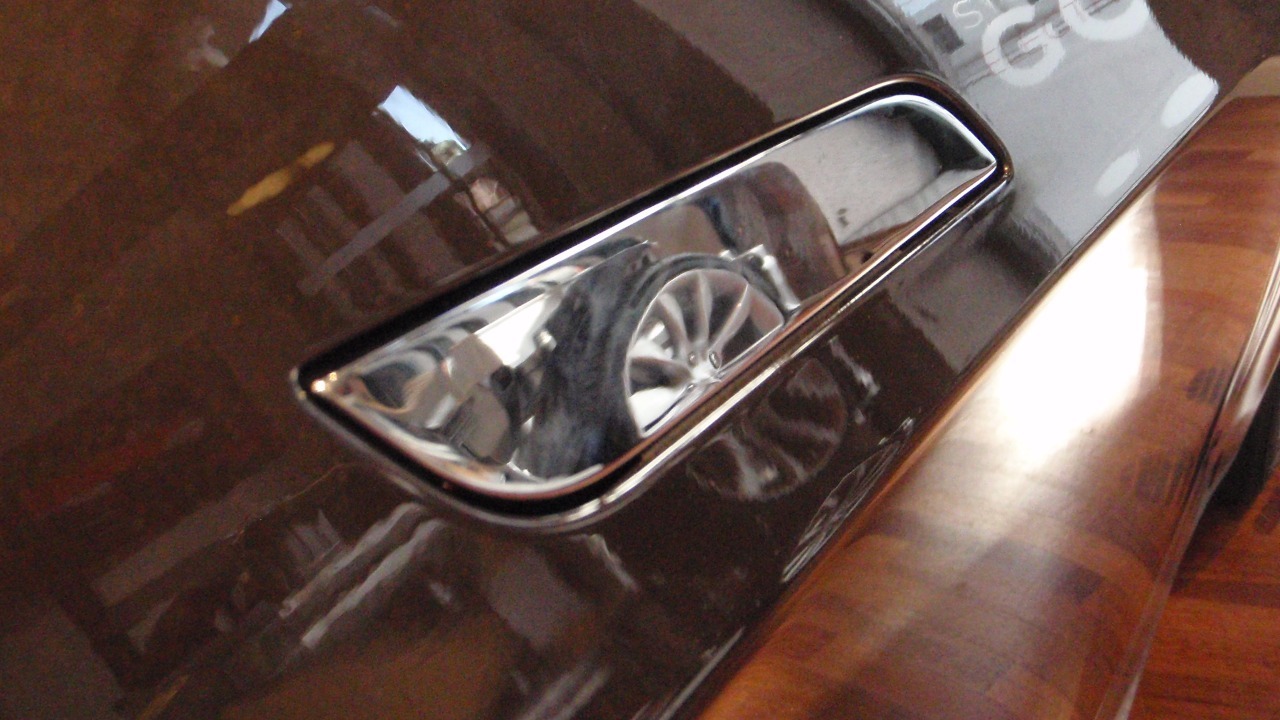

China is moving to outlaw the sleek, flush door handles that helped define Tesla’s minimalist design language, turning a once-subtle styling choice into a regulatory liability. The new rules, framed as a life‑or‑death safety fix after high‑profile crashes, strike directly at how Tesla builds and sells its core models in the world’s largest car market. For a company that has long treated China as both factory floor and growth engine, this is not a minor trim change, it is a structural hit.
The decision forces Tesla and its rivals to rethink how form, function, and software‑heavy hardware interact on future vehicles sold in China. It also signals that Beijing is increasingly comfortable reshaping global automotive design norms in the name of safety, even when that means targeting a signature feature of a foreign champion.
Safety fears turn a design flourish into a liability
Chinese regulators have zeroed in on hidden and electric door handles after a series of crashes in which occupants or rescuers struggled to open damaged vehicles. Officials in Feb said the policy on these handles, which are common on Tesla’s electric vehicles, is meant to address safety concerns after fatal accidents where people could not escape or be pulled out quickly enough. The core complaint is simple: when seconds matter, a rescuer should not have to decode a user interface, wait for an electronic actuator, or hunt for a hidden latch.
Regulators are particularly wary of handles that sit flush with the body and rely on electric motors or complex linkages to pop out. In some Tesla crashes, firefighters have reported difficulty accessing the cabin when power systems were compromised, a risk that grows when the manual release is obscure or buried. The new rules respond by requiring conventional, visible handles with straightforward mechanical operation, a shift that directly targets the Tesla aesthetic that turned the Model 3 and Model Y into rolling tech statements rather than traditional cars.
What exactly China is banning, and when
The upcoming standards do not outlaw electric assistance outright, but they do ban the combination of concealed placement and electronic dependence that defines Tesla’s current setup. Regulators are moving to prohibit Tesla‑style handles that sit flush with the body of a car and are often electronically actuated, a design described in China finalizes as sometimes lacking a clear manual release or burying it in a non‑intuitive location. The concern is that even when a mechanical backup exists, it may be impossible for a panicked passenger or an untrained bystander to find it in the dark, under water, or in a vehicle filled with smoke.
Authorities have given automakers several years to adapt, with the ban on hidden car door handles set to take effect starting in 2027, and manufacturers told they will have years to update their designs to match the regulations. That transition window, described in detail in coverage of how China bans hidden car door handles over safety concerns, is meant to avoid sudden production chaos while still forcing a clear break from the current fashion. For Tesla, which builds large volumes of Model 3 and Model Y in Shanghai, the clock is now ticking on a redesign that touches both hardware and software.
Why Tesla is uniquely exposed
Flush, minimalist handles are not exclusive to Tesla, but Tesla has made them central to its brand and user experience in China. The Model Y, for example, uses a hidden handle that requires a specific push‑and‑pull motion, a design highlighted in reports noting that Tesla’s Model Y has hidden door handles and that China’s ban is a world‑first safety rule. In one detailed account, a Gift Article describes how people have been unable to escape or be rescued, to die, in part because rescuers could not quickly work out how to open the doors. That is a devastating indictment of a feature that was marketed as futuristic convenience.
China has officially thrown a regulatory wrench into Tesla’s future with a new draft rule that strikes at the core of the company’s design philosophy, as one analysis of how China has officially targeted Tesla’s approach put it. Tesla’s reliance on software‑centric controls, from phone‑as‑key systems to touch‑screen‑driven settings, compounds the problem when power is lost or screens go dark. The company can no longer treat the handle as a mere styling flourish in China; it has become a regulated safety device that must function intuitively even when every other system fails.
China’s safety push and its global ripple effect
Chinese regulators are not just tweaking a niche rule, they are setting a template that could spread well beyond their borders. Analysts such as Russo have already argued that the new door regulations are likely to be echoed abroad, particularly in Europe, as Russo expects European authorities to respond once Chinese vehicles and platforms enter their markets in greater numbers. If Europe follows, Tesla would face a multi‑continent redesign challenge, turning what might have been a China‑only compliance issue into a global retooling of its best‑selling models.
China’s move also reflects a broader ambition to set international safety benchmarks, not just follow them. Reports on how China to ban hidden car door handles, citing Peter CATTERALL AFP and noting the rules were Updated as the debate evolved, frame the policy as part of a push to set new safety standards rather than a one‑off reaction. If regulators in Brussels or other capitals decide that China’s approach has merit, Tesla’s design team in California will find itself responding to Beijing’s rulebook as much as to any domestic regulator.
How Tesla and rivals may adapt
For Tesla, the most obvious response is a China‑specific hardware package that swaps in protruding, mechanically linked handles while preserving as much of the existing bodywork as possible. Officials have signaled that automakers will have years to update their designs, and Officials have emphasized that companies can make changes to match the regulations without scrapping entire platforms. That still means new tooling, crash testing, and software updates to ensure that the mechanical handle and any remaining electronic assistance work seamlessly together.
Rivals, especially domestic Chinese brands that already design with local rules in mind, may find it easier to pivot and even use the change as a marketing edge. Some have already favored more conventional handles, which now look prescient rather than old‑fashioned. As China gives manufacturers years to update their designs, local players can move quickly to badge their cars as compliant and safer, while Tesla races to retrofit a feature that once symbolized its cool factor but now reads, in Beijing’s eyes, as an unacceptable risk.
More from Morning Overview