

China has unveiled its latest engineering marvel, the world’s highest bridge, standing an astonishing 2,051 feet into the sky. This record-breaking structure, which includes a glass-bottom path, has already captivated and terrified tourists during its preview phase. While other high-altitude projects, such as a mega-resort undergoing an $8 billion makeover to include one of the world’s highest infinity pools, continue to evolve, the bridge’s completion marks a significant milestone in extreme infrastructure development.
Bridge Design and Height Achievements
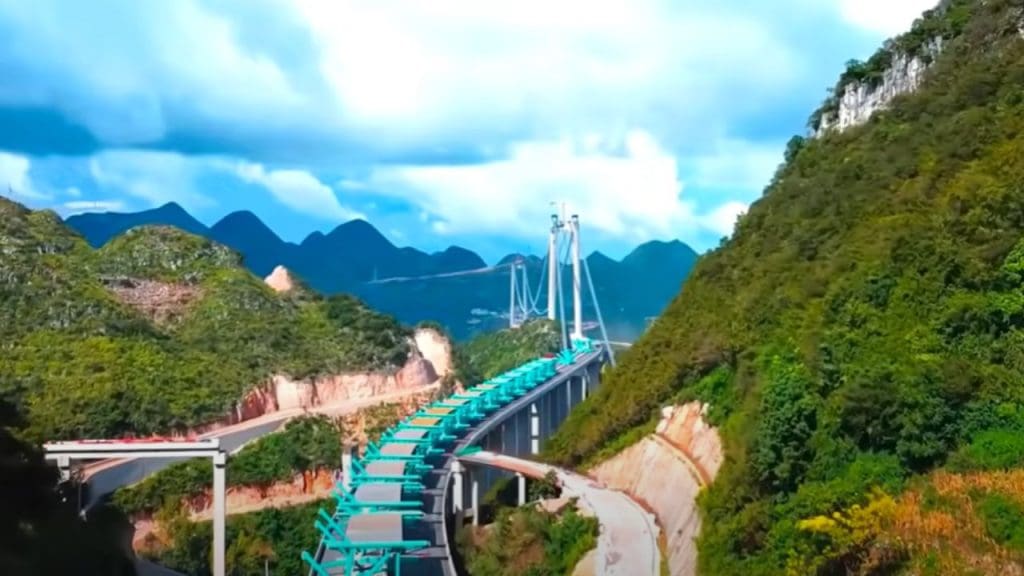
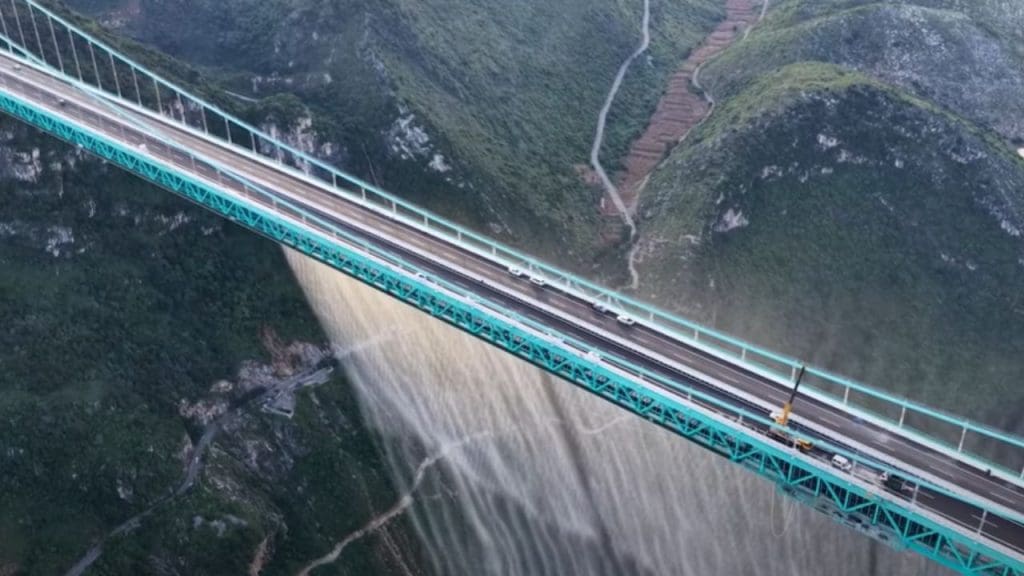
The newly opened bridge in China reaches a remarkable height of 2,051 feet, establishing it as the tallest bridge in the world. This engineering feat not only sets a new record for elevation but also serves as the highest crossing globally, designed to accommodate both vehicular and pedestrian traffic at such an extreme altitude. The bridge’s design reflects a blend of innovation and functionality, ensuring that it can withstand the challenges posed by its lofty position [source].
Constructed with the dual purpose of facilitating transportation and offering a unique tourist experience, the bridge integrates advanced engineering techniques to maintain safety and stability. Its towering height and strategic location make it a significant landmark, drawing attention from around the world. The bridge’s design not only prioritizes structural integrity but also enhances the aesthetic appeal, making it a symbol of modern engineering prowess [source].
The bridge’s construction involved the use of advanced materials and techniques to ensure its durability and resilience against environmental factors such as strong winds and seismic activity. Engineers employed high-strength steel and reinforced concrete to create a structure capable of withstanding the elements while maintaining its integrity over time. The design also incorporates aerodynamic features to minimize wind resistance, ensuring stability even in adverse weather conditions. This attention to detail in the engineering process highlights the bridge’s role as a pioneer in high-altitude construction, setting a benchmark for future projects of similar scale and ambition.
Construction Timeline and Opening
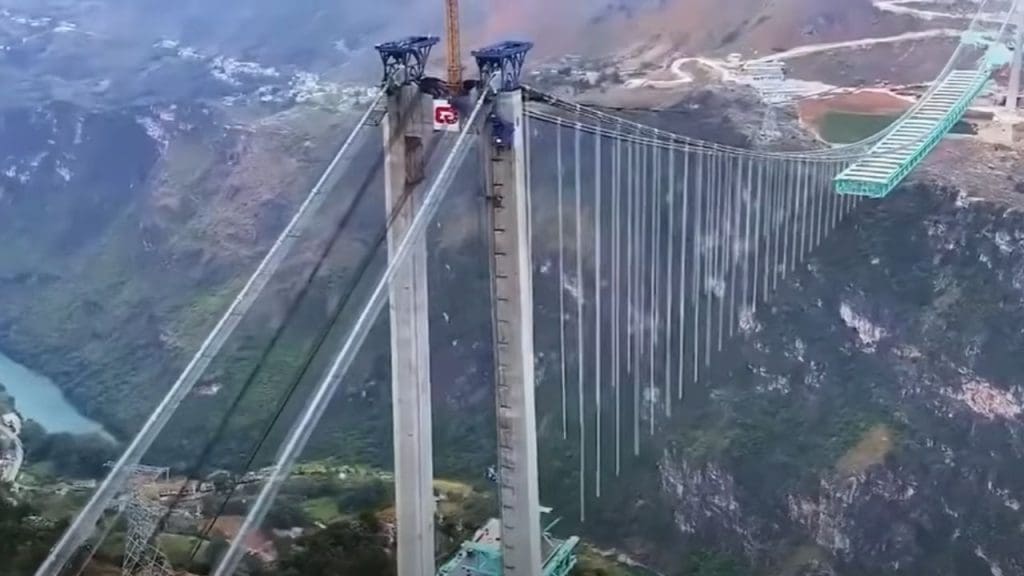
The bridge officially opened to the public on October 3, 2025, following the completion of its ambitious construction project. This milestone was eagerly anticipated, as reports had indicated that the world’s highest crossing was set to open imminently, aligning with the subsequent public access. The opening marks the culmination of years of planning and construction, showcasing China’s commitment to pushing the boundaries of architectural and engineering innovation [source].
Leading up to the opening, the bridge had already generated significant buzz, with early reports highlighting its unique features and the thrilling experience it offers. The anticipation surrounding the bridge’s debut underscores its significance as a landmark achievement in infrastructure development. The successful completion and opening of the bridge demonstrate the effective collaboration between engineers, architects, and construction teams, all working towards a common goal of creating a world-class structure [source].
The construction of the bridge was a complex endeavor that spanned several years, involving a multinational team of experts in engineering, architecture, and construction. The project faced numerous challenges, including difficult terrain and logistical hurdles, which required innovative solutions and meticulous planning. The use of cutting-edge technology, such as drones and 3D modeling, facilitated the precise execution of the construction phases, ensuring that the project stayed on schedule and within budget. The successful completion of the bridge not only underscores China’s engineering prowess but also demonstrates the potential for international collaboration in achieving monumental infrastructure goals.
Unique Features and Tourist Experiences
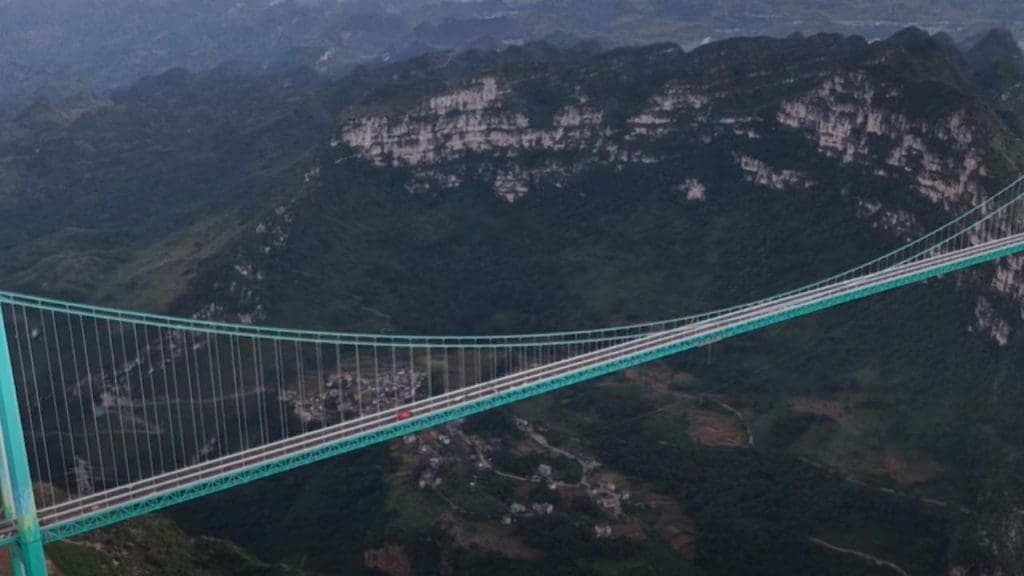
One of the most striking features of the bridge is its glass-bottom path, which offers a vertigo-inducing view from 2,051 feet in the air. This feature has already terrified and thrilled tourists who had the opportunity to experience it during early access. The glass-bottom path provides an unparalleled perspective of the surrounding landscape, enhancing the bridge’s appeal as a tourist destination. The combination of height and transparency creates a unique experience that challenges the senses and offers a new way to appreciate the grandeur of the natural environment [source].
Incorporating innovative elements to handle the extreme height, the bridge prioritizes both safety and thrill. The design ensures that visitors can enjoy the breathtaking views without compromising on security. This balance between excitement and safety is a testament to the meticulous planning and execution that went into the bridge’s construction. The bridge not only serves as a functional crossing but also as an attraction that draws visitors from around the world, eager to experience its unique offerings [source].
In addition to the glass-bottom path, the bridge features several observation decks strategically placed to offer panoramic views of the surrounding landscape. These decks are equipped with interactive displays that provide information about the bridge’s construction and the natural environment, enhancing the educational aspect of the tourist experience. The bridge also hosts guided tours that delve into the engineering marvels behind its construction, offering visitors a deeper understanding of the challenges and triumphs involved in creating such a towering structure. These elements combine to make the bridge not just a crossing, but a destination in its own right, attracting visitors eager to explore its unique offerings.
Broader Context of High-Altitude Projects
While the bridge stands as a testament to China’s engineering capabilities, it is part of a broader trend of high-altitude projects that are reshaping landscapes worldwide. A notable example is a mega-resort that features one of the world’s highest infinity pools, which is set to undergo an $8 billion makeover to add a new tower. This development highlights the growing interest in creating structures that not only serve practical purposes but also offer unique experiences at great heights [source].
These projects reflect a broader ambition to push the limits of what is possible in architecture and engineering. By integrating cutting-edge technology and innovative design, these high-altitude projects are setting new standards for what can be achieved in the built environment. As these developments continue to unfold, they promise to redefine the relationship between human-made structures and the natural world, offering new perspectives and experiences that captivate and inspire [source].
The trend of high-altitude projects is not limited to bridges and resorts; it extends to urban developments that seek to integrate nature and architecture at unprecedented heights. Skyscrapers with vertical gardens and rooftop parks are becoming increasingly popular, offering urban dwellers a connection to nature while maximizing space in densely populated areas. These projects are part of a larger movement towards sustainable and innovative urban planning, where the focus is on creating environments that are both functional and aesthetically pleasing. As cities continue to grow vertically, these high-altitude projects will play a crucial role in shaping the future of urban living, providing solutions that address both environmental and social needs.