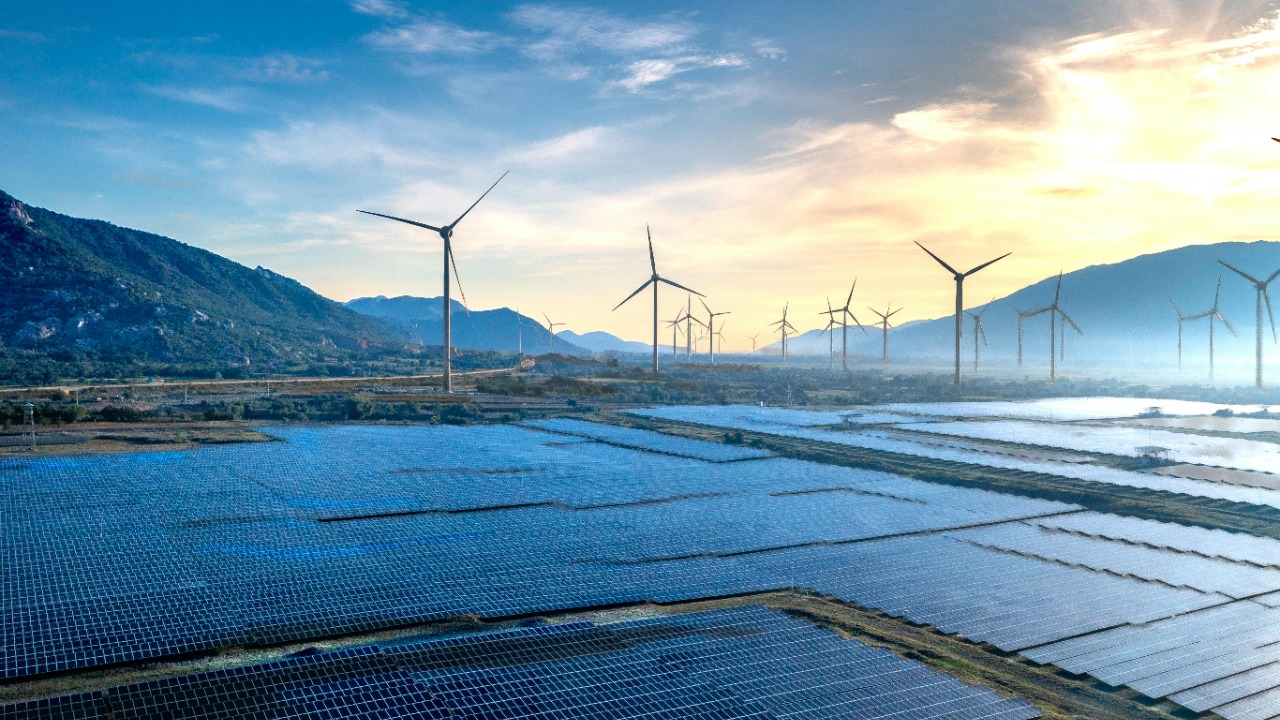

China is adding wind and solar capacity at a pace the world has never seen, yet it is also locking in decades of new coal power. That contradiction now sits at the heart of global climate politics, because what happens in China’s power sector will heavily shape whether the world can keep warming in check. I see a country racing in two directions at once, trying to secure energy supplies and hit climate goals without triggering blackouts or social unrest.
The numbers are staggering on both sides of the ledger. China has become the central player in global clean energy deployment, but it is also the largest consumer and producer of coal and continues to approve and build new coal plants even as renewables hit record highs. Understanding why Beijing is doing both at once is essential to understanding the next decade of global emissions.
Record-breaking renewables meet a coal construction boom
China’s energy system is now defined by scale. The country is already the world’s biggest power market, and its sheer size means any shift in its mix reverberates globally. Official data show that China Added 543 of New Power Capacity in 2025 alone, an expansion larger than the entire installed capacity of many industrialized economies. Within that surge, wind and solar did much of the heavy lifting, reflecting how central clean power has become to Beijing’s growth model.
On the renewable side, the country hit what one industry account described as a Stunning 264 G of Wind Solar Installations in 2025, a Renewable Energy Milestone that would have been unthinkable just a few years ago. Separate data show that the record renewable additions were equivalent to about 17,000 wind turbines, underscoring how quickly China is scaling up clean power. Yet at the same time, reports describe how China Leads Global, with plans to commission as many as 85 coal-fired power generation units and a large pipeline of coal power capacity under construction.
Why Beijing says it still needs coal
To understand why coal is still being built, it helps to look at how Chinese officials frame the problem. The government position, as described in one account of Why China is building so many coal plants despite a solar and wind boom, is that coal remains essential for grid stability and as a backup when weather-dependent renewables dip. Officials argue that in a system where demand is still rising fast, they cannot afford to retire dispatchable capacity too quickly without risking shortages.
That logic is reinforced by the country’s resource endowment. A detailed look at the power sector notes that, in the short term, the role of coal as the most important energy source is shaped by China’s domestic coal reserves and the need to maintain energy security while pursuing its “dual carbon” goals. A separate guide on Coal policy explains that China is the world’s largest consumer and producer of coal and that Chinese policy makers have plans for the fuel in the 2026–2030 period even as they expand renewables. In other words, coal is not a legacy fuel being phased out in the near term, but a tool Beijing still sees as strategically necessary.
Coal capacity surges even as approvals slow
On the ground, that strategy has translated into a rapid buildout of coal plants. One report finds that China expanded the capacity of coal-fired plants more in the first half of 2025 than in any comparable recent period, even though this came despite massive renewable capacity. Another account notes that China brought 21 gigawatts of coal power online in the first half of 2025, even as renewables hit record highs, underscoring how both sides of the system are expanding at once.
At the same time, there are signs that the pace of new approvals is starting to ease. Research cited by Greenpeace finds that new coal power approvals declined to 41.77 G in the first three quarters of 2025, marking a second consecutive year of decline and suggesting that the peak of coal-related power sector emissions may be within reach. Another analysis of China boosting coal notes that the share of coal in the power mix has already fallen from three-quarters in 2016, even as absolute coal capacity has grown, because renewables and other sources are expanding even faster.
Clean energy dominance and the grid integration challenge
While coal remains central, the center of gravity in new investment is clearly shifting toward clean energy. One assessment notes that China Sets Clean, with the country now the world’s top energy investor and pouring about $625 billion into clean energy in a single year. Another data set shows that, As of the end of September 2025, As of the end of that period, China’s total installed renewable energy capacity approached 2,200 G, up 27.2% year-on-year, highlighting how quickly non-fossil sources are scaling.
Solar is now poised to overtake coal in installed capacity. Official projections suggest that China‘s installed solar power capacity is expected to exceed coal for the first time this year, with non-fossil energy sources accounting for a growing share of total capacity. A related report from China indicates that non-fossil energy sources are set to make up a rising portion of total capacity as the buildout continues. The challenge, as grid planners acknowledge, is integrating this tidal wave of variable generation without sacrificing reliability, which is one reason coal plants are increasingly being repositioned as flexible backup rather than baseload workhorses.
Policy pivots, coal demand and the global context
Policy is starting to catch up with these realities. Analysts note that 2026 marks China‘s first year of advancing a comprehensive shift from “dual control” of energy consumption to “dual control” of carbon emissions, including reforms to the environmental impact assessment system. In the same discussion, Biqing Yang, an Energy Analyst for Asia at Ember, highlights how this new planning cycle will be important to watch in 2026 as Beijing balances growth, security and climate targets. Meanwhile, the government has moved to promote the integrated development of coal and new energy sectors, with one briefing noting that China has pushed for coal and renewables to be developed together so that clean power can supply a higher percentage of total electricity.
Yet coal demand is not about to vanish. One forecast argues that China coal demand is poised to rebound in 2026 as power growth offsets renewable gains, and that India coal imports remain elevated as power and industrial demand stay strong. Another assessment of Renewable energy in China suggests that permits for new coal power plants are on track to fall to a four-year low as renewables reduce the need for additional coal capacity, even if existing plants continue to run. In parallel, a global outlook from the International Energy Agency notes that Renewable energy is set to achieve a historic milestone by overtaking coal-fired generation either in 2025 or by 2026 at the latest, a shift that will be heavily influenced by how China manages its own transition.
That leaves Beijing walking a tightrope. On one side is the need to keep the lights on and factories humming, which helps explain why China Leads Global and commissions 85 of 104 new global coal plants in 2026 While Dominating Renewables, according to News and Statistics. On the other is the reality that non-fossil sources are already reshaping the system, with China‘s total installed power capacity increasingly dominated by clean energy and non-fossil energy sources taking a larger share of the total capacity. As the new five-year plan unfolds, the central question is not whether China will keep building renewables, but how quickly it will allow coal’s role to shrink from the backbone of the system to a supporting act.
More from Morning Overview