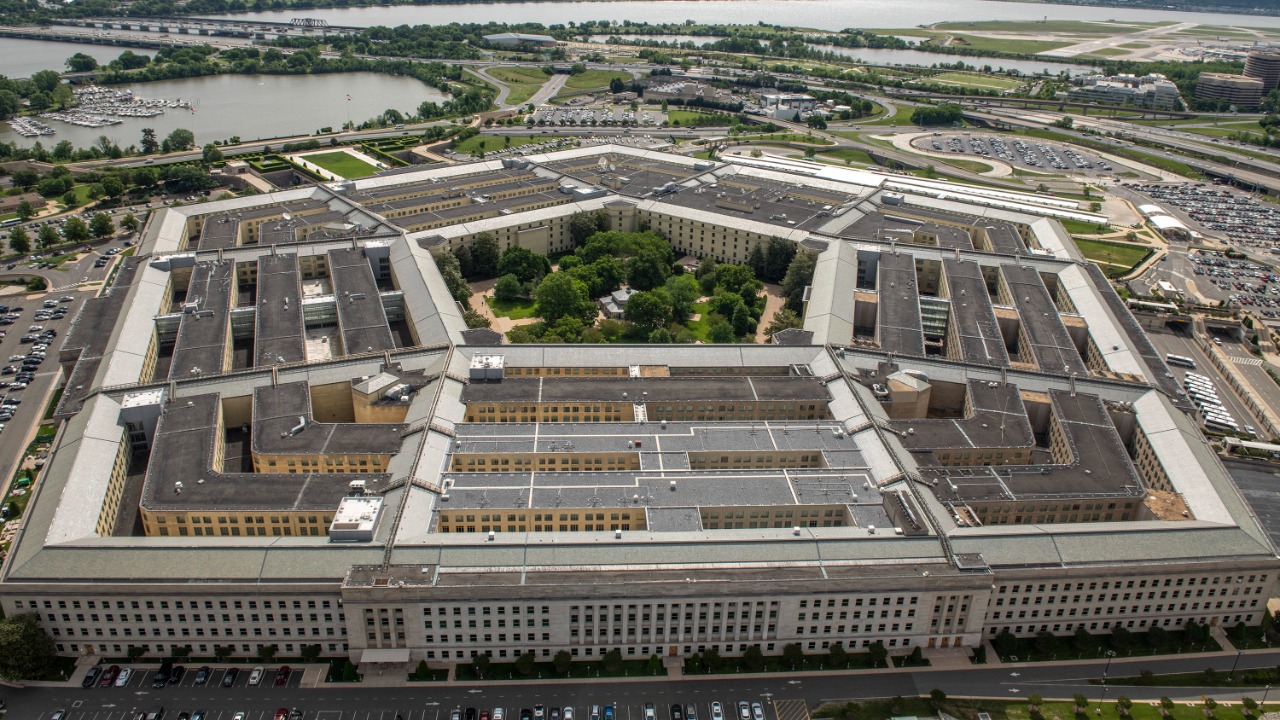

The Pentagon has quietly rewritten its threat rankings, moving China out of the singular top spot that defined United States strategy for years. The shift does not mean Beijing is suddenly seen as benign, but it does signal a broader reprioritization of how Washington allocates finite military power, political attention, and support to allies.
I see this as a structural change rather than a rhetorical one: the United States is recalibrating from a China-first doctrine to a more diffuse map of dangers, even as other parts of the national security system still describe China and the Chinese Communist Party as the most consequential long term challenge.
The long arc from “pacing challenge” to crowded threat board
For most of the past decade, China sat at the center of U.S. defense planning, framed as the primary strategic competitor shaping everything from shipbuilding to semiconductor controls. That focus reflected the scale of China as a global power, its rapid military modernization, and its assertive posture in Asia. In the 2022 National Defense Strategy, Defense Secretary Lloyd Austin described China as the “pacing challenge,” and the Pentagon in Washington explicitly cast Beijing as the top threat shaping U.S. force design and alliances, a judgment reinforced in public remarks by Defense Secretary Lloyd.
That same 2022 strategy increased the emphasis on working with allies and partners, particularly in Europe and the Indo-Pacific, as a core element of U.S. defense. Reporting on the document highlighted how it sought to rebuild partner networks that had been splintered by Trump and to knit together coalitions in Europe, the Middle East, and Asia to manage both Russia’s war and the challenge from Beijing, a shift detailed in coverage of the 2022 defense strategy. Even then, however, the seeds of today’s pivot were visible: China was the top concern, but it was already being framed inside a crowded landscape of simultaneous crises.
A new National Defense Strategy and “more limited” support
The latest National Defense Strategy marks a sharper turn. The Pentagon now signals that the United States will offer “more limited” support to allies, a phrase that reflects both resource constraints and a deliberate decision to avoid overextension. In the new document, The US still names China as a central challenge to U.S. security, but it no longer stands alone as the overriding priority that automatically outranks every other theater, a nuance captured in reporting on the Pentagon’s updated National Defense Strategy.
I read that language as a quiet admission that Washington cannot sustain maximal commitments on every front at once. The United States is still positioning itself against China’s military and technological rise, but it is also trying to manage wars and instability in Europe and the Middle East, while reassuring partners from India to the Gulf that they will not be left exposed. Coverage of the broader regional picture, including U.S. efforts to balance commitments in Europe, the Middle East, China, and the United States’ own domestic constraints, underscores how stretched the system has become and how Beijing’s actions now sit alongside, rather than above, other urgent crises in places like Europe and the.
Inside the Pentagon’s quiet downgrade of China’s priority
The clearest sign of the shift comes from inside the building itself. A detailed Story by Jack Detsch, accompanied by photography from Francis Chung, reports that the Pentagon no longer treats the China threat as its single top priority, a notable departure from the Biden administration’s 2022 strategy that had elevated Beijing above all other competitors. According to that account, senior officials are now juggling a more even set of concerns, from Russia’s war to instability in the Middle East, while still tracking China’s military moves and technology race, a recalibration laid out in the Pentagon threat ranking.
In a follow on version of that reporting, the same Story by Jack Detsch notes that India now sees the United States as a less reliable security partner, a perception that flows directly from Washington’s decision to spread its attention across multiple theaters rather than anchor everything on deterring Beijing. That account, which credits Francis Chung and references CNBC, underscores how allies are reading the change in emphasis and how it diverges from the Biden administration’s 2022 strategy that had placed China at the center of U.S. planning, a contrast spelled out in the linked analysis by Jack.
Intelligence and law enforcement still see China as the primary long game
What makes the Pentagon’s pivot so striking is that it is not matched across the rest of the U.S. security apparatus. U.S. intelligence leaders told lawmakers in a recent worldwide threats hearing that the Chinese Communist Party remains the “most consequential threat” to U.S. national security, language that keeps Beijing at the top of their risk hierarchy even as the Defense Department spreads its focus. That assessment, delivered on a Wednesday session on Capitol Hill, was part of a broader warning about how the Chinese Communist Party is using technology, intelligence operations, and economic leverage to reshape the global order.
Law enforcement is even more blunt. The FBI describes the counterintelligence and economic espionage efforts emanating from the government of China and the Chinese Communist Party as a “grave threat” to the economic well being and democratic values of the United States, and it has built a sprawling program to understand and counter that threat, as detailed in its overview of the China threat. A more detailed version of that description stresses that the counterintelligence and economic espionage efforts from China and the Chinese Communist Party are the defining challenge for U.S. investigators, language that appears in the bureau’s expanded discussion of China and the.
Domestic warnings collide with global optics
The FBI Director has gone further in public, calling China the most significant counterintelligence threat to the United States in a widely circulated statement. That warning, delivered in a short video clip, reinforces the bureau’s written assessment and leaves little doubt that, from a spycatcher’s perspective, Beijing is still enemy number one, a point made explicitly when the FBI Director said China is the most significant counterintelligence threat to the U.S.
Yet even as U.S. agencies issue those warnings, Beijing is staging its own shows of strength. A Chinese V-Parade in Beijing, described by observers as more than a commemoration, was framed as a signal of deterrence, especially toward nations aligned with the United States. Some lawmakers in the United States are already warning that the major pivot in Pentagon priorities is akin to turning away from moral and strategic obligations just as China is flexing its muscles, a concern captured in commentary on the Chinese Parade in.
More from Morning Overview