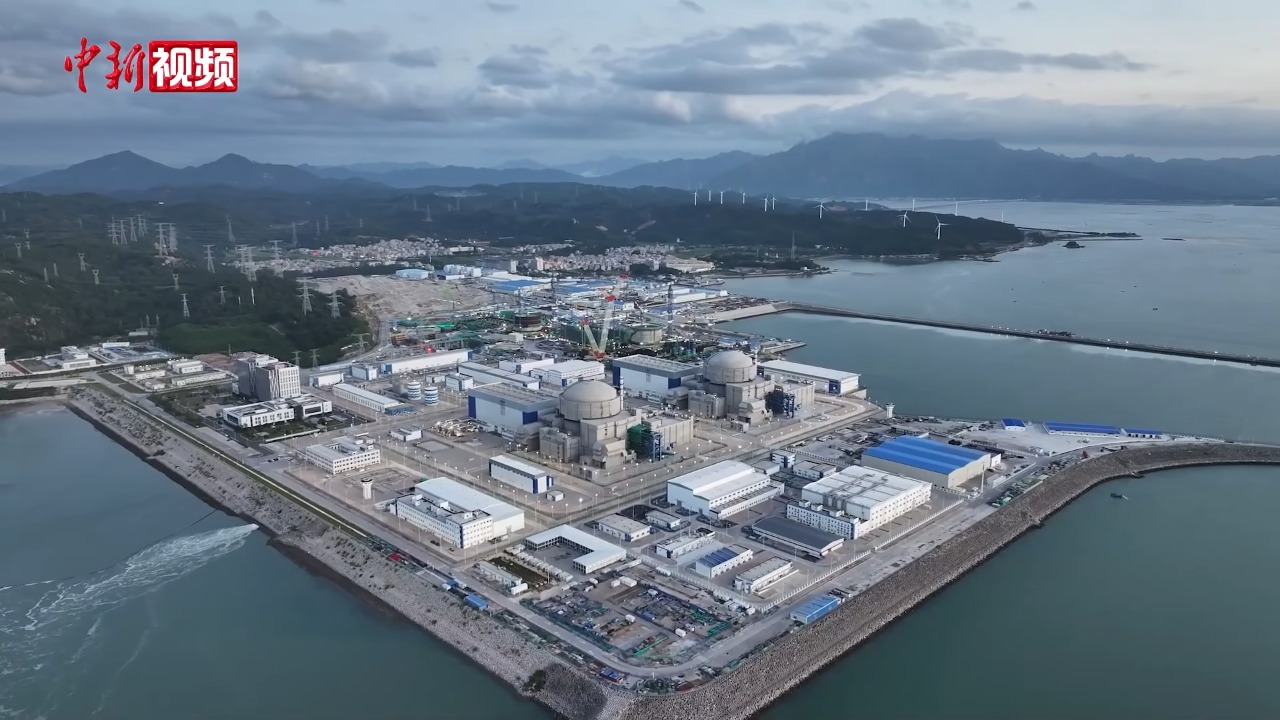

China has completed the installation of all three steam generators at unit 3 of the Zhangzhou nuclear power plant, a key construction milestone at what is billed as the world’s largest nuclear power base. The lift caps a complex engineering sequence that moves the six‑reactor complex in Fujian province closer to full operation and cements the country’s bet on domestically designed Hualong One technology.
The Zhangzhou site is emerging as a flagship for China’s nuclear ambitions, combining scale, export‑ready reactor designs, and a tightly choreographed build schedule. With unit 3’s steam generators now in place, the focus shifts to piping, containment, and commissioning work that will determine how quickly the project can translate hardware into grid power.
Why unit 3’s steam generators matter
The installation of steam generators at Zhangzhou unit 3 is more than a routine construction step, it is the moment when the reactor building gains the core components that will ultimately turn nuclear heat into electricity. According to project updates, the last of the three massive vessels was lifted into its final position at the coastal site in Fujian, completing a sequence that required precision heavy lifting and tight tolerances inside the reactor building’s containment structure, as detailed in reports on Zhangzhou 3. Each generator will sit between the reactor core and the turbine hall, forming the thermal bridge that allows pressurised water from the core to transfer heat to a secondary loop without mixing radioactive and non‑radioactive circuits.
From a project management perspective, getting all three steam generators installed at unit 3 signals that civil works on the reactor building have advanced to the point where major equipment can be locked in and protected. Engineering accounts describe how the heavy components were moved into place using a combination of gantry cranes and modular construction techniques, with the final lift marking a transition from structural work to systems integration at the Zhangzhou complex, which is being developed as a six‑unit station in eastern China, as noted in technical briefings on the Station.
Inside the world’s largest nuclear power base
Once all six reactors at Zhangzhou are complete, the site is expected to form the core of what Chinese planners describe as the world’s largest nuclear power base, both in terms of installed capacity and concentration of advanced pressurised water reactors. The complex is being built around the Hualong One design, a domestically developed reactor type that has already entered commercial service at other locations and is intended to anchor China’s long‑term nuclear fleet, as highlighted in project descriptions of the six planned Hualong One units. By clustering six identical reactors at a single coastal site, operators can standardise maintenance, training, and spare parts, which in turn should lower operating costs over the plant’s multi‑decade life.
The Zhangzhou project is also tightly linked to China’s broader nuclear build‑out, which includes other large coastal stations that are already feeding power into the grid. Phase 1 of the wider nuclear base, which includes earlier Hualong One units, has already entered commercial operation and is cited by Chinese officials as proof that the design has cleared international benchmarks such as the United Kingdom’s Generic Design Assessment. That certification, combined with the scale of the Zhangzhou build, is intended to position Chinese vendors as credible suppliers in global nuclear tenders, from Asia to the Middle East.
Regulators, ownership and local impact
Behind the engineering milestones sits a dense web of regulation and ownership that shapes how Zhangzhou is being delivered. China’s Ministry of Ecology and Environment issued the initial construction licences for Zhangzhou units 1 and 2 to the project company CNNC‑Guohe Nuclear Power, setting the template for subsequent units at the site. That licensing process covers environmental impact assessments, safety case reviews, and ongoing oversight of construction quality, with regulators expected to play a central role again when unit 3 moves into fuel loading and commissioning. The presence of a national‑level ministry as the lead regulator underscores how nuclear projects in China remain tightly controlled from Beijing, even as local governments court investment and jobs.
On the commercial side, the Zhangzhou project reflects a partnership model that splits ownership between central and provincial interests. Reports on the financing structure note that China National Nuclear Corporation holds a controlling stake in the project company, while a regional partner, often referred to as Guohe, owns the remaining share, a pattern that mirrors other large Chinese infrastructure ventures and is referenced in coverage of the Corporation. For the surrounding communities in southern Fujian, the build is pitched as a long‑term economic anchor, with the completed station expected to supply electricity to both Zhangpu and Zhangzhou cities and to support local industry with stable, low‑carbon power, as described in planning documents for the Zhangzhou site.
Engineering choreography at Fujian’s coastal site
The physical act of lifting and installing the steam generators at unit 3 illustrates the choreography required to build a modern nuclear plant on a tight schedule. At the Fujian coastal site, project teams sequenced the work so that the reactor building’s containment structure, internal supports, and access openings were ready just as the heavy components arrived, allowing the three generators to be hoisted into place in rapid succession, as outlined in technical notes on Fujian. That timing matters, because once the generators are installed, crews can begin welding primary circuit piping, mounting auxiliary systems, and closing up the containment dome, all of which are prerequisites for pressure testing and eventual fuel loading.
The Zhangzhou lifts also highlight how China has refined its heavy‑industry supply chain for nuclear components. The steam generators themselves are large, complex pressure vessels that must meet stringent quality standards, and their delivery to the site depended on a logistics chain that includes specialised fabrication shops, port facilities, and on‑site handling equipment, as described in background material on the Zhangzhou site. The ability to repeat such complex lifts across multiple units at a single station is one reason Chinese planners are confident they can keep to aggressive build schedules and bring new capacity online in a predictable sequence.
China’s wider infrastructure playbook
The Zhangzhou nuclear build fits into a broader Chinese pattern of tackling large, technically demanding infrastructure projects at scale. In the energy and water sectors, state‑linked companies have been exporting that model abroad, most visibly through projects like the Diamer Basha Dam in Pakistan, which has been described as a Renowned world‑class water conservancy project because of its technical complexity and construction scale. The same engineering culture that is trialling full‑process concrete production systems for that dam is at work in the nuclear sector, where Chinese firms are standardising designs, industrialising component production, and compressing construction timelines without, they argue, compromising safety.
At Zhangzhou, that approach is visible in the way multiple units are staggered but overlapping, so lessons from earlier reactors can be fed directly into later ones. Reports on the steam generator installation at unit 3 emphasise that the work benefits from experience gained on units 1 and 2, as well as from other Hualong One projects that have already entered commercial operation, including reactors that began supplying power earlier this year, as noted in updates on operation. For China’s nuclear industry, each successful milestone at Zhangzhou is both a domestic achievement and a reference project to be cited when pitching Hualong One reactors and associated services to potential buyers abroad, a point underscored in analyses of how China is positioning its nuclear technology globally.
More from Morning Overview