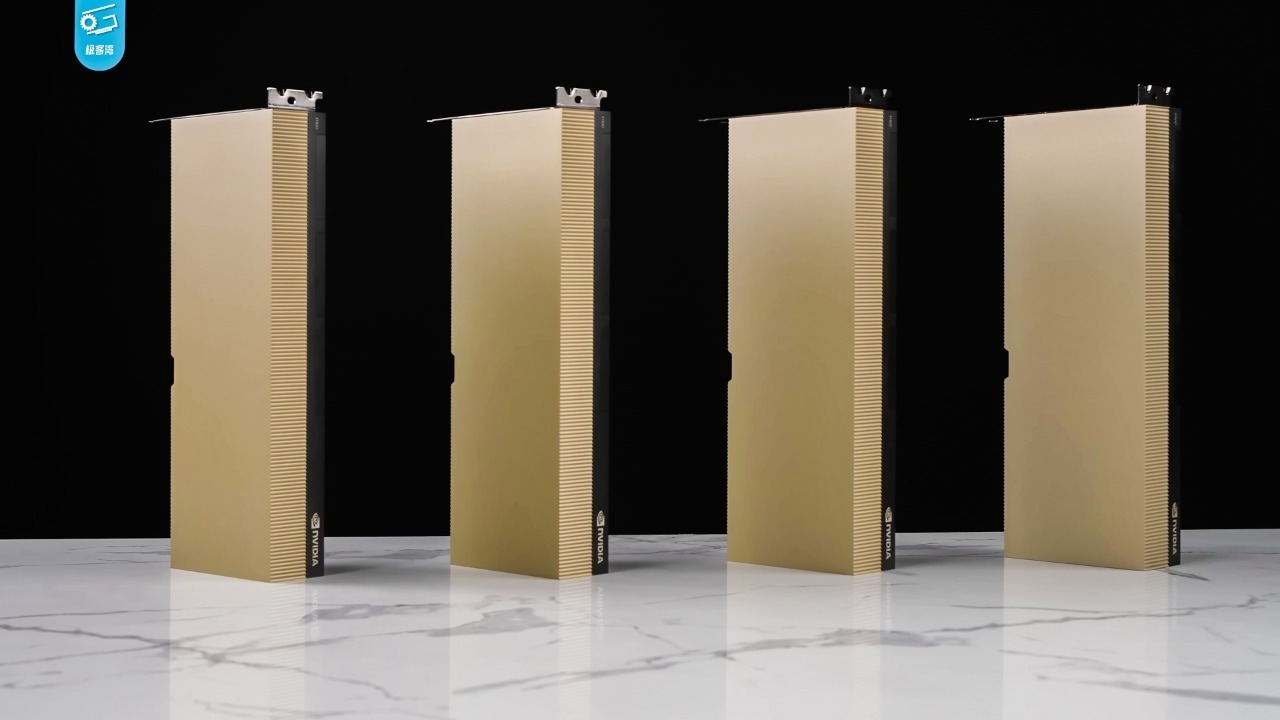

The United States has finally opened a narrow channel for Nvidia’s H200 artificial intelligence chips to reach Chinese buyers, but the path is lined with strict technical caps, licensing hurdles, and monitoring demands. The result is a compromise that lets Nvidia tap a crucial market while Washington tries to keep the most advanced military and surveillance applications out of Chinese hands. For Beijing and its tech giants, the message is blunt: access to cutting edge silicon is now a privilege, not a given.
At stake is who sets the pace in the next wave of AI and high performance computing, from large language models to advanced industrial automation. The H200 is designed as a flagship accelerator for those workloads, yet in China it will arrive as a constrained product, shaped as much by U.S. export lawyers as by chip engineers.
The rule change that reopened the door
The turning point came when the Department of Commerce issued a new regulation that explicitly permits the sale of advanced AI chips to Chinese customers, but only within tightly defined performance bands. On January 13, the Department of Commerce published a rule that allows exports to Chin so long as the chips fall below specific thresholds, including an interconnect bandwidth of less than 6,500 GB/s, according to Experts. That technical line is not an arbitrary number, it is meant to block the most powerful clustered systems while still leaving room for commercial AI deployments.
The policy shift followed a political signal from President Donald Trump, who had said he would allow Nvidia to sell the H200 to “approved” buyers in China, a stance that Commerce later translated into formal export criteria. The new rules arrived just over a month after President Donald Trump’s comments and now require that Nvidia and its partners prove that any H200 shipments to China meet the defined ceilings and are destined for vetted end users, as described in the updated Commerce framework. In practice, that means every sale is a negotiated exception, not a blanket reopening of the Chinese market.
What Nvidia can sell, and to whom
For Nvidia, the H200 is not just another GPU, it is the company’s next generation data center workhorse, positioned above earlier accelerators in memory capacity and AI throughput. The chip is marketed as a premium product for training and inference at scale, and global cloud providers have been racing to secure supply. Earlier this year, the Trump administration formally approved Nvidia’s H200 chips for export to China, reversing months of restrictions that had forced the company to design lower tier alternatives for that market, according to an analysis of On January developments. That approval, however, is bounded by the same performance and interconnect rules that now define the entire export regime.
The new criteria do not give Nvidia Corp a free hand. Companies shipping H200s to Chinese buyers are constrained by a licensing system that scrutinizes both the chip configuration and the intended use, as described in a summary of the revised companies guidance. In Washington, officials have framed this as a way to let Nvidia compete globally without handing over the most sensitive capabilities to strategic rivals, a balancing act that leaves Chinese cloud providers and AI labs operating under a ceiling that their U.S. and European counterparts do not face.
Harsh conditions on Chinese buyers
From Beijing’s perspective, the new rules are a reminder that access to U.S. technology now comes with intrusive oversight. The Department of Commerce’s regulation spells out that only chips with performance below the defined thresholds can be shipped to Chin, and that any system level configuration that effectively boosts aggregate bandwidth beyond those caps could trigger a violation, according to the detailed Department of Commerce criteria. That means Chinese data centers cannot simply buy more H200s and wire them together to recreate the kind of supercomputing clusters that U.S. regulators are trying to restrict.
On top of the technical limits, Nvidia must ensure that there is a clear chain of custody for every shipment and that only the approved chips for export reach end users in China, according to the export rules described by Nvidia compliance obligations. That puts the company in the position of gatekeeper, responsible for monitoring distributors and cloud partners in a market where resale and gray channel activity have historically been hard to police. For Chinese firms, the result is a supply chain that can be interrupted not only by policy shifts in Washington, but also by compliance decisions inside Nvidia’s own export control teams.
Washington’s strategic calculus
In Washington, the decision to ease regulations on Nvidia H200 exports to China reflects a broader debate over how to manage technological interdependence without ceding military advantage. Officials in WASHINGTON framed the move as an adjustment to existing controls, with the Trump administration easing regulations so that Nvidia can sell H200 chips to China under defined conditions, according to a detailed account from Reuters. The Trump administration’s calculus is that completely cutting off Nvidia would damage a key U.S. company and push Chinese buyers more aggressively toward domestic alternatives, while a controlled flow of slightly downgraded chips preserves leverage.
Critics, including some Experts who have examined the new AI chip export policy, argue that the framework is strategically incoherent and difficult to enforce in practice. They point out that the Department of Commerce is trying to draw a bright line in a fast moving field where performance can be scaled horizontally and where software optimizations can extract more capability from hardware that technically sits below the 6,500 GB/s threshold, as highlighted in their assessment of the new regulation. The risk, in their view, is that the United States ends up with a complex rulebook that is porous enough to be gamed, yet restrictive enough to fuel long term decoupling.
How China and Nvidia adapt from here
For China, the new regime reinforces the urgency of building a domestic semiconductor stack that can support its AI ambitions without relying on U.S. suppliers. The country has already poured resources into national champions and local fabs, and the latest restrictions on H200 exports will likely accelerate that push, especially as Chinese policymakers weigh how much they want to depend on a supply chain that can be throttled by Washington, as reflected in the broader context of China technology policy. In the short term, however, Chinese cloud providers and AI startups are likely to take what they can get, using constrained H200s to train and deploy new AI systems while they wait for domestic alternatives to mature.
Nvidia, for its part, is trying to navigate between political pressure at home and commercial demand abroad. The company has already experienced how quickly rules can shift, after earlier export controls forced it to design China specific variants of its accelerators, and it now faces a future in which every new flagship chip will be scrutinized for its export profile as much as its performance. The Trump administration’s revised criteria for Nvidia Corp shipments, described in a summary of the Takeaways, make clear that future products will be born into a world where export compliance is a core design constraint. For now, the H200’s limited path into China shows how geopolitical rivalry is being etched directly into the silicon that powers the global AI race.
More from Morning Overview