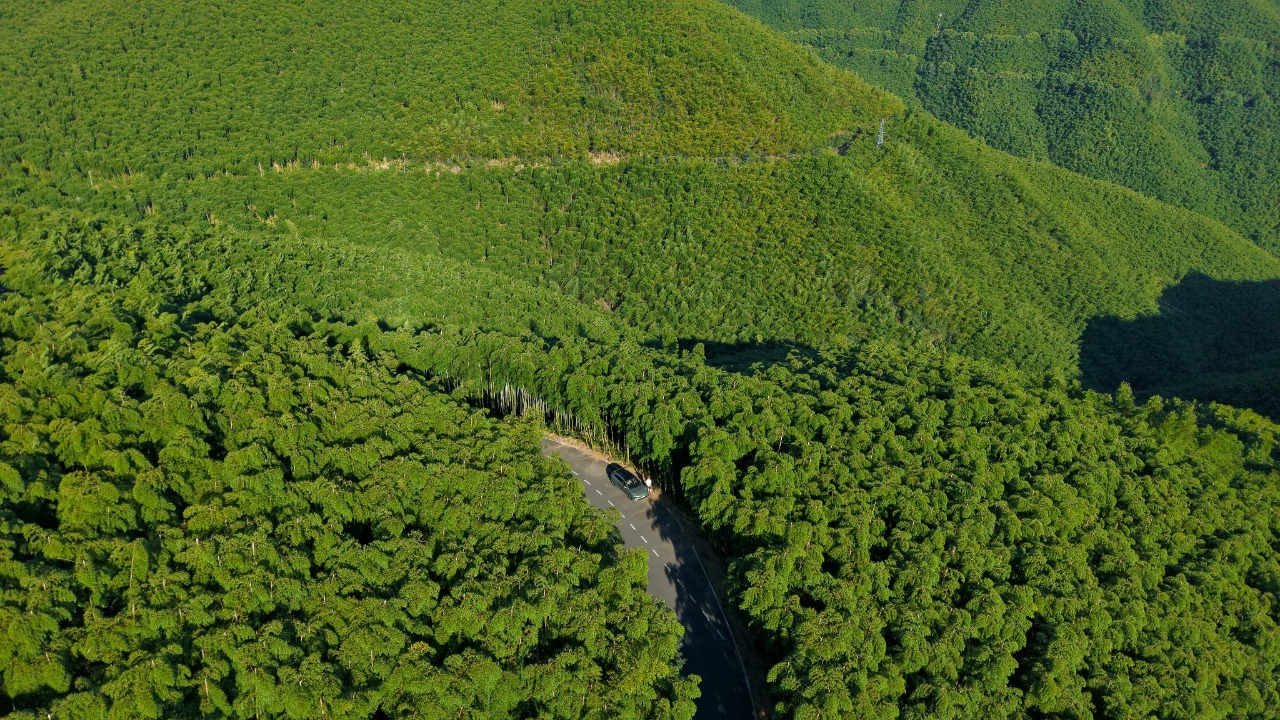

China set out to stop its deserts from marching east and to lock more carbon in the ground. In the process, it planted tens of billions of trees across its dry northern frontier and far beyond, on a scale no other country has attempted. Now scientists say that success has come with an extraordinary side effect: the country has effectively reprogrammed where its rain falls, drying out some regions while soaking others.
The story is not a simple tale of good trees gone bad. The same forests that stabilized dunes and pulled dust out of the air have also altered winds, humidity and runoff in ways that ripple across the entire water cycle. I find that tension, between ecological repair and unintended disruption, is the real lesson of China’s regreening experiment.
From dust bowl to “Great Green Wall”
For decades, China has treated tree planting as a national infrastructure project, a living barrier against sandstorms and soil erosion. Official campaigns have pushed forest belts across the country’s arid north, often described collectively as a kind of Great Green Wall that stands between expanding deserts and the country’s industrial and agricultural heartlands. That ambition is now central to how the state presents China’s environmental identity at home and abroad.
Researchers estimate that China embarked on an astonishing feat, planting an estimated 78 billion trees as part of this regreening drive, while other analyses describe a “Green Problem” in which the country Planted 78 Billion Billion Trees to Save the Soil. One summary notes that China’s reforestation efforts increased tree cover from 10% to 25%, a transformation that reshaped everything from dust storm frequency to how much sunlight reaches the ground.
The physics of “moving” rain
What scientists are now documenting is that this much new vegetation does not just sit in place and behave like a static windbreak. Trees act as biological pumps, pulling water from the soil and releasing it into the air through their leaves. As China planted billions more trees across its arid north, those pumps multiplied, changing how much moisture is available to form clouds and where that moisture ultimately falls as rain. One analysis describes how those pumps intensified as China kept expanding its forest belts over five decades.
Hydrologists now argue that the country has, in effect, shifted its own rainfall patterns. One detailed study of how China embarked on planting an estimated 78 billion trees concludes that the regreening has altered the country’s entire water cycle, while a separate assessment finds that China has planted so many trees it has changed the entire country’s water distribution. Another synthesis of climate data notes that China’s massive tree-planting programs have reshaped not just the landscape but regional water and rainfall patterns, forcing different regions to adapt locally as precipitation regimes diverge.
When greening dries the ground
The most jarring finding is that a campaign designed to fight drought and erosion is now implicated in new water stress. Analyses of the “Green Problem” argue that China Green Problem Now They Cause, highlighting how the same forest belts that stabilized soils are drawing down groundwater and reducing streamflow. A detailed summary of China’s reforestation notes that the increase in tree cover from 10% to 25% has had an unexpected negative effect on precipitation, with knock-on impacts for rivers and as much as 60% of arable land.
On the ground, ecologists are seeing how thirsty plantations can outcompete native vegetation. In some experimental plots, single-species stands of fast-growing trees have sucked groundwater so aggressively that native grasslands wither and topsoil thins, a pattern flagged by scientists who warn that Jan research may be underestimating long term damage to fragile ecosystems. Another synthesis of field data notes that in some regions, topsoil is literally thinning as roots and evaporation strip moisture faster than it can be replenished.
Satellites, storm tracks and a national water experiment
The scale of the transformation is visible from orbit. Remote sensing specialists report that Satellite data and hydrological studies now show that these new forests have dramatically altered the country’s water cycle, with mature stands changing how much water is stored in tree biomass and how much is released as atmospheric vapor. One synthesis of those datasets concludes that Mature forests are now a central driver of regional humidity patterns, effectively acting as infrastructure that shapes storm tracks.
At the same time, climate scientists tracking storm systems over East Asia argue that News analyses of how forests interact with monsoon flows are only beginning to catch up with reality. One widely cited report, By Sascha Pare, notes that the country has planted so many trees it has changed the entire country’s water distribution, while another synthesis of field and model data on Sascha Pare Live and Johannes Plenio imagery highlights how rivers and reservoirs are responding to the new forest cover in China.
Runoff, floods and the double edge of forest “infrastructure”
Not every hydrological change is negative. In many watersheds, the new forests have slowed surface runoff, allowing more water to soak into the ground and reducing flood risks during heavy storms. One synthesis of field measurements notes that Forests slowed surface runoff and reduced flooding, even as increased evaporation changed the balance of nature. Another analysis of how At the same time, more water is being pulled into the atmosphere, underscores that these forests are functioning like giant pieces of green infrastructure, with trade offs that depend on local geology and climate.
Yet the same processes that tame floods can starve downstream farms and cities of water. A detailed climate summary notes that Dec assessments of China’s reforestation link reduced river flows to stress on up to 60% of arable land, while a separate synthesis of hydrological models finds that Jan projections show regional water and rainfall patterns diverging sharply as forests mature. In that sense, the country’s tree belts have become a national water experiment, one that is still unfolding in real time.
More from Morning Overview